Urban Form: Covered Tea Caddy
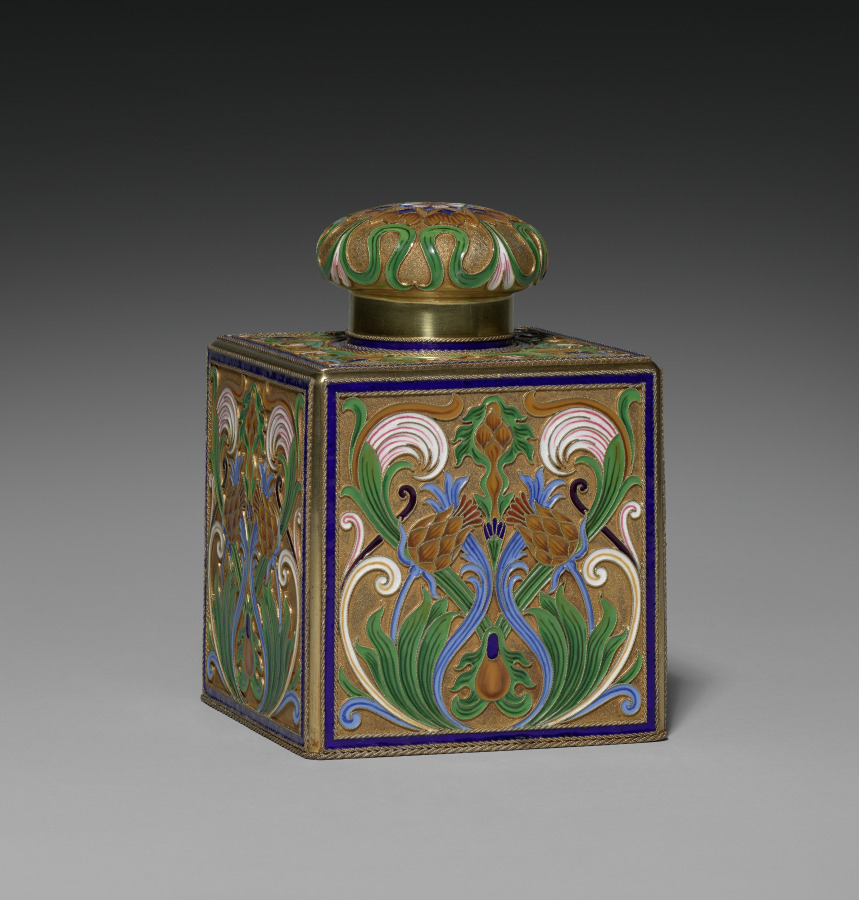
Structural Poetics: The Covered Tea Caddy as Architectural Prototype
The Covered Tea Caddy, when subjected to the rigorous lens of urban silhouette research, reveals itself not as a mere vessel but as a compressed architectural manifesto. Its geometric integrity—a taut interplay of vertical containment and horizontal restraint—directly informs the 2026 executive silhouette for Addison Fashion. The object’s essence lies in its negative space: the void within the container is as critical as the enclosing form. This is not decoration; it is structural poetics—a dialogue between mass and emptiness that mirrors the urbanite’s need for both presence and privacy.
The caddy’s lid, a subtle dome that rises without arrogance, establishes a crown-like terminus. In silhouette terms, this translates to a sharp, clean shoulder line—neither padded nor exaggerated, but architecturally precise. The body of the caddy, a perfect cylinder or faceted polygon, demands a vertical elongation in the garment’s torso. The 2026 executive coat must echo this: a single-seam construction from shoulder to hem, with no interruption at the waist. The fabric must fall like a curtain of onyx, unbroken, suggesting both strength and the quietude of a sealed space.
Geometric Integrity and the Urban Frame
The Covered Tea Caddy’s geometry is one of controlled tension. Its base is broad, grounding the form in a trapezoidal stability. This translates to the silhouette’s lower half: a slight A-line expansion from the hip downward, but executed with such minimal flare that it reads as a structural necessity, not a stylistic flourish. The hem of a 2026 executive skirt or trouser should mirror this—a clean, weighted fall that anchors the wearer to the urban grid.
The caddy’s surface, often lacquered to a matte obsidian finish, informs the materiality of the silhouette. Urban materiality here demands fabrics that absorb light rather than reflect it: double-faced wool, bonded cashmere, or technical crepe with a stone-like density. The color Onyx is not a choice but a structural imperative—it erases surface detail, forcing the eye to read pure form. Any seam, any dart, becomes a line of architectural intent. The silhouette must be assembled with the precision of a joinery system: no visible stitching, only fused edges and internal structures that hold the shape from within.
Urban Materiality: The Onyx Imperative
In the context of the 2026 executive, the Covered Tea Caddy’s material logic dictates a monochromatic, monolithic approach. Onyx as a color is not merely dark; it is absorbent of narrative. It does not compete with the urban environment but asserts a silent dominance. The fabric must have a matte, almost powdery finish—like a lacquered surface that has been sanded to a satin state. This is achieved through carbonized wool blends or micro-sanded technical silks that refuse to shine.
The caddy’s lid, often fitted with a precise lip, suggests a closure system for the silhouette. The 2026 executive coat should feature a concealed magnetic placket or a single, off-center closure that mimics the caddy’s seal. This is not about fastening; it is about completing the volume. The garment becomes a portable chamber—a private space within the public realm.
The Interior Void as Design Principle
The Covered Tea Caddy’s most radical contribution to the silhouette is its celebration of the interior. The object’s value lies in what it contains, yet the exterior is a perfect, unadorned shell. For the executive silhouette, this translates to a pared-down exterior that hints at complexity within. A jacket may appear as a simple block from the front, but a hidden interior pocket, a silk lining in a contrasting texture, or a structured inner yoke creates a secret architecture. The wearer knows; the observer only senses.
This aligns with the “物我交融” (unity of object and self) philosophy from the internal DNA. The garment is not a costume but a habitable form. The executive who wears it is not performing power but inhabiting a state of composed readiness. The silhouette becomes a second skin of urban armor, refined to the point of invisibility.
Defining the 2026 Executive Silhouette
Drawing from the Covered Tea Caddy’s DNA, the definitive 2026 executive silhouette is characterized by:
1. Vertical Compression: The torso is elongated, with the waistline suppressed only through internal darts that do not break the outer surface. The effect is a continuous column from shoulder to mid-thigh or knee.
2. Shoulder as Crown: The shoulder is a clean, slightly extended cap—not a power shoulder of the 1980s, but a structural terminus that frames the head like a caddy’s lid. It is sharp but not aggressive, suggesting contained authority.
3. Base as Plinth: The hem is weighted and stable. Trousers are cut with a slight taper to the ankle, while skirts fall to a precise mid-calf length that does not flutter. The silhouette stands as if on a hidden platform.
4. Material as Surface: Only matte, dense fabrics in Onyx or its tonal equivalents (deep charcoal, ink black) are used. Texture is suppressed in favor of pure color. The garment’s surface is a field of silence.
5. Closure as Ritual: The act of dressing becomes a ritual of sealing. A single, deliberate closure—a hidden hook, a magnetic snap, a wrapped belt—completes the form. The wearer closes themselves into the silhouette.
Conclusion: The Silhouette as Urban Tea Caddy
The Covered Tea Caddy, in its minimalist perfection, offers a blueprint for the 2026 executive silhouette. It is not about volume or drama but about presence through absence. The garment, like the caddy, is a container for the self—a private, protected space that moves through the city with geometric certainty. The Onyx color, the matte materiality, the unbroken lines—all serve to create a silhouette of quiet power. This is the Addison Fashion executive: a figure of structural poetics, inhabiting the urban landscape as a living artifact of refined intention.