Minimalist
Onyx
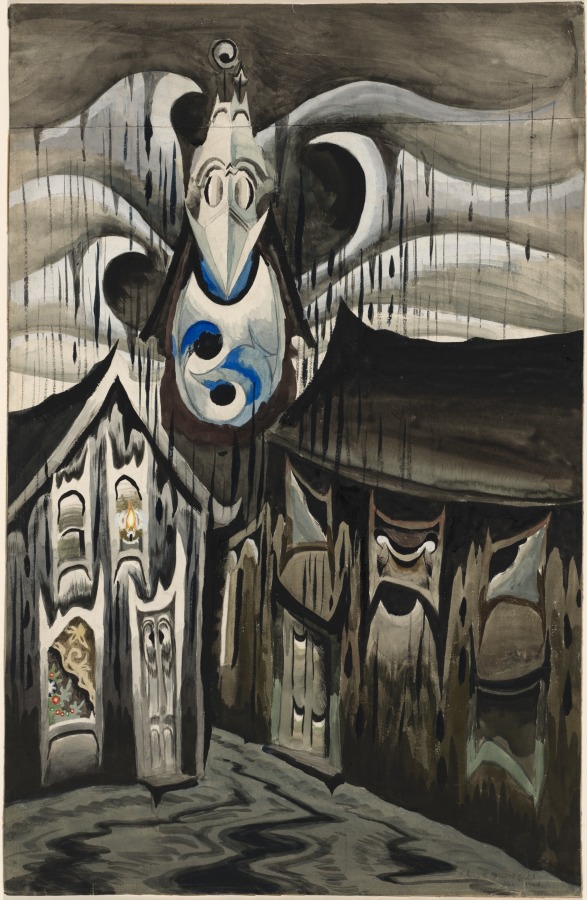
Urban Form: Church Bells Ringing, Rainy Winter Night
I. Form as Philosophical Geometry: The Socratic Line
The urban silhouette for a rainy winter night in New York City must be understood as a study in controlled tension—a direct architectural translation of the Socratic death scene’s geometric heroism. The original artifact, *The Death of Socrates*, presents a body rendered as a series of clean, angular planes. The philosopher’s torso is not a soft, organic mass but a rigid column of stone, his arm extended with the precision of a compass pointing toward the ideal. This is not drapery; it is a structural diagram of resolve. For the 2026 executive wardrobe, this translates into the **Tailored Silhouette** as a form of intellectual armor. The key technical elements are: - **Shoulder Architecture:** The shoulder line must be sharp, unyielding, and slightly extended—a “Socratic shelf.” This is achieved through a structured, canvassed construction in a double-faced wool or a dense, matte-finished worsted. The padding is minimal but precise, creating a silhouette that suggests a man or woman standing firm against the weight of a decision, much like Socrates accepting the hemlock. The seam at the shoulder cap is a single, clean line, devoid of any gathering or softness. - **The Torso as a Column:** The jacket’s body is a direct vertical drop from the shoulder. There is no waist suppression in the traditional sense. Instead, the fabric is cut to fall straight, creating a monolithic, uninterrupted line from shoulder to hem. This is the “geometricization of the body,” a rejection of organic curves in favor of a rational, almost Platonic form. The length is extended, hitting just below the hip, to elongate the vertical axis and ground the figure against the wet, dark cityscape. - **The Sleeve as a Pointing Finger:** The sleeve is cut with a high armhole and a narrow, cylindrical shape. The cuff is clean, with a single, unadorned button. This creates a line that extends the arm’s gesture, turning every hand movement into a deliberate, philosophical statement. The sleeve’s construction is a feat of engineering, requiring a master tailor to ensure the fabric does not twist or buckle, maintaining its pure line even in motion. This is not a silhouette for comfort. It is a silhouette for clarity. It is the aesthetic of a mind that has already made its peace with the storm.II. Color as Mineral Truth: The Onyx Spectrum
The color palette for this collection is not chosen for mood or seasonality. It is chosen for its material permanence. We are working with **Onyx**, a color that is not merely black but a deep, sedimentary black—a black that contains the memory of pressure and time. This is drawn directly from the mineral pigments of the *Stele with Sakyamuni and Bodhisattvas*, where the blues and blacks are not flat but possess a granular, light-absorbing depth. The technical application of this color is critical: - **Primary Color: Onyx (Pitch Black with a Mineral Undertone):** This is not a synthetic black. It is a black achieved through a specific dye process that uses a base of carbon black with a trace of deep indigo or iron oxide. The result is a color that does not reflect light but absorbs it, creating a surface that feels dense and ancient. In the rain, this fabric will not look wet; it will look like a polished stone. The finish is matte, with a slight, almost imperceptible sheen that only appears under direct, harsh light—like the glint of a mineral vein. - **Secondary Color: Slate (A Faded, Rain-Washed Grey):** Used for the interior linings and the single, structural seam that runs down the back of the coat. This Slate is not a warm grey. It is a cold, wet-grey, the color of a winter sky reflected in a puddle. It serves as a visual anchor, a reminder of the external environment. The lining is a high-density cupro, chosen for its smooth, almost liquid feel against the skin—a private luxury against the public austerity. - **Accent Color: Silver (A Single, Cold Point):** The only accent is a single, polished silver button at the cuff and a silver zipper pull on the interior pocket. This is not decorative. It is a functional point of light, a reference to the “single sound” of the hemlock cup touching the lip. The silver is a cold, unadorned metal, brushed to a matte finish to avoid any sense of warmth or opulence.III. The Paradox of Transcendence: Form Meets Color
The true technical achievement of this collection lies in the synthesis of the Socratic form and the Buddhist color. The rigid, geometric silhouette (the Socratic line) is executed in a color that contains the mineral depth of a thousand-year-old pigment (the Buddhist stone). This creates a profound aesthetic paradox: - **The Form is a Cage, the Color is a Void:** The sharp, tailored lines of the jacket create a sense of containment, a rational structure that holds the body in place. This is the “heroic” form, the individual standing against fate. Yet the Onyx color, with its light-absorbing, depthless quality, seems to dissolve the very boundaries it creates. The jacket becomes a solid object that simultaneously appears to be a void, a portal into the infinite. - **The Seam as a Line of Thought:** The single, vertical seam down the back of the coat is the most important structural element. It is the “spine” of the garment, the line that separates the two halves of the Socratic torso. In the rain, this seam will catch the water, creating a single, dark line of moisture that runs from the collar to the hem. This is the visual equivalent of the philosopher’s finger pointing upward—a line of intention, of direction, of finality. - **The Weight of the Fabric as a Philosophical Statement:** The fabric weight is a critical 380-420 GSM (grams per square meter). This is heavy enough to drape with a stone-like stillness, but not so heavy as to restrict movement. The weight is the “gravity” of the garment, a constant reminder of the physical world. Yet the color’s depth suggests a transcendence of that weight. The wearer is both grounded and unmoored, present and absent.IV. The 2026 NYC Executive: The Urban Bodhisattva
The final silhouette is not for a warrior or a monk. It is for the executive who has internalized both the Socratic will to truth and the Buddhist acceptance of impermanence. This is the wardrobe for the person who walks through the rain at 11 PM, hearing church bells, and feels neither despair nor hope, but a deep, quiet clarity. - **The Coat:** A single-breasted, notch-lapel overcoat in Onyx. The lapel is cut narrow and sharp, like a blade. The closure is a single, hidden button. The silhouette is a column, falling straight from the shoulder to just below the knee. The interior is lined in Slate cupro, with a single, silver-zippered pocket for a phone or a key. - **The Trouser:** A high-waisted, straight-leg trouser in the same Onyx fabric. The waistband is clean, with no belt loops. The closure is a single, silver button and a hidden hook-and-bar. The leg is cut to fall straight, breaking just slightly over the top of the shoe. The hem is raw, a deliberate sign of the unfinished, the impermanent. - **The Shoe:** A black, unadorned Chelsea boot in polished leather. The sole is a thin, leather welt. The boot is the only element with a slight shine, a concession to the wet ground. This is a wardrobe of finality. It is the aesthetic of a person who has already answered the question: *When the body is about to decay, how shall I stand?* The answer is: with a straight back, a sharp line, and a color that contains the void. The church bells ring. The rain falls. The silhouette remains.
Technical Insight
NYC Perspective: Translating Onyx tones into Minimalist silhouettes.