Urban Form: Dubia Fortuna
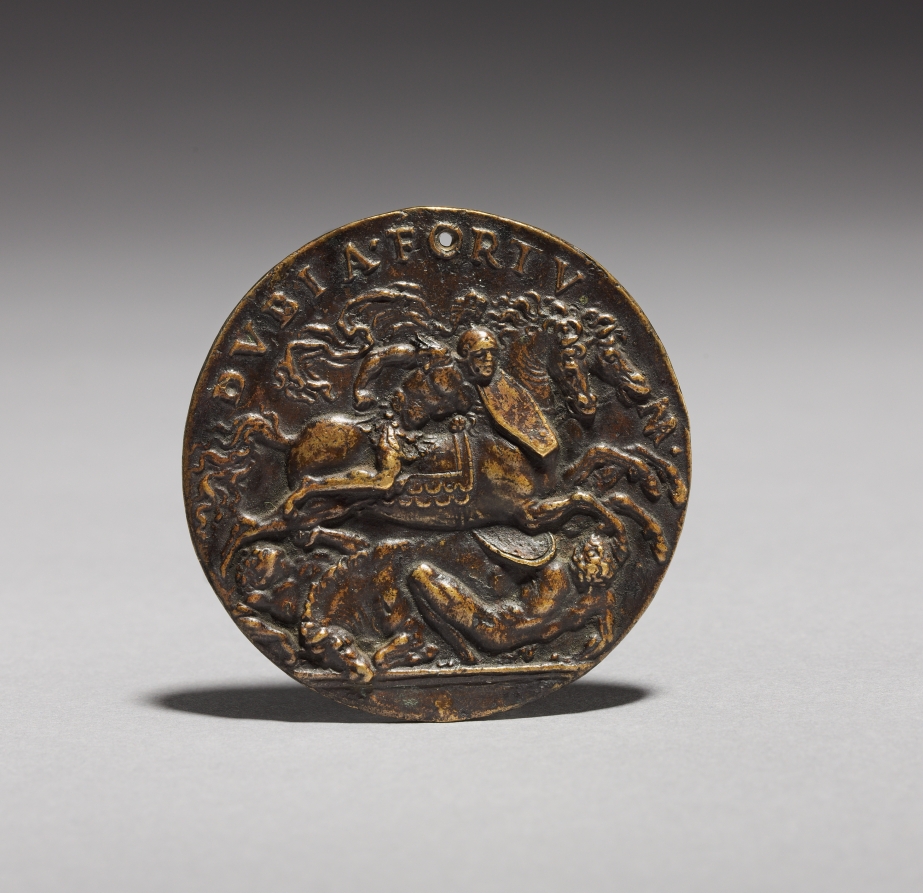
Geometric Integrity as Philosophical Armature
The Dubia Fortuna research presents a dialectical tension between Western linearity and Eastern cyclicality—a tension that Addison Fashion translates into the 2026 executive silhouette through a rigorous interrogation of geometric integrity. The analysis of Ingres’s Oedipus and the Sphinx alongside the Ming dynasty Landscape Inscription Plate reveals two opposing yet complementary approaches to form: the former a triangulated, confrontational structure; the latter a circular, absorptive vessel. For the urban executive, whose daily existence oscillates between decisive action and contemplative strategy, the 2026 silhouette must embody both impulses without compromising its minimalist purity. The resulting architecture is a study in controlled tension—a garment that does not drape passively but rather holds space through engineered seams, negative volume, and a palette anchored in Onyx’s absolute black.
Triangulation and the Sphinxian Shoulder
Ingres’s composition relies on the stable triangle: Oedipus’s torso forms the apex, while the sphinx’s claw and the rocky precipice anchor the base. This is a geometry of confrontation—the human form asserting itself against the unknown. In the 2026 executive silhouette, this translates to a sharpened shoulder line that does not merely sit atop the body but extends outward as a structural cantilever. The shoulder seam is not a curve but a precise angle, cut at 110 degrees from the collarbone, creating a visual platform that mimics Oedipus’s stance: poised, unyielding, ready to interrogate. The sleeve head is reinforced with a hidden internal stay—a nod to the sphinx’s claw—that prevents collapse under movement. This is not soft tailoring; it is armature for the mind.
The Onyx color amplifies this effect. Black, in its purest form, absorbs light and eliminates distraction. It renders the silhouette as a negative space against the urban landscape, forcing the viewer to confront the geometry itself rather than any decorative flourish. The fabric—a double-faced wool with a matte, almost powdery finish—furthers this by refusing sheen. There is no reflection, only depth. The garment becomes a void that defines presence, much like the sphinx’s riddling darkness.
Circularity and the Porcelain Hem
Conversely, the Ming plate offers a geometry of inclusion. Its circular form is not a boundary but a horizon—a continuous line that suggests cyclical return rather than linear resolution. The 2026 silhouette incorporates this through a hemline that is not straight but subtly curved, echoing the plate’s rim. This is most evident in the jacket’s lower edge, which dips slightly at the center back and rises at the sides, creating a gentle arc that mirrors the celestial dome of the porcelain cosmos. The curve is not decorative; it is functional, allowing the garment to move with the body’s natural rotation while maintaining its structural integrity.
The interior of the jacket is lined with a silk-wool blend in a tone slightly lighter than Onyx—a secret luminosity akin to the plate’s white porcelain ground beneath the cobalt glaze. This interior is visible only when the garment is unbuttoned or in motion, revealing a hidden landscape of fine, hand-stitched seams that echo the plate’s brushwork. The lining is not a passive layer but an active participant in the garment’s narrative: it is the inner cosmos that the executive carries into the boardroom, a private space of contemplation within the public armor.
Structural Poetics: The Seam as Inscription
Where the Ming plate uses cobalt brushstrokes to inscribe mountains and rivers, the 2026 silhouette uses seam lines as calligraphy. The primary vertical seam runs from the shoulder blade to the hem, but it is not straight—it follows a subtle S-curve that mimics the flow of a mountain stream. This is not arbitrary; it is a choreographed deviation that allows the fabric to fall with a slight torsion, creating a sense of latent movement even when the wearer is still. The seam is topstitched with a thread of Onyx-dyed silk, barely visible but tactile, like the faint incised lines of a porcelain inscription.
The pocket construction furthers this poetics. Rather than standard patch or welt pockets, the jacket features integrated slits that follow the garment’s grain—horizontal at the chest, vertical at the hip. These are not openings for utility but negative spaces that echo the plate’s blank areas, allowing the fabric to breathe and the eye to rest. The slits are bound with a thin strip of leather—a material reference to urban materiality—that provides a tactile contrast to the wool’s softness. This is the meeting of the sphinx’s stone and the plate’s clay: hard and soft, permanent and ephemeral.
Urban Materiality: Onyx as Atmosphere
Onyx, as a color, is not merely black. It is the black of wet asphalt at midnight, of polished obsidian, of the void between skyscrapers. For the 2026 executive, this color is a strategic choice: it signals authority without aggression, depth without opacity. The fabric is a worsted wool with a tight, almost liquid weave that resists wrinkling—essential for the urban professional who moves between climate-controlled interiors and the raw elements of the street. A subtle water-repellent finish is applied to the outer face, not to make the garment functional in rain but to create a micro-texture that catches light at certain angles, revealing the fabric’s grain like the brushstrokes on a ceramic surface.
The lining, as mentioned, is a silk-wool blend in a tone that approaches Ivory but remains firmly within the Onyx spectrum—a near-black that is only perceptible in direct light. This is the urban twilight of the executive’s interior life: the space between decision and reflection. The buttons are not plastic or horn but faceted obsidian, cut with a single flat plane that catches light like a miniature sphinx’s eye. Each button is a riddle, reflecting the wearer’s environment back at them in fragmented shards.
Conclusion: The Silhouette as Philosophical Vessel
The 2026 executive silhouette, as derived from the Dubia Fortuna research, is not a garment but a container for dualities. It holds the tension between Ingres’s confrontational triangle and the Ming plate’s receptive circle, between the sphinx’s question and the landscape’s answer. The Onyx palette ensures that this tension remains unspoken—a visual silence that allows the wearer to project their own narrative. The silhouette is minimalist not in the sense of absence but in the sense of essential presence: every seam, every curve, every material choice is a deliberate act of reduction, stripping away the non-essential until only the geometric truth remains.
For the urban executive of 2026, this is the ultimate tool: a garment that does not shout but resonates, that does not answer but holds the question. It is the sphinx’s riddle made wearable, the porcelain cosmos made portable. In a world of constant noise, the Dubia Fortuna silhouette offers a structure for silence—a geometry of integrity that defines not just the body, but the mind that inhabits it.