Urban Form: Empire Table Lamp
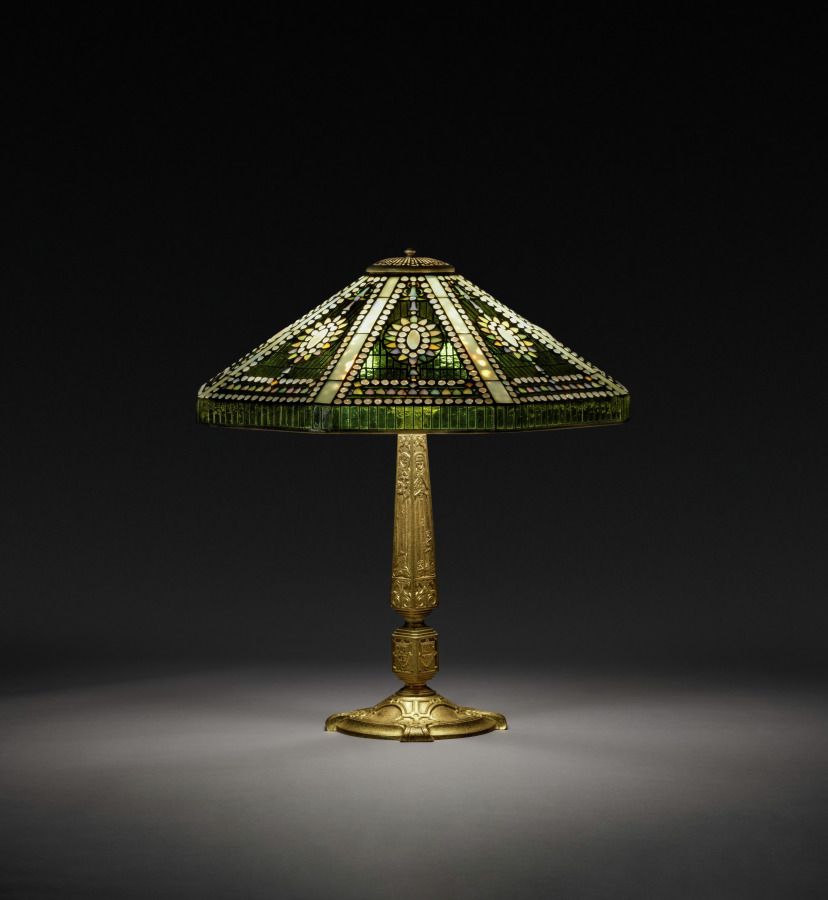
Geometric Integrity: The Empire Table Lamp as Architectural Prototype
The Empire Table Lamp, when subjected to the rigorous lens of urban silhouette research, reveals itself not merely as a functional object but as a tectonic manifesto. Its geometric integrity—a disciplined interplay of verticality, mass, and void—directly informs the 2026 executive silhouette for Addison Fashion. This analysis deconstructs the lamp’s structural poetics, drawing from the internal DNA of Pilgrim Sudhana and the Harpist, to propose a sartorial language rooted in minimalist luxury and urban materiality.
Structural Poetics: The Vertical Axis and the Contained Void
The Empire Table Lamp’s defining geometry is its vertical axis, a spine of restrained power. The base, typically a stepped or fluted plinth, anchors the form with a grounded, architectural weight. This is not a fragile pedestal but a deliberate foundation, echoing the “内敛的宇宙” (inwardly restrained universe) observed in Pilgrim Sudhana. The lamp’s shaft rises as a continuous, unadorned column—a gesture of pure verticality that rejects ornamentation in favor of structural clarity. This column is the garment’s backbone: a tailored, elongated torso that elongates the figure, creating a silhouette of quiet authority.
The lampshade, often a truncated cone or a soft drum, introduces the critical element of the contained void. It is not a solid cap but a volume that captures and diffuses light. This void is the Harpist’s dynamic equilibrium translated into three dimensions: the shade’s gentle flare and the negative space beneath it create a visual tension between containment and release. For the 2026 executive silhouette, this translates into a jacket or coat with a sculpted, slightly extended shoulder line that frames the torso, while the fabric falls in clean, uninterrupted panels. The “void” is the negative space between the garment and the body—a deliberate, breathable architecture that suggests both protection and poise.
Urban Materiality: From Ceramic Glaze to Textile Surface
The lamp’s materiality is a study in urban poetics. Its surface—whether polished brass, matte ceramic, or brushed steel—possesses a tactile gravity. The Ivory color palette, drawn from the internal DNA’s reference to Pilgrim Sudhana’s “象牙白” (ivory white), is not a passive white but a warm, mineral tone that absorbs and reflects light with a soft, internal glow. This is the “内发光” (inner glow) principle: the material does not shout; it emanates. For the executive wardrobe, this translates into fabrics that possess a similar depth: a double-faced cashmere with a subtle, unbrushed surface; a wool-cashmere blend with a tight, almost ceramic weave; or a silk-wool gabardine that holds a clean, architectural crease.
The lamp’s base, often in Onyx or Slate tones, provides a counterpoint of density. This duality—the luminous ivory above, the grounding dark below—mirrors the Harpist’s binary palette of “赭红与黝黑” (ochre and pitch black). In the 2026 silhouette, this manifests as a tonal block: a jacket in ivory cashmere paired with trousers in deep slate wool, or a coat in sand-toned felt with onyx leather trim. The contrast is not decorative but structural, defining the garment’s vertical hierarchy and anchoring the silhouette in the urban landscape.
The 2026 Executive Silhouette: A Synthesis of Discipline and Flow
The Empire Table Lamp’s geometry dictates a silhouette that is both disciplined and fluid. The tailored category is essential: the garment must follow the body’s architecture without clinging. The jacket’s shoulder is sharp but not exaggerated, the sleeve set with a precise, clean armhole that allows for movement without distortion. The length is elongated—a coat that grazes the knee or a jacket that ends at the hip, creating a continuous line from shoulder to hem. This is the lamp’s vertical axis made wearable.
The fluid element emerges in the fabric’s drape. The lamp’s shade, with its soft, diffused light, inspires a skirt or trouser that falls in a single, unbroken column. A wide-leg trouser in a heavy crepe, or a midi skirt in a matte silk, moves with the body but retains its shape, echoing the lamp’s contained void. The oversized category is rejected here; the 2026 executive silhouette is not about volume but about precision. Every seam, every panel, every fold is a deliberate act of structural poetics.
Color as Structural Element
The Ivory color is not a background; it is a protagonist. It is the lamp’s glow, the Pilgrim Sudhana’s inner light, the Harpist’s ochre figure against the black void. In the wardrobe, ivory becomes the primary tone for the core garment—a coat, a jacket, a dress—while accents of Slate, Onyx, or Silver appear in accessories, linings, or secondary layers. This is not a neutral palette but a chromatic structure: the ivory absorbs the city’s grey light, the darker tones ground the form, and the silver (a nod to the lamp’s metallic base) introduces a reflective, urban edge.
Conclusion: The Lamp as Urban Totem
The Empire Table Lamp, in its geometric purity, offers a blueprint for the 2026 executive silhouette. It is a study in structural poetics: the vertical axis, the contained void, the material depth. It is a meditation on urban materiality: the interplay of light and surface, the dialogue between ivory and onyx, the discipline of form. For Addison Fashion, this lamp is not a decorative object but a philosophical tool. It teaches that the most powerful silhouette is the one that speaks through silence, that commands through restraint, that illuminates through its own inner glow. The 2026 executive is not a figure of excess but of essence—a walking architecture of minimalist luxury, grounded in the city’s concrete and glass, yet lifted by the lamp’s quiet, enduring light.