Tailored
Onyx
Urban Form: Carving from an Overmantel
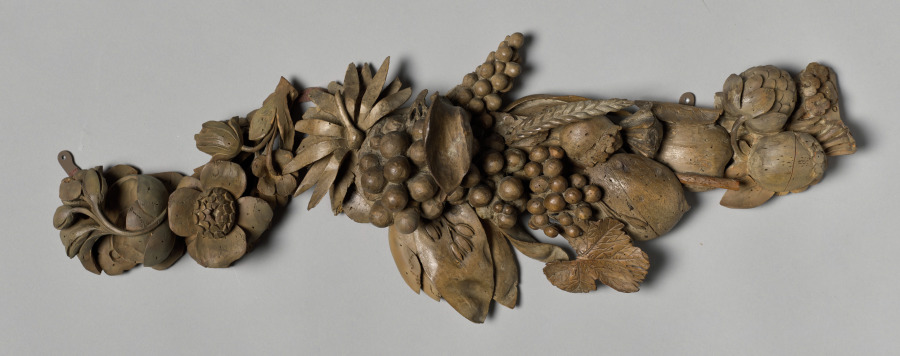
Technical Analysis: The Overmantel as a Structural Blueprint for the 2026 Executive Silhouette
The subject, *Carving from an Overmantel*, demands a rigorous deconstruction of form as a carrier of philosophical weight. The DNA source—a dialectic between Jacques-Louis David’s *The Death of Socrates* and a Shang-Zhou dynasty *fang you* (方卣) ritual vessel—provides a dual-axis framework for the 2026 NYC executive wardrobe. David’s painting offers a study in rational, crystalline geometry; the bronze vessel, a study in cyclical, volumetric containment. The synthesis is a tailored silhouette that is both a monument to logic and a vessel for transformation. The chosen color, Onyx, anchors this analysis in the absolute, absorbing light to create a surface of pure, unyielding form.I. The Davidian Rationale: Geometry as Power
David’s *Socrates* is a masterclass in controlled tension. The composition is a series of intersecting triangles: Socrates’s outstretched arm, the vertical axis of his seated torso, and the horizontal plane of the bed. This is not chaos; it is a theorem. For the 2026 executive, this translates into a tailored jacket with a defined, almost architectural shoulder. The shoulder line must be sharp, not padded into softness, but cut to create a clean, triangular apex that visually anchors the torso. The lapel is a critical vector—a wide, peaked lapel that mirrors the angularity of Socrates’s gesture, pointing not to the heavens but to the authority of the wearer. The fabric must be a high-density wool or a wool-silk blend with a matte finish. David’s use of chiaroscuro—the dramatic light falling on the philosopher’s chest—demands a fabric that can hold a crease and reflect light with precision, not diffusion. Onyx, as a color, is the perfect substrate. It is not black; it is a deep, geological black that absorbs ambient light, creating a silhouette that is both present and impenetrable. The trouser should be a straight, high-waisted cut, falling with a single, unbroken line to the shoe. No break, no pooling. This is the line of the philosopher’s leg, extended in a final, logical statement.II. The Fang You Principle: Volume as Ritual
The *fang you* is a container of cyclical power. Its form is not about the body’s surface but about the space it encloses. The vessel’s belly, adorned with *taotie* and *kui* dragon motifs, is a microcosm of the universe—a volume that holds transformation. For the executive wardrobe, this principle manifests in the interior architecture of the garment. The jacket must not merely drape; it must contain. This requires a structured canvas interior, with a floating chest piece that creates a subtle, sculpted volume around the ribcage. The silhouette is not flat; it is a three-dimensional form that suggests a hidden interiority, a space for strategy and ritual. The sleeve head, in this context, becomes a point of ritual articulation. It should be set with a slight, deliberate fullness at the cap, echoing the swelling belly of the bronze vessel. This is not a soft, Italian shoulder; it is a structured, almost ceremonial sleeve that implies the weight of the arm’s gesture. The closure is equally critical. A single, hidden button at the waist—a *feng* (封) or seal—mirrors the vessel’s lid. It is a point of closure that is both functional and symbolic, marking the transition from the public exterior to the private interior.III. The Synthesis: The 2026 Executive Silhouette
The 2026 NYC executive wardrobe, as derived from this overmantel carving, is a dialectic between the rational and the ritualistic. The outer form is Davidian: clean, geometric, and authoritative. The inner structure is Fang You: volumetric, containing, and transformative. The result is a silhouette that is tailored but not tight, powerful but not aggressive. The key garment is a single-breasted, three-roll-two jacket in Onyx wool. The lapel is a wide, notched peak, cut with a sharp, 90-degree gorge. The shoulder is a natural, structured shoulder with a slight roping at the sleeve head, creating a clean, architectural line. The waist is suppressed, but not cinched, creating a subtle, inverted triangle that echoes the vessel’s form. The trouser is a high-waisted, straight-leg cut with a single, forward-facing pleat. This pleat is not decorative; it is a functional element that allows for volume at the hip while maintaining a clean line from knee to hem. The fabric weight should be 280-320 grams per meter, with a tight, worsted weave that resists wrinkling and holds a crease. The color, Onyx, is not a neutral; it is a statement of absolute presence. It is the color of the void from which Socrates’s logic emerges and the color of the bronze patina after centuries of ritual use. It demands a specific approach to styling: a pure white, high-collared shirt (a modern *chiton*) and a silver tie bar—a single, linear element that references the philosopher’s cup. No pattern, no texture beyond the fabric’s own weave. The shoe is a whole-cut Oxford in polished calfskin, with a chiseled toe that mirrors the vessel’s angular base.IV. Color and Form: The Onyx Imperative
Onyx, as a color, operates on two levels. First, it is a light-absorbing surface, creating a silhouette that is defined by its edges, not its interior. This is the Davidian principle: the form is revealed by the light that falls on its boundaries. Second, it is a depth-creating field, suggesting the interior volume of the *fang you*. The color does not flatten; it deepens, creating a visual weight that anchors the wearer in space. For the 2026 executive, this is critical. The wardrobe must project authority without aggression, presence without spectacle. Onyx achieves this by being both absolute and ambiguous. The form, therefore, must be rigorously edited. Every line, every seam, every button is a decision. The jacket’s length should fall to the first knuckle of the thumb, a proportion that balances the upper and lower body. The vent is a single, center vent, creating a clean, uninterrupted line from the back of the neck to the hem. The pocket is a straight, welted pocket, flush with the fabric. No flaps, no ornamentation. This is the aesthetic of the *Socrates* painting: every element is subordinated to the central thesis.V. Conclusion: The Garment as a Philosophical Object
The *Carving from an Overmantel* is not a decorative motif; it is a structural philosophy. The 2026 executive wardrobe, as derived from this analysis, is a garment that does not merely clothe the body but contains the mind. It is a tailored form that is both a monument to rational thought and a vessel for cyclical transformation. The Onyx color is the ground, the absolute. The tailored silhouette is the figure, the decision. The wearer is not a passive participant; they are the ritual actor, the philosopher, the vessel. This is the Addison Fashion NYC vision for the urban executive: a wardrobe that is not worn, but inhabited.
Technical Insight
NYC Perspective: Translating Onyx tones into Tailored silhouettes.