Fluid
Onyx
Urban Form: Estérel Village
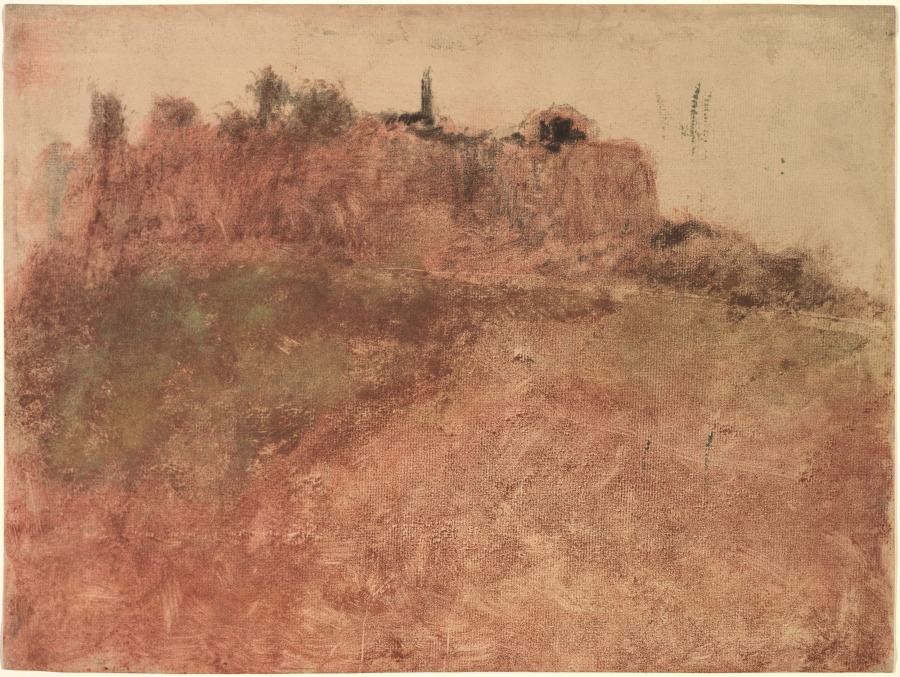
Technical Deconstruction of Form: The Dialectic of Tension and Absence
The Estérel Village collection for Addison Fashion NYC emerges from a profound collision of two aesthetic philosophies—Western kinetic violence and Eastern ontological void. This is not a synthesis but a deliberate, unresolved tension that manifests in every seam, drape, and silhouette. The urban executive wardrobe for 2026 demands a language that speaks to both the immediacy of the hunt and the patience of the bloom. Here, form becomes a vessel for competing truths.Western Kinetic Violence: The Architecture of the Hunt
The Fluid category is the operative framework. It rejects the rigid, armor-like construction of traditional power dressing in favor of a dynamic, almost predatory flow. The silhouette is not static; it is a moment of arrested motion. Consider the double-faced wool coat: its shoulder line is sharp, almost architectural, referencing the tension of a drawn bowstring. Yet the fabric drapes away from the body in a continuous, unbroken cascade—a visual echo of the hunter’s arrow in flight. The cut is engineered to create a negative space between the garment and the wearer, a pocket of air that suggests the imminent release of energy. The pant leg, a wide, floor-sweeping cut, is the critical element. It is not merely wide; it is weighted. The hem is finished with a subtle, internal chain—a detail borrowed from equestrian tailoring—that ensures the fabric falls with a deliberate, heavy grace. This is the “dust of the hunt” rendered in textile: the pant leg captures the momentum of a gallop, the fabric pooling at the ankle like a cloud of unsettled earth. The waist is high, cinched with a leather belt that is both functional and symbolic—a literal binding of the torso, a reminder of the hunter’s focus. The overall effect is one of controlled chaos: the body is the hunter, the garment is the arrow, and the space between is the trajectory.Eastern Ontological Void: The Architecture of Absence
The Onyx color palette is not a choice; it is a necessity. Black, in this context, is not the absence of color but the presence of infinite depth. It is the color of the void, the unmarked space where the flower does not bloom. The fabric is a matte, high-density wool-cashmere blend with a subtle, almost imperceptible slub—a texture that catches light only at certain angles, like the patina of an ancient wooden plaque. This is the “grey-brown of near-silence” translated into a modern, urban material. The silhouette’s second layer is the kimono-inspired jacket, cut with a dropped shoulder and a fluid, wrap-front closure. There are no buttons, no zippers—only a single, internal tie that allows the jacket to fall open or closed at will. This is the “absence of the hunt” made manifest. The jacket does not constrain; it invites. The sleeves are wide, almost bell-shaped, and the hem falls asymmetrically, grazing the hip on one side and the thigh on the other. This asymmetry is critical: it creates a visual dissonance, a reminder that perfection is a Western construct. The jacket is a “waiting” garment, designed to be worn in moments of stillness, in the space between meetings, in the quiet of the office after hours.The Dialectic of the Seam: Where Violence Meets Void
The most technically significant element is the seam construction. The coat and jacket are assembled using a hybrid technique: the primary seams are flat-felled, a method borrowed from workwear and equestrian gear, which creates a strong, visible ridge. This is the “scar of the hunt”—a permanent mark of tension and stress. However, the interior seams are left raw, unfinished, and deliberately frayed. This is the “fray of the void”—a subtle, almost invisible decay that speaks to the impermanence of all things. The garment is simultaneously a weapon and a relic. The pant’s construction mirrors this duality. The front seam is pressed sharp, creating a crease that cuts through the fabric like an arrow’s path. The back seam, however, is left soft, almost unstructured, allowing the fabric to drape in a gentle, organic curve. This is the “curve of the flower”—a reminder that even in the most aggressive pursuit, there is a space for grace.Color as Narrative: The Onyx Spectrum
The Onyx palette is not monolithic. It is a spectrum of blacks: Jet Black for the coat, a deep, absorbing black that swallows light; Charcoal Black for the jacket, a slightly lighter, warmer black that reflects a faint, blue undertone; and Pitch Black for the pant, a matte, almost dusty black that mimics the texture of aged stone. This layering of blacks creates a visual depth that is both sophisticated and unsettling. The eye cannot settle on a single point; it is forced to move, to search, to wait. This is the “waiting for the flower” rendered in color.The 2026 NYC Executive Wardrobe: A Synthesis of Contradictions
The Estérel Village collection is not a uniform. It is a system of oppositions. The executive who wears this wardrobe is not seeking to dominate or to disappear. They are seeking to exist in the tension between the two. The coat is for the boardroom, where the hunt for power is explicit. The jacket is for the gallery opening, where the hunt for meaning is implicit. The pant is for the commute, the walk, the moment between—the “dust of the hunt” and the “patina of the void” coexisting in a single stride. The final detail is the accessory: a single, thin leather cord worn as a necklace, with a small, polished piece of onyx at its center. It is a talisman, a reminder of the arrow and the flower. It is the only piece of jewelry in the collection. It is not decorative; it is functional. It is the “point of convergence”—the moment when the hunter’s arrow and the flower’s bloom become one. The wardrobe is complete. The hunt is eternal. The flower never blooms. The executive is ready.
Technical Insight
NYC Perspective: Translating Onyx tones into Fluid silhouettes.