Urban Form: Saint Peter of Alcántara
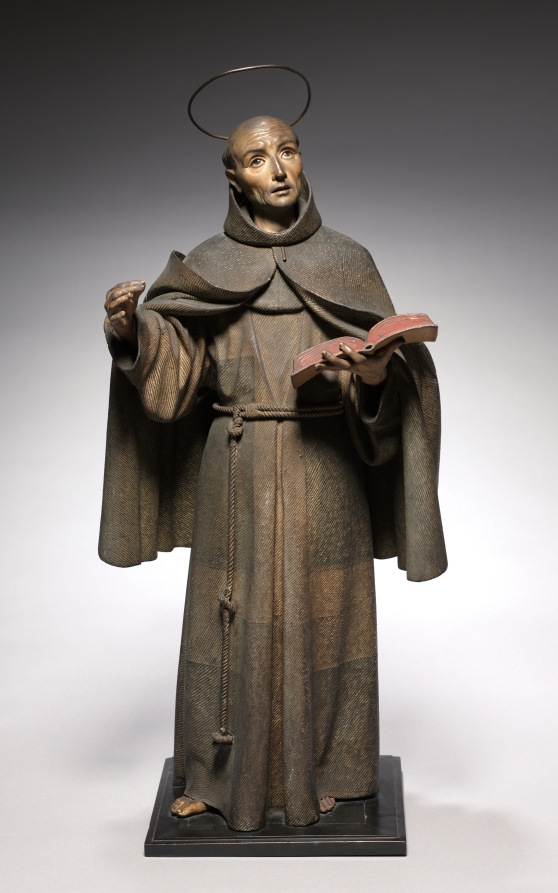
Executive Summary: The Dialectics of Material Restraint
This Urban Silhouette Research for Addison Fashion NYC deconstructs the aesthetic DNA of Saint Peter of Alcántara through a comparative analysis of two ostensibly disparate works: the Western religious tableau The Temptation of Saint Anthony and the Chinese bird-and-flower classic Loquat Branch. The synthesis reveals a unified proposition for the 2026 executive wardrobe: minimalism as a vessel for spiritual amplitude. The research identifies a core tension—between conflict-driven symbolism and harmonious presence—and resolves it into a design language of controlled volume, muted chromatic tension, and structural clarity. The resulting silhouette is not a compromise but a dialectical advancement: a wardrobe that operates as both a shield against urban entropy and a mirror for interior stillness.
I. Form: The Architecture of Restraint and Expansion
A. The Temptation of Distortion: Rejecting Baroque Excess
In The Temptation of Saint Anthony, form is weaponized. The grotesque, fused creatures—part animal, part artifact—embody a morphological aggression that disrupts the viewer’s equilibrium. The silhouette is dense, layered, and asymmetrical, with sharp diagonals and compressed spatial relationships. This is a form that denies comfort in favor of spiritual trial. For the 2026 executive, this translates into a cautionary archetype: the over-structured, hyper-tailored suit that constricts rather than liberates. The research rejects this model. Instead, we extract its lesson—that form can carry psychological weight—and invert it. The Addison silhouette must not impose conflict but contain it.
B. The Loquat’s Poise: Minimalist Volume as Presence
Contrast this with the Loquat Branch. Here, form is economy of gesture. The branch curves with organic inevitability; the leaves are spaced with a rhythm that mimics breath. The silhouette is not absent but expansive through restraint. The negative space—the “void” of the unpainted silk—is as active as the painted fruit. This is the foundational principle for the 2026 silhouette: volume as a function of negative space. The executive’s jacket should not cling but hover, allowing the body to exist within a defined but uncluttered envelope. Shoulders are soft but defined, not padded into aggression. The waist is suggested, not cinched. The hem falls with a gravitational calm, neither trailing nor truncated. This is the Minimalist category in its purest form: a silhouette that achieves presence through absence.
C. Synthesis: The Slate Silhouette
The technical resolution is a three-dimensional drape that borrows from the loquat’s branch structure. The jacket’s shoulder seam is set slightly inward, creating a gentle slope that echoes the branch’s natural arc. The sleeve is cut with a slight bell from elbow to cuff, referencing the leaf’s outward curve without sacrificing precision. The trouser is a straight, wide leg with a single, deliberate crease—a nod to the fruit’s axial symmetry. The overall form is monolithic yet porous: a block of slate that breathes. This is not the armor of the saint’s temptation but the shell of contemplation.
II. Color: The Chromatic Field of Contemplation
A. The Temptation Palette: Darkness as Conflict
The color field of The Temptation of Saint Anthony is saturated with shadow. Deep umbers, burnt siennas, and blackened greens create a claustrophobic atmosphere. Light is fractured, emerging only in sharp, theatrical highlights. This palette is emotionally coercive, forcing the viewer into a state of unease. For the executive wardrobe, this translates into the Onyx category—a valid but extreme option for power dressing. However, the research finds Onyx too aggressively declarative for the 2026 urban professional, who requires a color that absorbs rather than reflects the city’s noise.
B. The Loquat Palette: Light as Atmosphere
The Loquat Branch operates in a high-key, restrained chromatic register. The fruit is a muted gold-amber, the leaves a soft, grayed green, and the background is an unbleached silk white. There is no black, no pure white—only modulated tones that exist in a state of luminous equilibrium. This is the Ivory and Sand categories: colors that do not shout but resonate. They are the chromatic equivalent of the loquat’s stillness—a field that allows the wearer’s presence to emerge without competition.
C. The Executive Resolution: Slate as the Mediating Hue
The research selects Slate as the primary color for the 2026 collection. Slate is not a neutral; it is a chromatic compromise between the saint’s darkness and the loquat’s light. It carries the gravitas of Onyx but is tempered with the softness of Ivory. In its blue-gray undertones, it evokes the urban sky at dusk—a moment of transition between activity and reflection. The technical application is precise: a matte, brushed wool for the jacket, absorbing ambient light rather than reflecting it. The trousers are in a slightly lighter slate, creating a subtle tonal shift that mimics the loquat’s leaf-to-fruit gradient. Accents—a single pocket square, a silk lining—are in muted amber, a direct citation of the loquat’s fruit. This is not decoration but chromatic punctuation.
III. The 2026 Executive Wardrobe: A Technical Blueprint
A. The Jacket: The Loquat’s Branch
Structure: Unstructured shoulder, single-button closure, notch lapel with a reduced gorge (lower than traditional). The back is cut with a center vent that opens only slightly, preserving the monolithic front. Fabric: 380g/m² brushed wool in Slate. Lining: Silk in muted amber, visible only at the cuff when the sleeve is turned. Pockets: Two patch pockets, set low and wide, referencing the loquat branch’s horizontal leaf placement.
B. The Trouser: The Fruit’s Axis
Silhouette: Wide leg, straight from hip to hem. A single, sharp crease runs from waist to ankle, mimicking the fruit’s central axis. Rise: High, sitting at the natural waist. Hem: Unfinished, allowing the wearer to adjust length—a nod to the loquat’s organic, un-tailored form. Fabric: 280g/m² wool-cashmere blend in light Slate.
C. The Layering Piece: The Void
Item: A long, open-front vest in the same Slate wool, cut to fall just below the hip. Function: It creates the negative space of the loquat’s background—a void that frames the body. Worn over the jacket, it adds depth without bulk. Detail: A single, hidden interior pocket, accessible only from the left side—a private space for the executive’s contemplative tools (a pen, a notebook).
IV. Conclusion: The Wardrobe as Spiritual Vessel
The 2026 Urban Silhouette for Addison Fashion is not a trend but a philosophical instrument. It rejects the saint’s temptation of aggressive form and the loquat’s risk of passive stillness, instead forging a third path: active restraint. The Slate palette absorbs the city’s chaos; the Minimalist silhouette creates a portable sanctuary. This is a wardrobe for the executive who understands that power is not in volume but in presence, and that the most profound statement is often made in silence. The Saint Peter of Alcántara DNA, distilled through the dialectic of East and West, yields a garment that is both armor and altar—a technical achievement in form and color that serves the soul’s need for both protection and openness.