Minimalist
Ivory
Urban Form: Carved Bowl
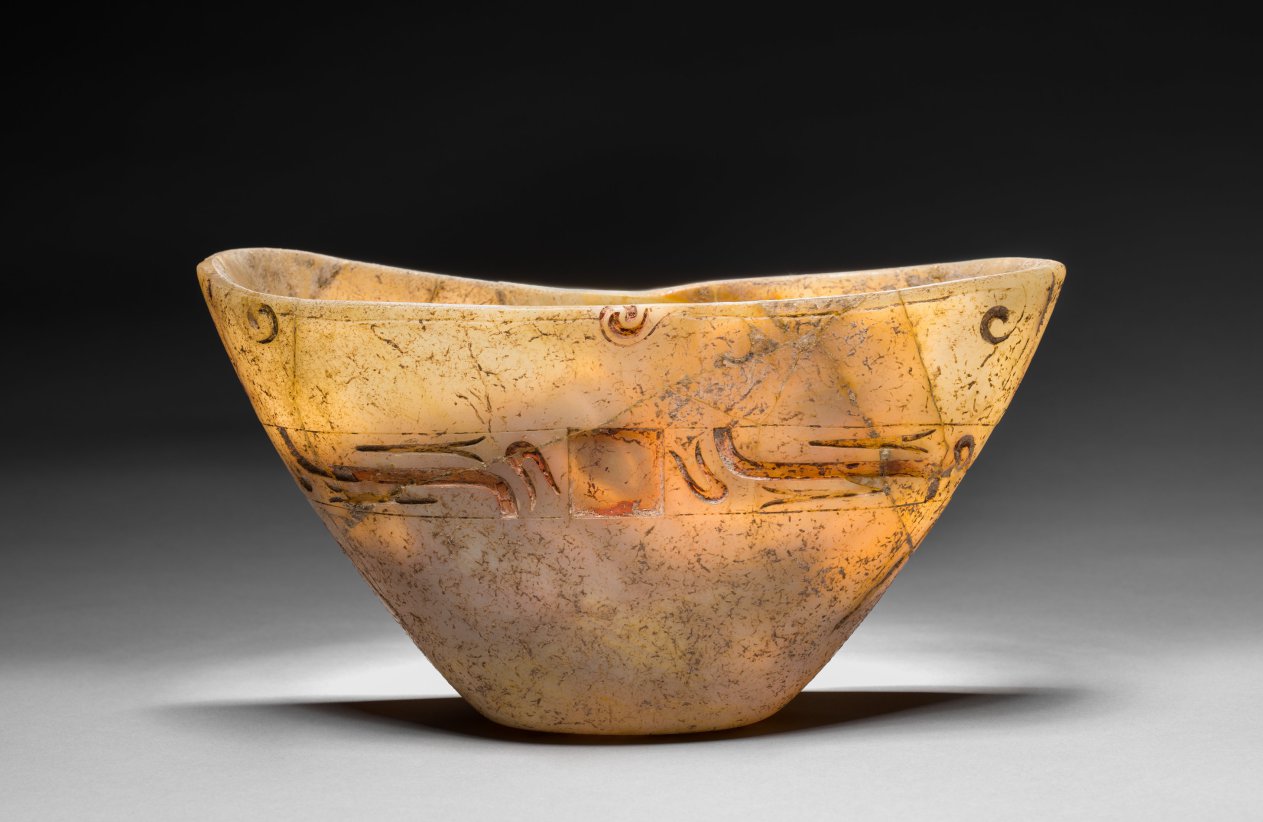
Structural Poetics: The Carved Bowl as an Architectural Garment
The Carved Bowl, as an object of analysis, presents a paradox of containment and release. Its geometric integrity is not found in a perfect hemisphere or a rigid cylindrical form, but in the tension between its external mass and its internal void. For the 2026 executive silhouette, this translates into a garment that is both a shield and a sanctuary. The bowl’s exterior is a continuous, unbroken surface—a single, carved volume that rejects superfluous ornament. Its interior, however, is a negative space, a hollow that holds potential. This duality is the foundational principle for a new urban uniform: a coat or jacket that presents a clean, monolithic front to the city, while its interior construction—the lining, the hidden pockets, the engineered seams—becomes a private architecture for the wearer. The reference to the “Udumbara Flowers” temple plaque is critical here. The plaque’s wood grain is not a decorative afterthought; it is the material’s own history, a record of growth and time. In the Carved Bowl, the “grain” is the directional flow of the cut, the way the tool has followed the curve of the form. For the executive silhouette, this dictates a fabric choice that carries its own narrative of construction. Consider a double-faced wool, where the weave is tight and the surface is matte, almost like a honed stone. The cut must be precise, with seams that are not hidden but articulated as lines of force—like the chisel marks on the plaque. The garment’s shoulder line, for instance, should not be a padded, artificial shelf, but a clean, architectural cantilever that emerges from the body’s own structure, as if carved from a single block of material.Geometric Integrity: The Void as Volume
The Carved Bowl’s most radical geometric statement is its interior. The “Jar” painting from the brief—with its suggestion of an unseen, contained presence—reinforces this. The bowl is not a vessel for holding; it *is* the act of holding. Its volume is defined by the space it encloses, not the material that encloses it. In the 2026 executive silhouette, this translates to a new understanding of drape and fit. The garment should not cling to the body, nor should it hang away from it in a shapeless manner. Instead, it should create a defined, controlled void between the fabric and the wearer. This is achieved through engineered tailoring: a coat that is cut with a subtle, internal structure—a hidden canvas, a floating panel—that creates a pocket of air around the torso. This void is not a sign of poor fit; it is a deliberate architectural feature, a space for the wearer’s own presence to exist without being compressed. The color Ivory is chosen for its ability to articulate this geometry. It is not a warm, creamy white, but a cool, mineral tone—the color of unglazed porcelain or freshly cut alabaster. This shade absorbs and reflects light in a way that emphasizes the purity of the form. On a structured coat, Ivory will read as a solid, monolithic block. In the shadows of the internal void, it will become a soft, almost luminous negative space. This is the urban materiality of the piece: a color that is both ancient and hyper-modern, referencing the carved stone of a temple and the matte finish of a high-end electronic device.Urban Materiality: The Texture of Time
The brief’s internal DNA speaks of “capturing intangible time” through tangible matter. The Carved Bowl achieves this through the physical evidence of its making—the tool marks, the grain, the patina. For the executive silhouette, this demands a fabric that is not a passive surface but an active participant in the garment’s life. We reject the sterile, synthetic perfection of fast fashion. Instead, we propose a material that will age with grace: a heavy, felted wool with a slight luster, or a densely woven cotton-silk blend that develops a subtle sheen at points of friction. The garment’s seams should be left raw in key areas, not as a sign of incompletion, but as a deliberate exposure of the construction process—a nod to the chisel marks on the plaque. The “Udumbara” concept of a flower that blooms only once in three thousand years is translated into the garment’s silhouette as a single, decisive gesture. There is no room for redundant pleats, extraneous pockets, or decorative zippers. Every line must serve a structural purpose. The collar, for example, should be a single, folded plane that rises from the body like the lip of the bowl. The sleeve head should be set with a clean, unbroken curve, avoiding the puffiness of traditional tailoring. The overall shape is one of controlled tension: a garment that appears to be holding its breath, waiting for the wearer to animate it.Conclusion: The Garment as a Vessel for the Present
The Carved Bowl, in its fusion of the temple plaque’s “frozen moment” and the painting’s “contained void,” offers a definitive blueprint for the 2026 executive silhouette. It is a silhouette of restraint, of negative space, of material honesty. The garment is not a decoration of the body; it is a habitable sculpture. The wearer does not simply put on a coat; they step into a defined volume, a carved space that protects and reveals simultaneously. The color Ivory, the Minimalist category, and the structural poetics of the bowl converge to create a uniform for the urban executive who understands that true power lies not in accumulation, but in the mastery of emptiness. The garment is the vessel; the wearer is the content. The flower has already bloomed.
Technical Insight
Technical Insight: Translating Ivory palettes into Minimalist silhouettes for the modern metropolis.