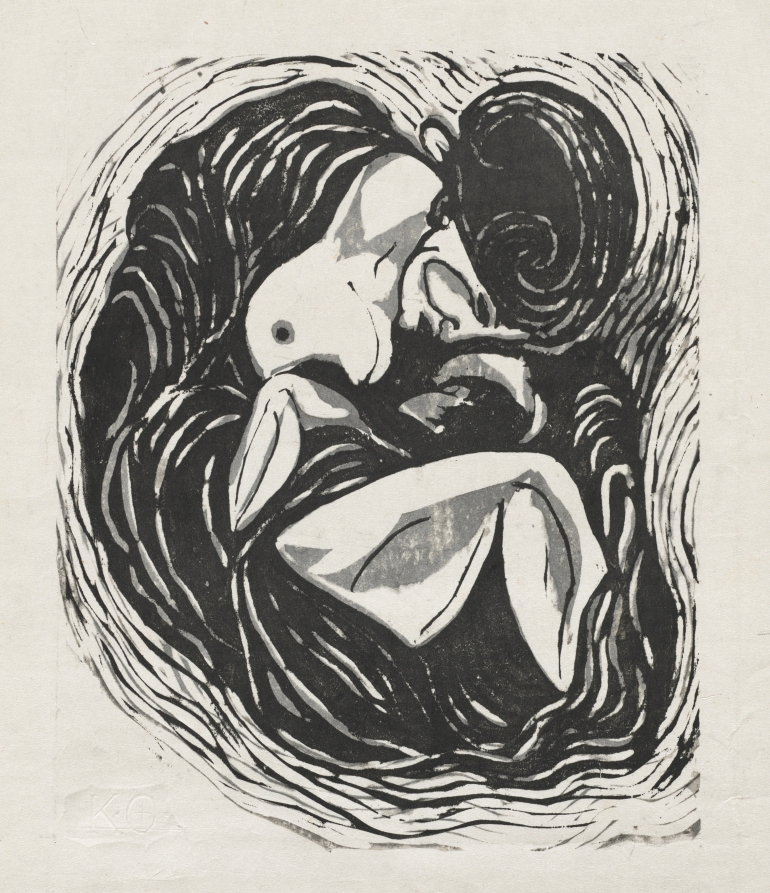
Urban Form: Mother and Child
Structural Poetics: The Architectural Dialogue Between Lacquer and Oil
The urban silhouette for 2026, as interpreted through the lens of Addison Fashion, demands a rigorous synthesis of material history and contemporary spatial logic. The subject of Mother and Child—here abstracted into a study of containment, protection, and transmission—finds its definitive expression in the convergence of two seemingly disparate artifacts: the Ming dynasty carved lacquer box (明代剔红携琴访友图长方盒) and Caravaggio’s The Musicians. This is not a mere stylistic juxtaposition but a technical analysis of how geometric integrity, when stripped of ornament, can define the executive silhouette for the modern urban woman.
1. The Lacquer Box as a Paradigm of Enclosed Geometry
The Ming lacquer box presents a rectilinear volume—a precise, orthogonal form that encloses narrative within its rigid boundaries. Its geometry is that of a minimalist container: a rectangular prism with sharp, unyielding edges, softened only by the tactile accumulation of cinnabar layers. The carved surface, depicting a scholar carrying a qin to visit a friend, is not decoration but a structural bas-relief that respects the box’s architectural integrity. Each incision—the strata of mountains, the folds of robes, the curve of the instrument—is a subtraction from the whole, creating a topography that invites touch without compromising the object’s essential cubic discipline.
For the 2026 executive silhouette, this translates into a jacket or coat defined by clean, unbroken lines—a shell that encloses the body as the lacquer encloses the scroll. The shoulder line must be architecturally precise, not padded but structured through fabric weight and seam engineering. The silhouette is trapezoidal or rectangular, avoiding waist suppression to emphasize the volume as a protective carapace. The “carving” occurs not in fabric but in the negative space between the garment and the body: a controlled gap that allows for movement while maintaining the outer geometry. This is the urban equivalent of the lacquer’s “touch-visual” philosophy—a silhouette that demands to be seen from a distance but understood only upon closer inspection of its material depth.
2. Caravaggio’s Theatrical Volume: The Body as Architectural Element
Caravaggio’s The Musicians offers a counterpoint: the human form as a sculptural mass within a compressed, stage-like space. The four youths are arranged in a frieze-like composition, their bodies overlapping to create a single, undulating volume. The chiaroscuro—the dramatic contrast of light and shadow—carves the figures out of darkness, giving them a three-dimensional weight that is both sensual and monumental. The fabric of their garments is rendered with oil-thick plasticity: the folds of sleeves, the drape of a collar, the sheen of a velvet doublet—all are treated as architectural elements that define the body’s geometry.
In the 2026 executive silhouette, this translates into soft, volumetric draping that respects the body’s natural structure without constricting it. The mother-and-child dynamic becomes a study in interlocking forms: a high-necked, structured top (the “lacquer box”) paired with a flowing, asymmetrical skirt (the “oil painting”). The fabric—perhaps a heavy matte silk or a dense wool crepe—must have a paint-like weight that holds its shape when gathered or pleated. The color palette, anchored in Ivory, references the raw canvas of Caravaggio’s underlayers and the unpainted lacquer ground of the Ming box. This is not a neutral beige but a cool, bone-white that absorbs light rather than reflecting it, creating a matte, monolithic presence on the urban street.
3. The Music of Structure: Narrative as Geometric Tension
Both artifacts use music as a narrative device that organizes space. The lacquer box’s “carrying the qin” motif implies a linear journey—a progression from one point to another, mirrored in the silhouette’s vertical elongation. The garment must have a continuous, unbroken line from shoulder to hem, perhaps achieved through a single-seam construction or a hidden closure that eliminates visual interruption. The qin itself—a long, narrow instrument—becomes a proportional reference for the silhouette’s width-to-height ratio: the jacket should be narrow in the torso, with sleeves that fall straight and close to the body, like the strings of a zither.
Caravaggio’s musicians, by contrast, create a static, circular composition—a moment of suspended harmony. This translates into radial construction in the garment: a circular cut at the neckline, a gathered waist that fans outward, or a mandarin collar that frames the face like a lacquer rim. The “music” here is the tension between containment and release: the structured upper body (the “box”) gives way to a fluid lower half (the “oil”), allowing the wearer to move through the city with the controlled grace of a musician tuning an instrument.
4. Urban Materiality: Ivory as a Tactile and Visual Statement
The choice of Ivory is not arbitrary. It is the color of raw silk, of unbleached linen, of bone—materials that carry the memory of the body. In the context of the mother-and-child subject, Ivory represents the primal, unadorned state before culture imposes its layers. It is the ground upon which the lacquer is built and the canvas upon which the oil is spread. For the 2026 executive silhouette, this color demands absolute purity of line: no prints, no embroidery, no extraneous hardware. The only texture comes from the fabric’s weave—a herringbone twill, a ribbed matelassé, or a double-faced wool that creates a subtle, structural shadow.
The urban materiality of this silhouette is defined by its resistance to the elements. Like the lacquer box, which withstands centuries of handling, the garment must be engineered for durability: reinforced seams, water-resistant finishes, and a weight that anchors the body against wind. The geometric integrity is maintained through internal structuring—a hidden corset of boning or a bonded interlining that prevents the fabric from collapsing. This is not a garment for the passive observer; it is a tool for navigation, a second skin that mediates between the wearer and the city’s hard surfaces.
5. The Final Silhouette: A Synthesis of East and West
The definitive 2026 executive silhouette, as derived from this analysis, is a minimalist, architectural ensemble that balances the rectilinear containment of the Ming lacquer with the sculptural volume of Caravaggio’s figures. It consists of:
- A long, structured jacket with a straight, unbroken shoulder and a slight A-line flare from the waist, referencing the lacquer box’s trapezoidal form.
- A high-necked, sleeveless shell in Ivory double-faced wool, with a circular cut at the neckline that echoes the Musicians’ central figure.
- A narrow, floor-length skirt with a single side slit, allowing for movement while maintaining the vertical line of the qin.
- All closures are invisible—magnetic snaps or hidden hooks—to preserve the monolithic surface.
This silhouette is not a costume but a system of proportions. It is designed for the woman who moves through the city as a living sculpture, her form a dialogue between the touch of lacquer and the gaze of oil. The mother-and-child dynamic is encoded in the protective outer shell and the vulnerable, layered interior—a relationship of containment and nurture that is both ancient and urgently modern.