Urban Form: Niagara Falls
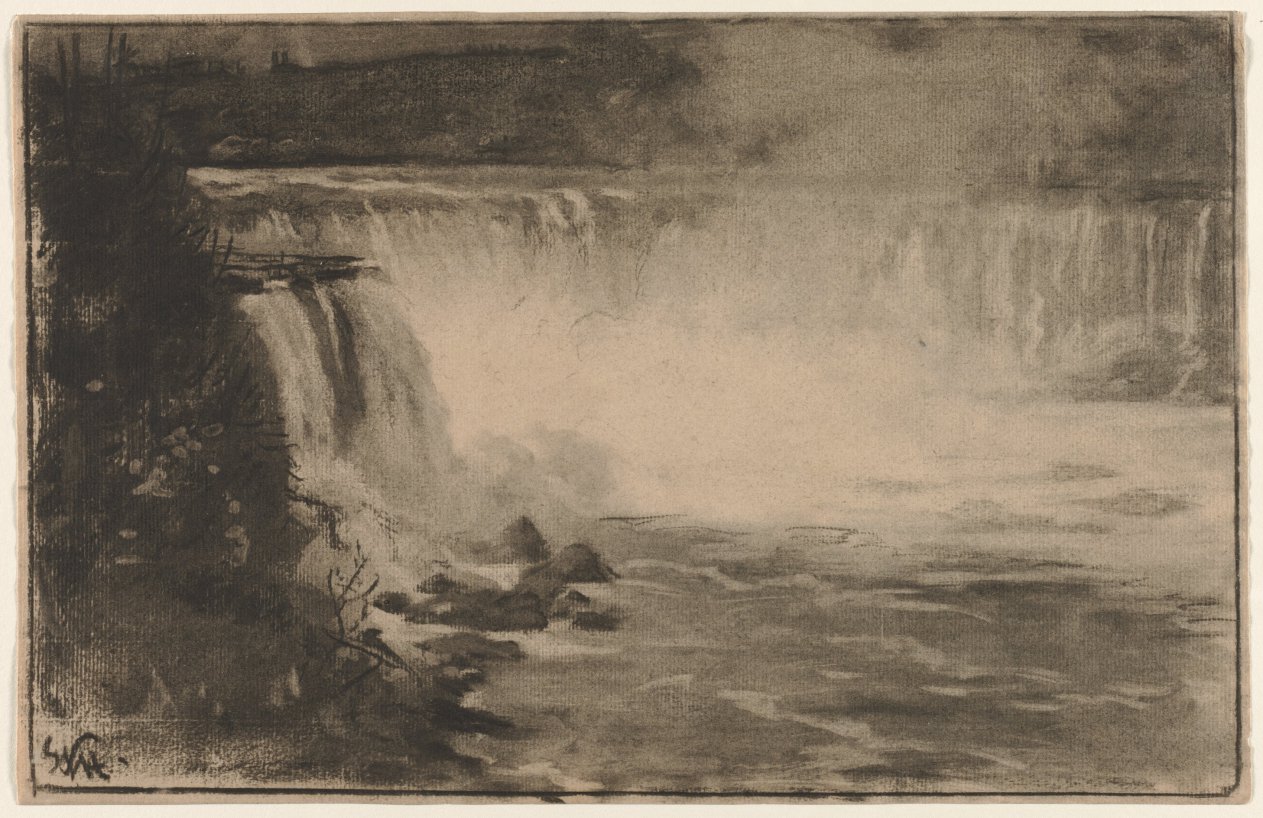
Urban Silhouette Research: Niagara Falls as a Dialectic of Materiality and Transcendence
The urban silhouette for 2026 demands a rigorous interrogation of form, one that transcends mere garment construction to engage with the philosophical underpinnings of material presence. The subject of Niagara Falls, when filtered through the internal DNA of Addison Fashion—specifically the dialectic between the Pilgrim Sudhana sculpture and the Sample of Fibrolite—yields a definitive silhouette defined by structural poetics and urban materiality. This analysis deconstructs the waterfall’s geometric integrity, not as a representation of water, but as a study in vertical compression, horizontal tension, and the static monumentality of a natural force arrested in time.
Geometric Integrity: The Vertical Slab and the Horizontal Veil
Niagara Falls, in its most essential geometric reading, is a vertical slab of immense scale. Its primary structural gesture is a sheer, uninterrupted drop. This is not the fluid, organic curve of a cascade, but a hard, architectural edge—a cliff face of water. For the 2026 executive silhouette, this translates into a Minimalist form that prioritizes linear precision over volume. The silhouette is a rectilinear column, a monolithic block that falls from the shoulder to the hem with minimal interruption. The waist is not cinched; it is implied through the subtle shift in fabric tension, much like the water’s surface tension before the plunge.
However, the geometric integrity of the falls is not monolithic. It is bisected by the horizontal line of the brink, the lip of the precipice. This creates a horizontal veil—a plane of tension where the water’s surface transforms from a contained river to a free-falling sheet. In the garment, this is articulated as a sharp, architectural shoulder line that extends beyond the natural body, creating a cantilevered effect. The shoulder becomes the brink, the point of departure. The sleeve, if present, is a separate, flat panel that drops vertically, mimicking the water’s descent. The overall geometry is a study in orthogonal relationships: the vertical fall of the body, the horizontal cut of the shoulder, and the implied diagonal of the spray—the latter rendered as a subtle, asymmetric drape or a single, sharp pleat that breaks the strict verticality.
Structural Poetics: The Pilgrim Sudhana Principle of “Form as Vessel”
The Pilgrim Sudhana sculpture teaches that material can be a vessel for the immaterial. The artisan’s hand transforms metal or wood into a conduit for spiritual narrative. In the Niagara Falls silhouette, the garment is not a covering but a vessel for urban experience. The Slate color—a deep, mineral grey with undertones of blue and green—is chosen not for its neutrality, but for its capacity to absorb and reflect light in a manner that suggests depth, like the dark, churning water at the base of the falls.
The structural poetics lie in the internal architecture. The garment is constructed with a hidden, rigid substructure—a skeletal frame of bonded interfacing or lightweight metal boning—that maintains the vertical slab shape against the body’s movement. This is the Pilgrim Sudhana principle: the visible form is a serene, uninterrupted surface, while the unseen interior is a complex, engineered system. The wearer becomes the spiritual pilgrim, moving through the urban landscape with a contained, meditative presence. The garment’s stillness is its power; it does not flutter or billow. It stands, a monument to the wearer’s own internal resolve.
Urban Materiality: The Sample of Fibrolite Principle of “Inherent Structure”
Conversely, the Sample of Fibrolite—a natural mineral with its own crystalline logic—demands that the material itself dictates the form. The fabric for this silhouette must possess an inherent structural memory. A double-faced wool or a high-density technical twill is selected, one that holds a crease with the permanence of a geological fold. The material is not draped; it is cut and assembled to reveal its own internal tension. The seams are not hidden; they are exposed and articulated, like the cleavage planes of the fibrolite sample. They become the urban calligraphy of the garment, tracing the logic of its construction.
The urban materiality of the falls is not about water, but about pressure and erosion. The constant force of the water has carved the rock over millennia. In the garment, this is expressed through strategic, sharp pleats that are pressed with extreme precision, creating a series of vertical channels that suggest the flow of water over stone. These pleats are not decorative; they are functional structural elements that allow the fabric to fall with a weighted, deliberate gravity. The hem is raw, or laser-cut, to mimic the fractured edge of the rock face. The overall texture is matte, with a slight, irregular slub—a reference to the mineral’s fibrous, non-uniform surface.
Synthesis: The 2026 Executive Silhouette
The definitive Urban Silhouette for Addison Fashion, inspired by Niagara Falls, is a Minimalist, Slate-toned column that synthesizes the Pilgrim Sudhana’s spiritual vessel with the Sample of Fibrolite’s inherent material logic. It is a silhouette of controlled power—a vertical statement that commands space through its stillness, not its volume. The garment is a static monument in a dynamic urban environment. The wearer is both the pilgrim and the precipice, the vessel and the void. The geometric integrity is absolute: a single, unbroken line from shoulder to floor, interrupted only by the architectural shoulder and the subtle, structural pleats that echo the falls’ relentless, silent force. This is not fashion as adornment; it is fashion as urban geology—a study in the poetics of pressure, the beauty of the vertical, and the materiality of the sublime.