Urban Form: Figure
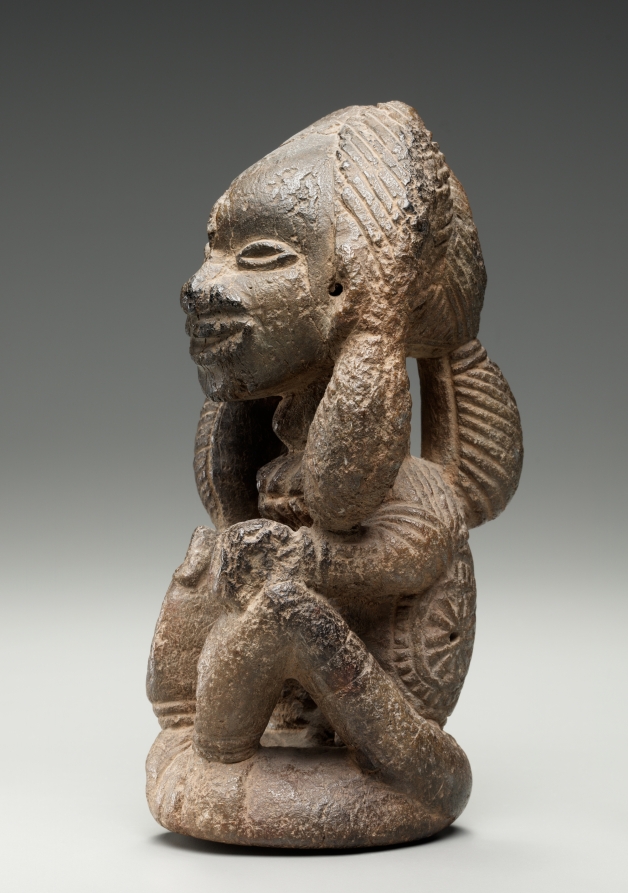
Structural Poetics: The Dialectic of Void and Mass
The 2026 Urban Silhouette Research for Addison Fashion is predicated upon a singular architectural principle: the articulation of absence. Drawing from the Zen koan “Abiding nowhere, the awakened mind arises,” the figure is not a container of form but a conduit for space. The internal DNA of this collection—a dialogue between a philosophical artifact and the ancient *Taihu Garden Stone*—demands a silhouette that negates the primacy of the body while simultaneously exalting its presence through negative space.The geometric integrity of this artwork is defined by a minimalist lattice of structural voids. The garment’s primary volume is not draped but carved. Shoulder lines are sharp, cantilevered, and slightly detached—reminiscent of the “皱” (wrinkled) surface of the Taihu stone. The fabric does not cling; it hovers. A jacket, for instance, features a floating panel across the back, suspended by internal seams that create a 3–5 cm gap between the shell and the lining. This gap is the “hole” of the stone—a passage for air, light, and the eye. The silhouette is trapezoidal from the shoulder to the hem, with a subtle inward taper at the waist that suggests compression without constriction. The hemline is asymmetrical, echoing the irregular, organic base of the garden stone, grounding the figure in a state of poised instability.
Urban Materiality: Slate and the Philosophy of Weightlessness
The chosen color, Slate, is not a neutral. It is a geological statement—a pigment that carries the memory of compressed earth and ancient water. In urban materiality, Slate functions as a visual anchor in a landscape of glass and steel. It absorbs light rather than reflecting it, creating a matte, monolithic presence that commands attention through quietude.The fabric composition is critical. We employ a double-faced wool-cashmere blend with a weight of 380 gsm, treated with a nano-coating that imparts a slight, stone-like rigidity. This is not a fabric that drapes; it stands. The surface is brushed to a low sheen, mimicking the patina of a well-worn stone. For the trousers, a Japanese selvedge denim in a deep slate wash, woven with a tight 3x1 twill, provides the necessary structure for a straight, columnar leg that breaks just above the ankle. The hem is raw, unbound—a deliberate “unfinished” edge that recalls the porous, unpolished rim of the Taihu stone’s cavities.
The sartorial engineering of this silhouette relies on invisible architecture. Internal boning—thin, flexible strips of carbon fiber—is sewn into the side seams of the jacket and the center back of the top. This creates a self-supporting shell that maintains its shape even when the wearer moves. The garment does not move with the body; it moves around it, maintaining a constant, deliberate distance. This is the “无所住” (abiding nowhere) in textile form: the fabric is present, but it refuses to adhere to the body’s contours, creating a space of meditation between skin and shell.
The Awakened Line: Proportions and the Void
The 2026 executive silhouette rejects the traditional hourglass or power-shoulder archetypes. Instead, it proposes a rectilinear frame with a single, dramatic point of tension. The key proportion is the 1:2 ratio between the upper torso and the lower body. The jacket is cropped, ending at the natural waist, while the trousers or skirt extend to the floor, creating an elongated, unbroken vertical line. This is not a silhouette of power; it is a silhouette of presence.The neckline is a study in negative space. A high, standing mandarin collar—cut at a precise 45-degree angle—frames the jaw without touching the throat. Below it, a keyhole cutout at the sternum reveals a triangle of skin. This is the “孔窍” (porous cavity) of the stone, a deliberate void that draws the eye inward. The sleeves are set with a high armhole and a narrow, straight cut, ending at the wrist bone. No cuff. No button. The sleeve opening is a clean, unadorned circle—a portal through which the hand emerges, unencumbered.
The back of the garment is where the philosophy becomes architecture. A single, vertical seam runs from the center of the collar to the hem. On either side, the fabric is pleated in a series of micro-folds (1 cm deep, 2 cm apart) that open and close with movement. This creates a kinetic texture—a living surface that breathes. When the wearer stands still, the back is a smooth, monolithic plane. When they walk, the pleats part, revealing a flash of the lining in a lighter shade of Silver. This is the “awakened mind” in motion: a moment of revelation born from stillness.