Minimalist
Onyx
Urban Form: Temple of Ramesses II, Abu Simbel
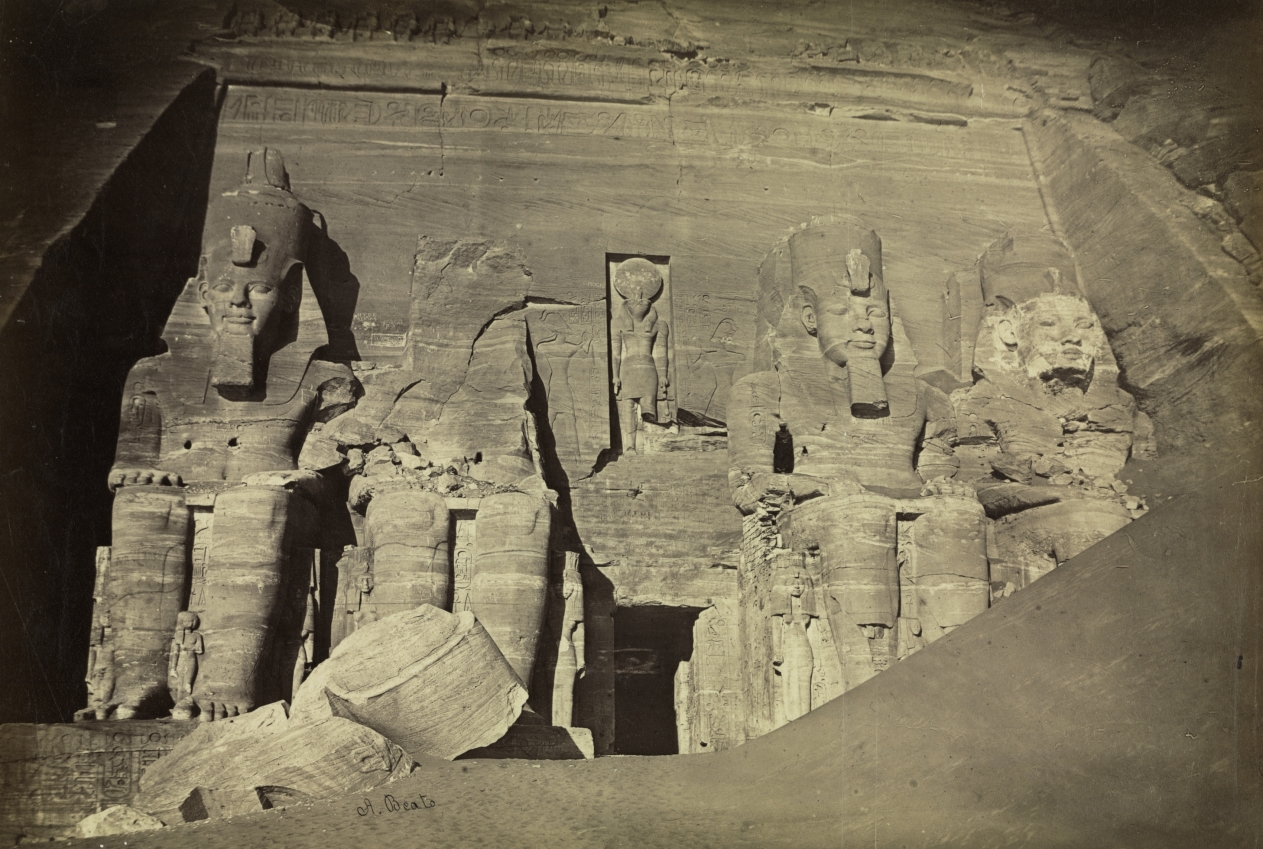
Structural Poetics: The Architectural Body as Sacred Enclosure
The Temple of Ramesses II at Abu Simbel is not merely a monument; it is a geological incision—a declaration of permanence carved into the living rock. Its façade presents a rigorous axial symmetry, four colossal seated figures of the pharaoh, each precisely 20 meters in height, flanking the entrance. This is not decoration; it is a system of mass and void, of vertical thrust and horizontal containment. For the 2026 executive silhouette, this translates into a garment that functions as a portable sanctuary. The shoulder line must be engineered as a load-bearing cornice, extending with a clean, unbroken horizontal that mirrors the temple’s lintel. The fabric—a dense, matte Onyx wool—is chosen for its ability to hold a sharp, architectural edge without drape. The body is not clothed; it is framed. The silhouette rejects the organic curve of the torso, instead imposing a rectilinear geometry: a jacket whose lapel is a straight, uninflected line from collarbone to waist, and whose hem falls at the hip with the finality of a stone block. This is the “Udumbara” principle of *presence through absence*—the form is defined by what it does not reveal, by the stillness it enforces upon the wearer.The Udumbara Dialectic: Emptiness as Structural Load
The internal DNA of the Udumbara plaque—a symbol of the rare and the transcendent—demands a material treatment that negates materiality itself. In the temple, the rock is so precisely hewn that it appears to dematerialize into pure geometry. For the garment, this is achieved through a technique of *negative tailoring*. The Onyx fabric is not padded or structured in the traditional sense; instead, it is cut with internal seams that create air pockets, a void between the cloth and the body. This void is the “three-thousand years in a single thought” made textile. The jacket’s back panel is constructed from a single, seamless piece, with a subtle, vertical channel running down the spine—a reference to the temple’s central axis. This channel does not follow the body’s curve; it creates a straight line, a plumb line of authority. The sleeves are set with a high, square armhole that forces the wearer’s posture into an upright, frontal stance. The garment does not move with the body; the body must conform to the garment’s rigid, meditative stillness. This is the *hunt* inverted—not a pursuit of flesh, but a capture of space, a freezing of time within the urban grid.Urban Materiality: The Hunt for Absolute Form
The second DNA strand—the visceral, Baroque energy of The Hunt—is not expressed through ornament or color, but through the *tension* within the structure. The Onyx is not a passive black; it is a deep, light-absorbing void, reminiscent of the temple’s interior chambers. The fabric’s surface is treated with a micro-herringbone weave, visible only under direct light, creating a subtle, directional texture—a ghost of the hunt’s frantic diagonal lines. This texture is the *blood and sinew* of the garment, a silent violence held in check by the Minimalist silhouette. The trousers are cut with a severe, straight leg, falling to a precise break at the shoe. There is no taper, no concession to the organic form. The waistband is a rigid, high-rise band that acts as a structural belt, anchoring the entire composition. The closure is a hidden placket, a seamless front that mimics the temple’s unbroken stone face. The buttons are not visible; they are internal, magnetic closures that snap into place with a decisive, architectural click. This is the *presence of the kill*—the moment of impact, frozen and rendered into a permanent, wearable object.Geometric Integrity: The Axis Mundi of the Executive
The 2026 executive silhouette is defined by a single, unyielding vertical axis. This is not the soft, flowing line of draped fabric; it is the hard, carved line of the temple’s central doorway. The garment’s geometry is a study in right angles. The collar stands away from the neck, a small, precise rectangle. The pockets are not slashed or welted; they are *cut-out* voids, negative spaces in the fabric, lined with a contrasting, micro-suede in a deeper, matte black. These pockets are not for utility; they are visual anchors, points of stillness that echo the temple’s hieroglyphic panels. The overall proportion is elongated, with a high waist and a long, unbroken torso. The silhouette does not suggest movement; it *commands* space. It is a garment for standing still, for being observed, for projecting an authority that is geological in its permanence. The wearer becomes a living statue, a contemporary Ramesses, their body a vessel for the city’s relentless, vertical ambition.Conclusion: The Dialectic Resolved in Fabric
The final garment is a synthesis of the Udumbara’s *emptiness* and The Hunt’s *intensity*. The Onyx color absorbs all light, creating a visual void that demands the viewer’s internal gaze. The Minimalist silhouette is not a lack of design; it is a *maximum of restraint*, a deliberate reduction to the essential structural elements. The jacket’s shoulder is a stone lintel; the trouser’s leg is a column; the entire ensemble is a mobile temple. It is a garment for the executive who understands that true power is not in the display of wealth, but in the *control of space and time*. The 2026 silhouette is not a fashion; it is a manifesto of architectural permanence in the ephemeral city. It is the hunt for the absolute, frozen in Onyx.
Technical Insight
Technical Insight: Translating Onyx palettes into Minimalist silhouettes for the modern metropolis.