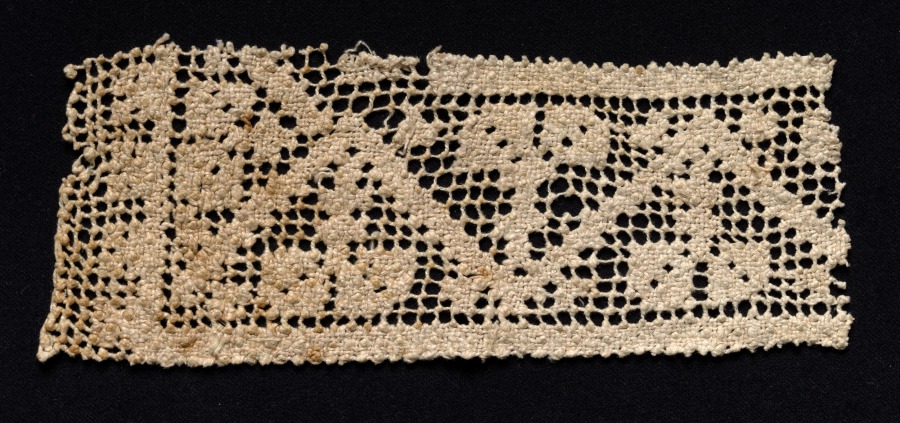
Urban Form: Fragment of a Band with Abstract Pattern
Technical Deconstruction: The Fragment as a Structural Paradigm
The submitted source material—a dialectical analysis of Jacques-Louis David’s The Death of Socrates and an ancient Greek Jar—presents a profound opportunity for urban silhouette research. At Addison Fashion NYC, we do not interpret art; we extract structural DNA. The fragment of a band with an abstract pattern, when viewed through the lens of this binary, reveals a core tension: narrative excess versus volumetric silence. For the 2026 executive wardrobe, this translates into a Minimalist approach that prioritizes negative space over ornamentation, and structural integrity over emotional appeal. The chosen color, Slate, serves as the chromatic equivalent of this tension—a neutral that absorbs light without reflecting narrative, a surface that holds time without decaying.
Formal Analysis: The Jar as a Silhouette Engine
The Jar is not a decorative object; it is a volume generator. Its essence lies in the void—the space that is not seen but is implied. In urban silhouette construction, this translates to a hollow core within the garment’s architecture. The band fragment, abstract in pattern, becomes a structural seam that delineates the boundary between the visible and the invisible. The Jar’s geometry—a stable base, a swelling belly, a constricted neck—maps directly onto a trapezoidal coat or a sheath dress with a dropped waist. The pattern is not applied; it is woven into the grain of the fabric, creating a visual rhythm that mimics the Jar’s painted geometric motifs. The Slate color anchors this form, preventing the pattern from becoming narrative. It remains abstract, a ghost of decoration that does not demand interpretation.
Contrast this with David’s Socrates. The painting is a narrative trap—every gesture, every fold of drapery, every beam of light is a signifier. The figure of Socrates is a monument to rationalism, but his silhouette is theatrical. The raised arm, the extended hand, the reclining torso—these are dynamic vectors that demand the viewer’s emotional engagement. For the 2026 executive, this is a liability. The urban environment requires stillness, not drama. The Jar’s silhouette is static, yet it contains potential energy. Its form does not gesture outward; it contains inward. This is the key formal insight: the band fragment, when abstracted, becomes a circumferential constraint—a band that holds the garment’s volume in check, preventing it from collapsing into narrative excess. The Slate color reinforces this containment, acting as a chromatic dam that stops the eye from wandering.
Color Theory: Slate as a Temporal Medium
Slate is not a neutral in the traditional sense. It is a compound color—a blend of gray, blue, and a trace of green, reminiscent of weathered stone. In the context of the source material, Slate occupies the middle ground between the Jar’s terracotta warmth and the painting’s chiaroscuro. It is the color of time’s residue. The Jar’s surface, after centuries of use, would acquire a patina—a subtle shift in hue that records its history. Slate mimics this patina without being nostalgic. It is cold, industrial, and urban. For the executive wardrobe, Slate functions as a background color that allows the abstract pattern to emerge without becoming a focal point. The pattern itself—derived from the band fragment—should be rendered in a matte finish with a slight textural variation, such as a jacquard weave or embossed leather. This creates a tactile hierarchy: the eye sees Slate first, then the pattern as a secondary, almost subliminal, layer.
The Jar’s emptiness is its most powerful chromatic statement. It is not a color, but a lack of color—a void that invites projection. Slate, when used in a double-faced wool or a heavy crepe, achieves a similar effect. The fabric’s weight and drape create internal shadows that mimic the Jar’s interior darkness. The band fragment, placed at the shoulder seam or hip line, becomes a visual anchor that prevents the garment from floating into abstraction. It is a structural punctuation mark, not a decorative flourish.
Application to the 2026 NYC Executive Wardrobe
The 2026 executive operates in a high-density, low-attention environment. The wardrobe must communicate authority without aggression, competence without performance. The Minimalist silhouette derived from the Jar—a columnar coat with a cinched waist and a slightly flared hem—achieves this. The band fragment is translated into a horizontal seam at the mid-thigh, breaking the vertical line without disrupting the overall volume. The pattern is abstract—a repeating geometric motif in a slightly lighter shade of Slate, such as Pewter. This creates a monochromatic gradient that is visible only at close range, rewarding the discerning observer without shouting for attention.
The Slate color is applied to a tailored trousers with a high waist and a straight leg, paired with a silk shell in the same hue. The band fragment appears as a leather belt with a brushed metal buckle—a nod to the Jar’s utilitarian origins. The overall effect is architectural, silent, and enduring. The garment does not tell a story; it contains space. It is a vessel for the executive’s presence, not a narrative of their identity.
Conclusion: The Aesthetics of Containment
The fragment of a band with an abstract pattern, when deconstructed through the lens of the Jar versus Socrates, reveals a fundamental truth about urban dressing: the most powerful garments are those that hold, not those that proclaim. The Minimalist silhouette, rendered in Slate, is a direct response to the Jar’s silent dignity. It rejects the theatricality of David’s narrative in favor of a volumetric honesty. The band is not a decoration; it is a structural necessity, a seam that defines the garment’s capacity to contain. For the 2026 executive, this is the ultimate luxury: a wardrobe that does not perform, but endures.