Minimalist
Slate
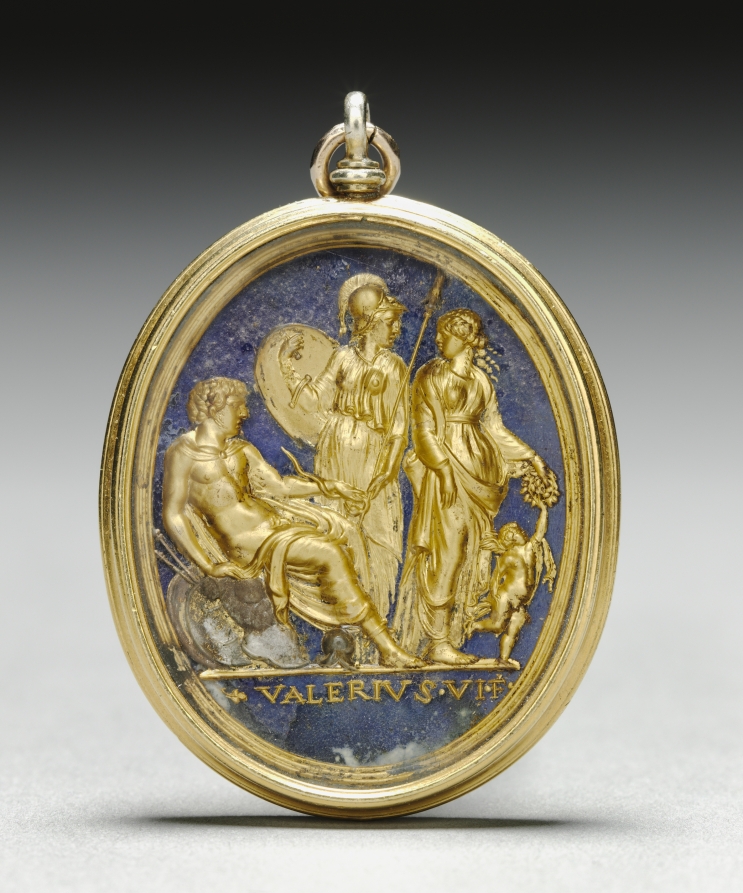
Urban Form: Mars, Minerva, Venus, and Cupid
Structural Dialectics: The Vessel as Architectural Prototype
The urban silhouette for 2026, as extrapolated from the internal DNA of Jacques-Louis David’s *The Death of Socrates* and Giorgio Morandi’s *Vases*, operates within a rigorous field of geometric tension. David’s composition is a masterclass in triangular stability—the philosopher’s outstretched arm, the bed frame, and the upward gesture of his hand form an implicit pyramid. This is not mere pictorial structure; it is a declaration of intellectual sovereignty. The cup of hemlock, positioned at the apex of this geometric drama, becomes a fulcrum. Its cylindrical form, rendered with classical precision, is a void waiting to be filled by narrative. Conversely, Morandi’s *Vases* exist in a state of horizontal entropy. Their ellipses are compressed, their necks truncated, their bodies clustered in a shallow, almost gravitational field. There is no apex, no climax. The vessels are arranged in a rhythm of near-identical grey tones, their contours softened by a dust of light. The geometry here is not heroic but phenomenological—a study of adjacency, of the space *between* objects. For the executive silhouette, this dialectic yields a garment that is both a container and a structure. The jacket, cut in a slate-toned wool-cashmere blend, is a direct translation of Morandi’s volumetric restraint. The shoulder is not padded but *shaped*—a subtle, internalized architecture that mimics the curve of a ceramic neck. The lapel is a straight, unbroken line, descending from the collarbone to the waist, echoing the verticality of David’s columnar figures. Yet, the garment’s interior is lined with a liquid silk in a deep, almost black onyx, a nod to the hemlock’s darkness. This is the hidden narrative, the *memento mori* that the wearer carries as a private knowledge. The silhouette is not oversized; it is *exact*. Every seam is a decision, every panel a proposition about how a body occupies space.Materiality as Urban Poetics: The Surface of the Vessel
The urban environment demands a material language that resists both the monumental and the mundane. David’s painting is a theater of light and shadow—the chiaroscuro that sculpts Socrates’ torso and the cup’s rim. Morandi’s work is a study of patina—the accumulated dust, the slight irregularity of hand-thrown clay, the way a surface absorbs and reflects light without drama. The 2026 silhouette synthesizes these into a textile strategy. The primary fabric is a double-faced wool, one side brushed to a matte, almost chalky finish (Morandi’s grey), the other side calendered to a subtle sheen (David’s theatrical highlight). This duality allows the garment to shift between states: in the low light of a subway car, it is a solid, monolithic form; in the glare of a glass tower, it reveals a secondary, reflective skin. The construction is a study in negative space. The garment’s internal seams are left exposed, not as a deconstructive gesture, but as a structural truth. They are the equivalent of the join lines on a ceramic vase—the evidence of the maker’s hand, the point where two surfaces meet and define a volume. Pockets are not cut but *inserted*, their openings aligned with the garment’s vertical axis, creating a continuous line from shoulder to hem. This is the urban poetics of the vessel: the body is not dressed but *housed*. The wearer becomes the liquid content, the garment the container. The silhouette’s length is calibrated to the city’s rhythm—a hem that falls just below the hip, allowing for movement, for the compression of a crowded elevator, for the expansion of a stride across a plaza.The Cup and the Void: Defining the 2026 Executive
The executive silhouette of 2026 is not a uniform but a *position*. It rejects the overt power signaling of the 1980s and the casual nihilism of the 2010s. It is a return to the vessel as a site of meaning, but a meaning that is self-contained. David’s cup is a symbol of sacrifice; Morandi’s vases are symbols of nothing. The 2026 silhouette occupies the space between: it is a symbol of *capacity*. The garment holds the potential for action, for thought, for presence, without declaring its contents. The slate color is the operative choice—neither black (absolute, funereal) nor grey (indeterminate, bureaucratic). Slate is the color of the urban horizon, of wet pavement, of the stone that holds a building’s weight. It is a color that absorbs and reflects in equal measure, a surface that invites touch but resists interpretation. The silhouette’s geometry is a response to the city’s own grid. The jacket’s shoulder line is a straight, uninflected horizontal, mirroring the skyline. The trousers are cut with a slight taper, but the fabric is weighted to fall in a single, unbroken column—a vertical that counters the horizontal. The waist is defined not by a belt but by an internal drawcord, a hidden mechanism that allows the wearer to adjust the volume. This is the Morandi principle: the object is not static; it is in a constant, quiet negotiation with its environment. The final detail is the closure: a single, concealed button at the sternum, positioned exactly where Socrates’ hand gestures toward the heavens. It is a point of tension, a micro-architecture that holds the entire structure together. It is the only ornament, and it is invisible.Conclusion: The Object in the City
The urban silhouette for 2026 is a resolution of the David-Morandi dialectic. It is a garment that acknowledges the heroic narrative of the vessel—its capacity to hold meaning, to signify sacrifice, to mark a moment—while simultaneously embracing the vessel’s quiet, material truth: that it is an object among objects, a form in space, a surface that exists without apology. The executive who wears this silhouette does not perform power; they *inhabit* it. The garment is a container for the self, a shell that is both protective and permeable. It is the cup that holds the hemlock and the vase that holds the light. In the urban landscape of 2026, this is the definitive statement: a silhouette that is at once a monument and a whisper, a structure and a void.
Technical Insight
Technical Insight: Translating Slate palettes into Minimalist silhouettes for the modern metropolis.