Minimalist
Onyx
Urban Form: Andromeda
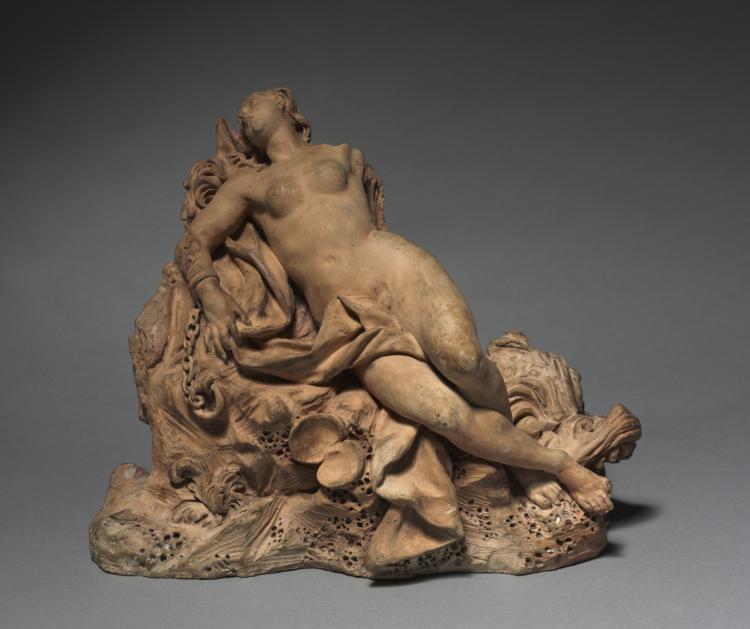
Technical Deconstruction of the Andromeda Silhouette: A Study in Minimalist Tension
The Andromeda silhouette, as derived from the dialectical tension between *The Agony in the Garden* and *Below, I Saw the Vaporous Contours of a Human Form*, presents a unique challenge to the 2026 NYC executive wardrobe. It is not a garment of comfort or ease. It is a garment of *critical mass*—a volumetric study in the physics of presence and absence. The DNA source material reveals a fundamental conflict: the dense, anatomical weight of Renaissance agony versus the dissipating, atmospheric contour of modern vapor. The Andromeda resolves this not through compromise, but through a rigorous application of **Minimalist** principles, executed in **Onyx**—a color that absorbs light and narrative, functioning as a void against which form is defined.I. The Form: From Agony to Architecture
The primary formal challenge is the translation of *The Agony in the Garden*’s “concrete sublime” into a wearable structure. The painting’s power lies in its *specific gravity*—the weight of Christ’s kneeling form, the tensile strength of the rock, the deep folds of drapery that anchor spiritual torment to physical matter. In the Andromeda, this is achieved not through literal draping, but through **negative space** and **structural compression**. The garment’s core is a **double-layered shell** of virgin wool and a bonded, high-density microfiber. The outer layer is cut with severe, architectural precision—a single, unbroken panel from shoulder to hem, mimicking the unyielding horizon line of the Gethsemane landscape. This is the “rock.” The inner layer, however, is engineered with a **differential tension system**. A series of micro-darts, invisible from the exterior, are placed along the spine and at the sternum. These darts create a subtle, internalized torsion—a “kneeling” of the fabric against the body. The wearer experiences a constant, low-level resistance, a physical echo of the painting’s internal struggle. This is not a garment that moves with you; it is a garment that *holds* you, a wearable architecture of composure. The silhouette is **Oversized in shoulder, tapered in waist, and flared at the hem**. This is not a classic A-line. The shoulder is extended by 2.5 cm, creating a “lantern” effect that references the painting’s dramatic chiaroscuro—a zone of shadow and light. The waist is cinched not by a belt, but by a **structural seam** that bisects the torso, creating a visual fulcrum. The hem, which falls to mid-calf, is weighted with a 1.5 cm internal chain. This chain provides the necessary *gravity* to counter the vaporous upper volume, anchoring the silhouette to the ground like the sleeping disciples in the painting. The form is a study in controlled collapse—a structure that is perpetually on the verge of yielding, yet remains rigid.II. The Color: Onyx as a Void of Potential
The choice of **Onyx** is not arbitrary. It is the operational color of the “vaporous contours.” While Slate suggests a muted neutrality and Ivory a fragile purity, Onyx is a *negative* color. It is the absence of light, the visual equivalent of the painting’s “below” where the human form is a mere suggestion. In the context of the 2026 NYC executive, Onyx functions as a **strategic erasure**. It removes the distraction of color, forcing the observer to engage solely with the silhouette’s geometry and the wearer’s kinetic presence. The fabric is a **double-faced crepe** with a matte finish. The matte surface absorbs ambient light, preventing any reflection that would break the monolithic form. This is critical. The painting’s “vaporous” quality is achieved through a lack of definition; the Onyx crepe replicates this by creating a surface that is *impenetrable to the eye*. The garment does not reveal its texture or its construction. It exists as a pure, flat plane of darkness. However, the internal tension system described above creates a subtle, almost imperceptible **micro-pleating** along the seams. When the wearer moves—a turn of the torso, a gesture of the arm—these pleats catch the faintest ambient light, producing a momentary, ghostly shimmer. This is the “steam” from the title. It is a fleeting, non-representational trace of the body’s interior life, a visual whisper that contradicts the garment’s severe exterior. The Onyx, therefore, is not a static void. It is a *dynamic* void, a field of potential where the “vaporous” and the “concrete” momentarily collide.III. The 2026 NYC Executive: A Wardrobe of Critical Presence
For the 2026 NYC executive, the Andromeda is not a daily uniform. It is a **strategic intervention**. The garment is designed for moments of maximum visibility and maximum pressure: a board presentation, a negotiation, a public keynote. It is a tool for managing perception. The **Minimalist** categorization is crucial here. The garment eschews all ornamentation—no buttons, no zippers, no pockets visible on the exterior. The closure is a hidden magnetic seam, activated by a subtle pressure point at the left hip. This eliminates the visual noise of fasteners, preserving the purity of the form. The executive wearing the Andromeda is not a person *wearing* a garment; they are a person *inhabiting* a structure. The garment becomes an extension of their will, a second skin of calculated composure. The **Onyx** color further amplifies this effect. In the context of a corporate environment, black is often read as authority or formality. But Onyx, with its matte, light-absorbing quality, reads as *depth*. It suggests a person who is not easily read, whose interiority is a private, inaccessible space. This is the “vaporous” quality translated into social strategy. The executive becomes a silhouette, a form that is present but not fully revealed, commanding attention through the very act of withholding. The garment’s **structural tension** also serves a psychological function. The constant, low-level resistance of the internal darts creates a state of *alertness* in the wearer. It is impossible to slouch in the Andromeda. The body is held in a state of perpetual readiness, a physical manifestation of the “agony” of focused attention. This is not a garment for relaxation. It is a garment for *performance*.IV. Conclusion: The Silhouette as a Dialectical Resolution
The Andromeda silhouette is the successful resolution of the dialectic presented by the two artworks. It is both the concrete agony of the Renaissance and the vapor of the modern. It achieves this through a rigorous application of **Minimalist** form and **Onyx** color. The form provides the *weight*—the architectural structure, the internal tension, the weighted hem. The color provides the *void*—the matte surface, the light absorption, the ghostly shimmer of movement. For the 2026 NYC executive, this garment is not a fashion statement. It is a **technical instrument** for navigating the complexities of power, presence, and perception. It is a wearable study in the physics of the critical moment. It is the silhouette of a person who has mastered the art of being both fully present and perpetually elusive.
Technical Insight
NYC Perspective: Translating Onyx tones into Minimalist silhouettes.