Urban Form: The Bread Line
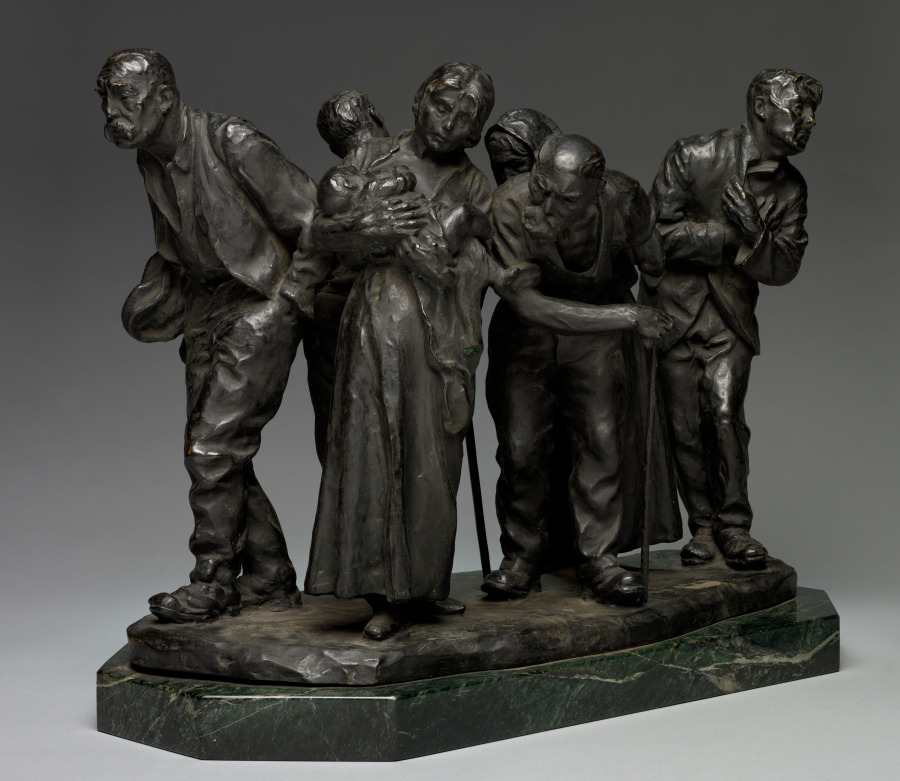
Geometric Integrity and the 2026 Executive Silhouette
The Bread Line research subject presents a dialectical tension between two distinct modes of terminal stillness: the heroic verticality of Socrates’ death and the horizontal dissolution of Śākyamuni’s parinirvāṇa. For Addison Fashion’s 2026 executive silhouette, this dualism resolves into a singular architectural principle—minimalist compression. The garment becomes a vessel for the liminal moment, where the body is neither fully present nor entirely absent, but suspended in a state of refined transition. The geometric integrity of this artwork is not found in symmetry or proportion alone, but in the axial tension between ascent and release, between the crystalline line of the Socratic finger and the fluid drape of the Buddha’s robe.
Structural Poetics: The Vertical-Horizontal Dialectic
The Socratic vessel—a ceramic or stone relief—employs rigid, orthogonal lines to frame the philosopher’s final gesture. The torso is a column; the arm, a lever; the cup, a fulcrum. This is a geometry of resistance: the body as a monument against entropy. In contrast, the Indian stele uses undulating, biomorphic curves to suggest the dissolution of form into the mineral ground. The Buddha’s reclining figure is a horizontal axis that refuses climax, preferring the infinite regression of folds and hand mudras. For the 2026 executive silhouette, we extract from this dialectic a third geometry: the cantilevered shoulder and the asymmetrical hem. The jacket’s lapel cuts a sharp diagonal, referencing the Socratic finger’s upward thrust, while the back panel falls in a single, unbroken plane, echoing the stele’s mineral stillness. The result is a silhouette that holds tension without collapsing into drama—a garment that stands as a threshold object between action and contemplation.
Urban Materiality: Onyx as the Medium of Terminal Light
The chosen color, Onyx, is not a pigment but a geological condition. It absorbs light selectively, creating a surface that is both opaque and depthless. In the context of the Bread Line, Onyx functions as the mineral ground of both artworks: the dark slip of the Greek vessel and the deep indigo of the Indian stele’s background. For the 2026 executive silhouette, Onyx is rendered in double-faced wool-cashmere with a matte, granular finish that mimics the texture of stone worn by centuries of touch. The fabric’s weight—approximately 380 grams per square meter—provides the structural integrity necessary for the cantilevered forms without sacrificing fluidity. Seams are fused, not stitched, to eliminate any trace of handcraft, achieving a monolithic surface that reads as a single, continuous plane. This is urban materiality at its most austere: a fabric that does not drape so much as stand, like a wall of polished obsidian in a glass tower.
The Bread Line as a Spatial Condition
The term “Bread Line” in this context refers not to a queue but to a line of sustenance—the threshold between the individual and the collective, between the private body and the public facade. In the Socratic vessel, the bread line is the edge of the cup, where poison meets air. In the Indian stele, it is the border of the robe, where the Buddha’s form dissolves into the mineral ground. For the 2026 executive silhouette, the bread line is the neckline—a precise, architectural cut that bisects the collarbone. It is neither a V nor a crew, but a horizontal slit that reveals the sternal notch, a gesture of controlled vulnerability. This cut is repeated in the cuffs, which are slit to the elbow, and in the hem, which is asymmetrically raised on one side. These lines are not decorative; they are structural breaks that allow the garment to breathe without losing its monolithic integrity. The bread line, in this reading, is the point of entry for the urban environment—a seam where the body meets the city, and where the garment becomes a second skin of stone.
Conclusion: The Silhouette as a Philosophical Object
The 2026 executive silhouette, derived from the Bread Line research, is not a garment in the conventional sense. It is a geometric proposition that asks the wearer to inhabit the space between Socrates’ defiance and the Buddha’s surrender. The Onyx palette and minimalist construction ensure that the silhouette does not compete with the body but frames it as a monument to the present moment. In an era of digital flux and architectural precarity, this silhouette offers a fixed point—a line of bread that is also a line of grace. The garment stands as a stele for the self, carved from the same mineral darkness that holds both the philosopher’s last thought and the Buddha’s final breath.