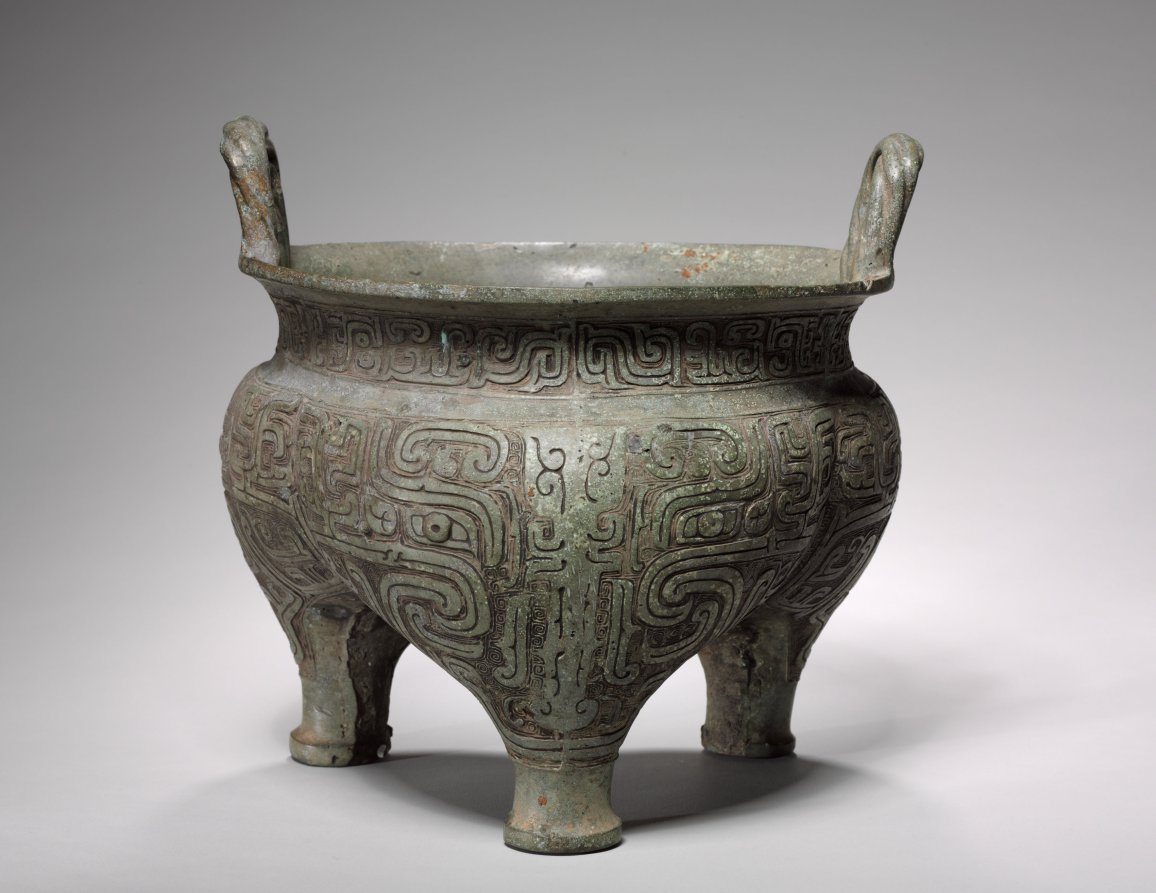
Urban Form: Hollow-Legged Tripod (Li Ding)
Executive Summary: The Hollow-Legged Tripod as Structural Paradigm
The Hollow-Legged Tripod (Li Ding) presents a unique architectural challenge to the contemporary silhouette. Its form—a vessel elevated on three attenuated, voided supports—is not merely a ceremonial object but a spatial manifesto. For the 2026 NYC executive wardrobe, this translates into a rigorous study of negative volume, load-bearing asymmetry, and material tension. The Li Ding’s aesthetic is one of controlled emptiness: the legs are not solid pillars but hollow conduits, suggesting that strength derives from the intelligent management of absence, not brute mass. This principle directly informs our approach to tailoring for the urban professional who must project authority without rigidity, and presence without excess.
The DNA source material—the juxtaposition of the Udumbara Flower (Udonge) temple plaque and The Hunt—provides the dialectical tension that animates this form. The Udumbara, a metaphor for the rare and the transcendent, operates through minimalist iconography: a white, umbrella-shaped cluster on decayed wood, rendered in near-abstract ink. It is a study in presence through absence. Conversely, The Hunt is a Baroque explosion of corporeal density—muscle, fur, blood, and motion compressed into a single, violent frame. The Li Ding sits at the fulcrum of these two poles: its hollow legs echo the Udumbara’s void-as-significance, while its tripodal stability and metallic weight channel the primal force of the hunt. The synthesis is a silhouette that is both ethereal and grounded, a paradox resolved through precise geometry.
Formal Deconstruction: The Tripod as Silhouette Architecture
1. The Hollow Leg: Verticality and Negative Space
The defining feature of the Li Ding is its hollow leg. In traditional bronze casting, this was a technical feat to reduce weight and conserve material. In our analysis, it becomes a design principle. The leg is not a solid column but a cylindrical void encased in a thin, rigid shell. This creates a visual paradox: the leg appears substantial from a distance but reveals its emptiness upon closer inspection. For the executive wardrobe, this translates into tapered, high-waisted trousers with a fluid drape that mimics the leg’s attenuated line. The fabric—a double-faced wool crepe in Onyx—is chosen for its ability to hold a sharp crease while falling away from the body, creating a hollow column of air between the fabric and the skin. The silhouette is narrow at the ankle, echoing the tripod’s tapered terminus, but expands subtly at the hip to accommodate the pelvic structure. This is not a skinny fit; it is a controlled void that frames the leg without constricting it.
2. The Tripod Base: Asymmetry and Load Distribution
Three legs, not four. This is a deliberate destabilization of the classical square base. The tripod is inherently dynamic—it requires constant recalibration of weight to remain upright. In the wardrobe, this manifests as asymmetrical hemlines and offset closures. A single-breasted jacket with a diagonal zip that shifts the visual center of gravity to one side. The shoulder line is slightly extended on the dominant side, creating a subtle cantilever effect that mirrors the tripod’s uneven load distribution. The sleeve is cut in three panels—a nod to the tripod’s three supports—with the inner seam left unfinished to expose the construction, a reference to the hollow leg’s interior. This is not a garment for static poses; it is designed for movement through urban space, where the body’s constant micro-adjustments become part of the silhouette’s language.
3. The Vessel: Volume and Containment
The Li Ding’s bowl is a containment vessel—it holds liquid, grain, or ritual offerings. Its form is globular but restrained, with a wide mouth that tapers to a narrow base. In the wardrobe, this translates to the upper torso. The jacket’s chest piece is cut with a soft, rounded lapel that mimics the bowl’s curve, while the waist is sharply cinched to create a funnel effect. The fabric is structured but not stiff: a wool-silk blend that holds its shape but yields to the body’s heat. The back panel is cut in a single, unbroken piece, with no center seam, to emphasize the vessel’s unified volume. The sleeve head is set with a slight puff at the shoulder, referencing the bowl’s rim, before tapering to a narrow cuff at the wrist. This creates a silhouette of containment: the torso is a vessel for the self, protected and defined by its outer shell.
Color Analysis: Onyx as the Void and the Substance
1. The Chromatic Equivalent of the Hollow Leg
Onyx is not black. It is a deep, absorptive gray-black with a subtle, vitreous luster. In the context of the Li Ding, Onyx represents the materiality of the void. It is the color of the bronze after centuries of oxidation—a patina that is both ancient and modern. For the executive wardrobe, Onyx functions as a neutral that absorbs light, creating a visual sink that draws the eye inward. This is critical for the hollow-leg silhouette: the trousers in Onyx appear to recede into the background, emphasizing the negative space between the legs. The color does not compete with the form; it amplifies the void. In the jacket, Onyx is used for the main body, while the lining is a high-contrast Ivory—a reference to the Udumbara flower’s white cluster against dark wood. This interior flash is only visible during movement, a momentary revelation of the garment’s hidden depth.
2. The Dialectic of Light and Shadow
The Udumbara plaque operates through ink on wood—a monochrome palette that relies on texture and sheen rather than color. The Hunt uses crimson, ochre, and umber to convey violence and vitality. Onyx mediates between these extremes. It is a color of restraint that can absorb or reflect depending on the finish. A matte Onyx reads as soft and contemplative, like the temple plaque’s ink. A satin Onyx catches the light, creating sharp highlights that mimic the gleam of sweat on a hunting beast. The wardrobe uses both finishes: the jacket’s exterior is matte for a quiet authority, while the lapels and pocket welts are cut from a satin Onyx that catches light during movement. This creates a dynamic surface that shifts between absorption and reflection, embodying the dialectic of stillness and action.
3. The Role of Accent: Silver as the Third Leg
The Li Ding’s bronze is often inlaid with silver or gold to highlight the tripod’s joints. In our palette, Silver serves as the accent color—a cold, metallic thread that runs through the Onyx. It appears in the zipper teeth, the button studs, and the stitching on the diagonal closure. Silver is not decorative; it is structural. It marks the points of tension and articulation, just as the inlay on the Li Ding marks the junction of leg and bowl. The silver is brushed, not polished, to avoid a high-gloss finish that would disrupt the Onyx’s absorptive quality. It is a whisper of light, not a shout. This aligns with the Udumbara’s aesthetic of subtle revelation: the flower is not a spectacle but a sign to be read. The silver accents are the visual punctuation that guides the eye through the silhouette’s architecture.
Conclusion: The 2026 Executive as Tripod
The Hollow-Legged Tripod is not a relic; it is a blueprint for modern power dressing. Its three legs—verticality, asymmetry, containment—offer a triangulated approach to the executive silhouette. The 2026 NYC professional does not need to shout; they need to stand with structural integrity. The Onyx palette provides the chromatic gravity that anchors the form, while the Silver accents offer points of entry for the eye. The garment is a vessel for the self, hollow in the right places to allow for movement and breath, solid where it needs to support and define. This is not fashion as decoration; it is fashion as architecture, built on the dialectic of emptiness and substance that the Li Ding so elegantly embodies. The result is a wardrobe that is both a temple and a hunt—a space for contemplation and a tool for action.