Urban Form: Carved Bracket
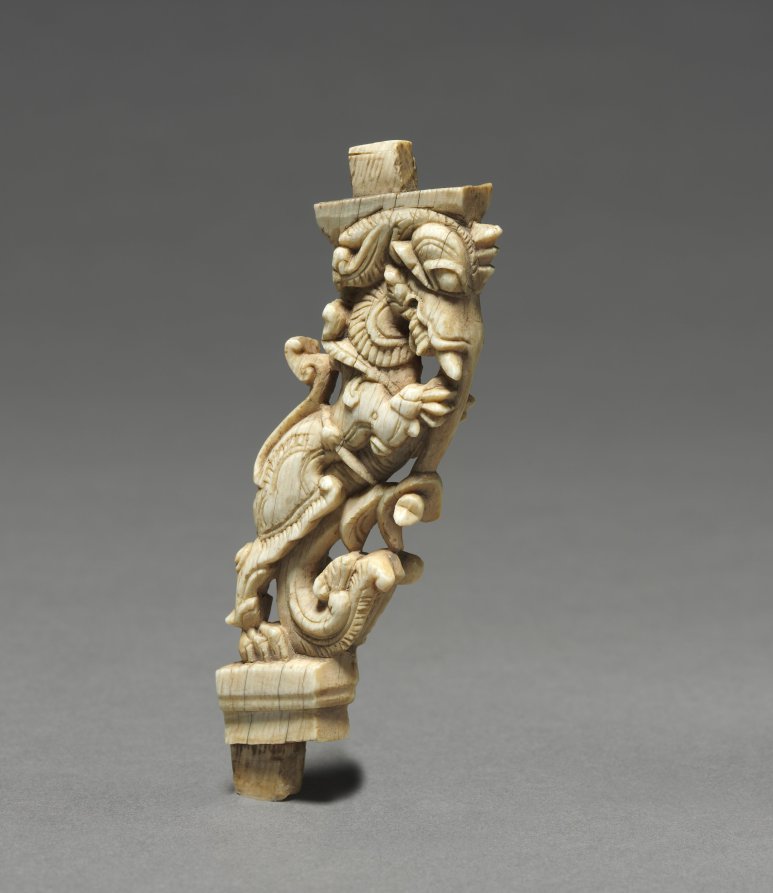
Structural Poetics: The Carved Bracket as Architectural Silhouette
The Carved Bracket, as a conceptual artifact, transcends mere ornamentation to become a fundamental principle of spatial articulation. In the context of Addison Fashion’s 2026 executive silhouette, this element is redefined not as a decorative appendage but as a load-bearing metaphor for the intersection of void and mass. Drawing from the dualistic logic of the Udumbara Flowers Temple Plaque and the Square Wine Container (Fangyou), the Carved Bracket embodies a minimalist dialectic: the tension between ethereal suspension and grounded structure. This analysis deconstructs the geometric integrity of the bracket, its material translation into urban fabric, and its role in defining a silhouette that is both authoritative and contemplative.
Geometric Integrity: The Dialectic of Void and Volume
The Carved Bracket’s geometry is predicated on a paradoxical relationship between negative space and solid form. Like the Udumbara flower’s rootless suspension on the temple plaque, the bracket’s silhouette appears to float within its own structural frame. Its lines are not merely outlines but carved absences—voids that define the volume of the garment. In the 2026 executive silhouette, this translates to sharp, angular shoulders that taper into a hollowed chest, creating a visual bracket that supports the upper torso while leaving the core unencumbered. The Fangyou’s rigid, rectilinear form informs the bracket’s base: a square, unyielding shoulder line that anchors the silhouette in urban authority. Yet, the bracket’s upper edge curves inward, mimicking the floral petal’s organic unfurling, thus introducing a controlled asymmetry that disrupts pure geometric stasis. This is not a soft drape but a hardened contour, where every angle is a decision, every curve a calculated release.
The bracket’s structural integrity lies in its negative capability. It does not fill space but frames it. The garment’s lapels, for instance, are carved away to reveal the wearer’s neck and collarbone as architectural voids, echoing the temple plaque’s “non-real, inwardly contemplative space.” This void is not empty but charged with potential—a silent dialogue between the body and the fabric. The Fangyou’s compartmentalized surface, with its precise bands and registers, is mirrored in the bracket’s segmented panels: each seam is a boundary line that organizes the silhouette into a readable, rational system. The result is a geometry that is both minimalist and monumental, where the bracket’s weight is distributed not through bulk but through the tension of its own lines.
Material Translation: From Wood and Bronze to Urban Textiles
The Carved Bracket’s materiality is a study in transmutation. The temple plaque’s wood grain, which simulates petal texture through natural flow, is reinterpreted in high-density wool or bonded jersey with a micro-ribbed surface that mimics the organic undulation of carved wood. This fabric is not printed but engineered—the grain is woven into the textile’s structure, creating a tactile illusion of growth and decay. The Fangyou’s bronze patina, with its oxidized layers of time, is translated into a double-faced satin in Onyx—a color that absorbs light rather than reflecting it, suggesting depth and age. The fabric’s surface is treated with a matte finish that recalls the dull sheen of aged metal, while its weight (approximately 380 GSM) provides the draped rigidity necessary for the bracket’s angular forms.
Urban materiality demands performance. The bracket’s construction incorporates laser-cut seams that are fused rather than stitched, eliminating thread bulk and preserving the silhouette’s clean lines. This technique echoes the Fangyou’s cast bronze—a monolithic form where joints are invisible. The bracket’s interior is lined with a microfiber mesh that wicks moisture and maintains structure, ensuring the silhouette remains crisp even under the stress of movement. The Onyx color palette is not arbitrary; it references the Fangyou’s dark patina, a hue that signifies authority and permanence in urban environments. This is a color that absorbs context, allowing the bracket’s geometry to dominate without chromatic distraction.
Urban Poetics: The Silhouette as Spatial Statement
In the urban landscape, the Carved Bracket silhouette functions as a mobile architectural fragment. Its sharp shoulders and hollowed chest create a negative space around the wearer’s upper body, a void that invites the city’s light and shadow to play across the fabric. This is a direct reference to the temple plaque’s “inward space for contemplation”—the garment becomes a portable sanctuary within the chaos of steel and glass. The bracket’s asymmetric lapel, which extends from the left shoulder to the right hip, mimics the Fangyou’s diagonal registers, guiding the viewer’s eye in a rational procession across the body. This is not a passive silhouette but an active spatial organizer, imposing order on the wearer’s environment.
The silhouette’s temporal dimension is equally critical. Like the Udumbara flower’s “instant of eternity,” the bracket’s sharp lines suggest a frozen moment of structural tension. The fabric’s stiffness, achieved through a bonded interlining, ensures that the bracket does not soften with wear but maintains its carved permanence. This is a garment that resists time, much like the Fangyou’s bronze patina accumulates history without losing form. The 2026 executive who wears this silhouette is not subject to fashion’s ephemerality but embodies a timeless authority—a bracket that supports not just fabric but a philosophy of minimalist endurance.
Conclusion: The Bracket as Aesthetic Imperative
The Carved Bracket, as realized in the 2026 executive silhouette, is a synthesis of opposing forces: the organic and the geometric, the void and the volume, the instant and the eternal. It is a structural poem written in the language of urban materiality, where every line is a decision and every void a statement. By channeling the Udumbara’s suspended grace and the Fangyou’s rigid order, this silhouette redefines minimalist luxury as a dialogue between absence and presence. The bracket does not merely support the garment—it defines the space between the body and the world, carving out a territory of quiet power in the relentless city. In Onyx, it is not a color but a condition of light, absorbing and reflecting the urban narrative with a cold, sophisticated precision that is the hallmark of Addison Fashion’s architectural vision.