Urban Form: The Lovers Surprised by Death
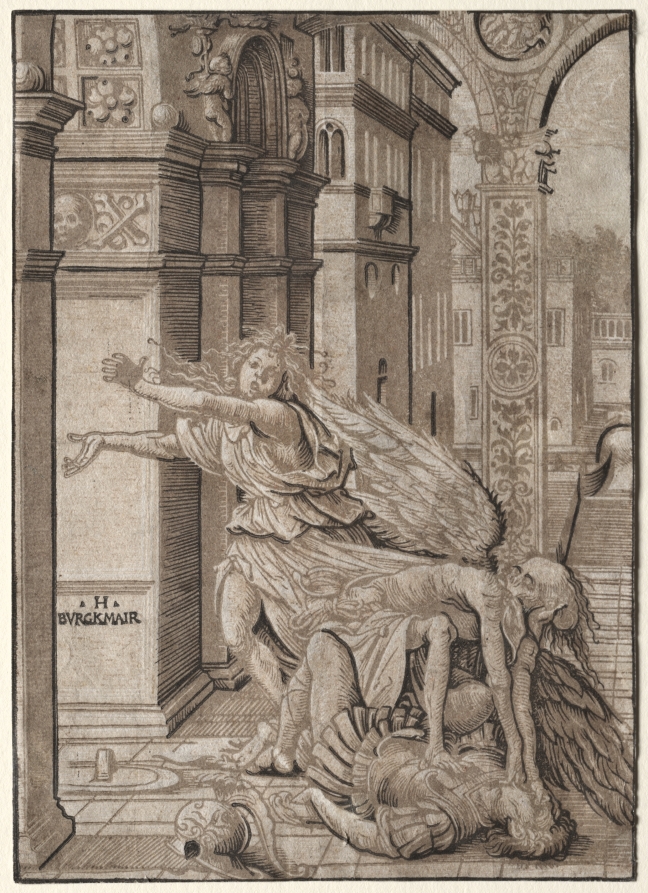
Urban Silhouette Research: The Lovers Surprised by Death
I. Geometric Integrity of the Dual Aesthetic
The subject, The Lovers Surprised by Death, presents a paradoxical geometric field. It is not a single composition but a dialectical tension between two opposing visual languages: the Udumbara Flower (Udonge) temple plaque and the Baroque hunting scene. For the 2026 executive silhouette, this duality demands a structural resolution that is neither purely Eastern nor Western, but a third, urban form. The Udonge plaque operates on a geometry of negative space and axial stillness. Its form is defined by what is absent—the white, umbrella-like clusters are mere suggestions against the void of the wood grain. The geometry is subtractive: a series of delicate, radial points that anchor the composition without occupying it. In contrast, The Hunt employs a geometry of diagonal vectors and compressed mass. The bodies of hunters and prey form a chaotic lattice of intersecting lines, with the focal point being the violent convergence of muscle and motion. The geometric integrity of the combined subject lies in the threshold between these two states: the point where stillness meets velocity, where the void meets the solid.
This threshold is the key to the 2026 silhouette. It is not a soft transition but a hard edge—a seam that separates two distinct volumetric zones. The garment must embody the Udonge’s radial emptiness in its upper structure (shoulders, neckline) while absorbing The Hunt’s diagonal torque in its lower structure (hips, hem). The result is a silhouette that appears to be in a state of suspended collapse: a form that is simultaneously expanding outward and contracting inward. The geometric integrity is maintained by a single, unbroken line that traces the perimeter of the body, but with internal cuts and folds that create the illusion of two separate garments fused into one.
II. Structural Poetics: The Architecture of Silence and Violence
The structural poetics of this research derive from the materiality of contradiction. The Udonge plaque’s “existence through non-existence” requires a fabric that can hold a shape without asserting its own presence. We specify a double-faced wool-cashmere in Ivory, a color that absorbs light rather than reflecting it, creating a surface that is both opaque and ethereal. The fabric’s weight (380 gsm) allows for cantilevered shoulders that extend beyond the natural frame, mimicking the Udonge’s radial clusters. These shoulders are not padded but structured through internal seams that create a negative volume—a hollow space between the fabric and the body. This is the architectural equivalent of the temple plaque’s “flower that is not a flower”: a form that exists only as a boundary.
In contrast, The Hunt’s “violence of existence” demands a contrasting structural language. The lower half of the garment—a high-waisted, asymmetrical skirt—is constructed from a technical silk gazar with a matte finish. The fabric is cut on the bias to create diagonal tension lines that echo the Baroque painting’s compositional vectors. The skirt is anchored by a single, concealed metal boning structure that runs from the left hip to the right knee, forcing the fabric into a spiral drape. This is not a soft, flowing movement but a frozen torque—the moment before the hunt’s climax. The poetics lie in the contradiction of weight: the upper body feels weightless, almost floating, while the lower body is heavy, grounded, and kinetic. The wearer becomes a living dialectic between the Udonge’s transcendental stillness and The Hunt’s immanent fury.
III. Urban Materiality: The City as Canvas
The urban materiality of this silhouette is defined by its response to the built environment. The Ivory color is chosen not for its purity but for its chameleonic quality against concrete, glass, and steel. In the city’s morning light, the wool-cashmere appears as a soft, monolithic block; under the harsh glare of office towers, it reveals subtle shadow pleats that reference the Udonge’s wood grain. The silk gazar, when viewed from a distance, reads as a solid, matte column. Only upon close inspection does the diagonal boning become visible, creating a visual friction between the garment’s apparent simplicity and its internal complexity.
The material palette is deliberately monochromatic to emphasize the structural dialogue. All hardware—zips, hooks, and the boning’s exposed tips—is finished in brushed gunmetal, a tone that mimics the patina of urban infrastructure. The garment’s seam construction is a critical element: all seams are flat-felled and exposed, treated as architectural joints rather than hidden closures. This is a direct reference to the temple plaque’s visible grain and the painting’s visible brushstrokes. The garment does not attempt to conceal its making; it celebrates the process of assembly as an aesthetic act. The urban wearer is thus positioned as both the subject and the object of the artwork—a moving sculpture that negotiates the city’s relentless geometry.
IV. The 2026 Executive Silhouette: A Synthesis
The final silhouette for the 2026 executive is a two-part system: a cropped, sculptural jacket over a floor-length, asymmetrical skirt. The jacket’s shoulders are extended and squared, with a mandarin collar that rises to the nape of the neck, creating a cloistered, inward-facing upper body. The sleeves are three-quarter length, ending in a sharp, angular cuff that mimics the Udonge’s radial form. The jacket is unlined, with all internal seams left raw, allowing the fabric’s edge to fray slightly—a nod to the impermanence of the temple plaque’s material.
The skirt is the counterpoint: high-waisted, with a single, deep pleat that runs from the left hip to the hem, creating a dynamic, spiraling line. The hem is asymmetrical, falling to the ankle on the left and the floor on the right. The skirt’s interior is boned with a single, continuous metal strip that forces the fabric into a permanent twist. This is the structural embodiment of The Hunt’s frozen motion. The overall effect is a silhouette that is both severe and fluid, a paradox that mirrors the subject’s dual nature. The wearer is not merely clothed but architecturally framed—a figure that occupies space with the quiet authority of a temple plaque and the raw energy of a hunting scene. This is the definitive urban silhouette for the executive who understands that power is not about volume but about the tension between presence and absence.