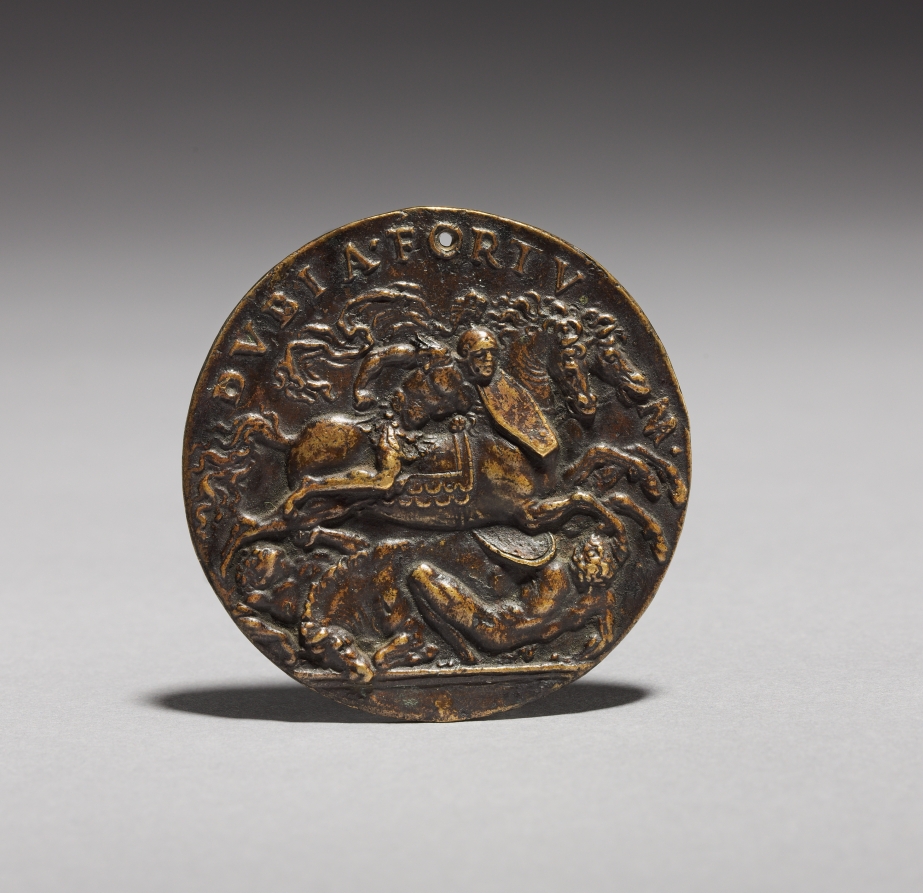
Urban Form: Dubia Fortuna
Structural Poetics: The Dialectic of Emptiness and Motion
The Dubia Fortuna research subject presents a profound aesthetic binary: the Udumbara Flowers wooden plaque from a Japanese temple, and the Mirror with Deities, Chariot, and the White Tiger from Han Dynasty China. These two artifacts, separated by centuries and divergent metaphysical systems, converge on a singular architectural principle—the negotiation between finite materiality and infinite spatiality. For the 2026 executive silhouette, this dialectic translates into a rigorous exploration of negative space as a structural load-bearer, and dynamic tension as a formal anchor.
The Udumbara plaque operates through subtraction. Its carved petals do not mimic botanical realism; rather, they index the topology of absence. Each chisel stroke is a deliberate renunciation of excess, leaving the wood grain to breathe as the only naturalistic element. This is Minimalist ontology: the garment becomes a field of strategic voids—unlined seams, asymmetrical drapes that expose the body’s own architecture, and shoulder lines that terminate in clean, unhemmed edges. The silhouette is pared to its essential geometry: a sharp, elongated tunic with a single, off-center pleat that mimics the plaque’s single blossom. The Onyx colorway—deep, absorptive, almost anti-reflective—anchors this emptiness, preventing the garment from dissolving into mere absence. It is a void rendered visible.
Conversely, the Han mirror operates through addition. Its “full-field” composition—the White Tiger in mid-leap, the chariot wheels spinning, the deities arranged in concentric celestial orbits—is a dense matrix of kinetic energy. Yet this density is not chaos; it is a controlled system of vectors. The tiger’s tail curves like a flame, but its trajectory is mathematically precise, leading the eye in a circular reading of the cosmos. For the 2026 executive silhouette, this translates into structural poetics of tension: a jacket cut with exaggerated lapels that sweep upward like the tiger’s tail, a skirt panel that wraps and fastens asymmetrically, suggesting perpetual motion arrested in fabric. The Onyx here is not passive; it is the dark matter against which the silver-threaded embroidery of the White Tiger motif—rendered as a geometric abstraction of intersecting lines and arcs—can achieve maximum optical velocity.
Urban Materiality: Bronze Patina and Wood Grain in Fabric
The material language of these artifacts dictates the urban materiality of the 2026 collection. The Udumbara plaque’s wood grain is not decorative; it is structural narrative. The artist preserved the natural fissures and knots as evidence of growth. In garment form, this translates to a double-faced wool crepe where the reverse side is deliberately exposed at the hem and cuff, showing the raw, unprocessed texture of the weave. The fabric is treated with a matte, almost chalky finish that absorbs light, echoing the plaque’s refusal of gloss. Seams are felled and left visible, not as imperfections, but as calligraphic marks—each stitch a deliberate, meditative act.
The Han mirror’s bronze patina—that green-black crust of oxidation—offers a counterpoint. It is time made tactile. For the 2026 silhouette, this is achieved through a bonded neoprene with a micro-embossed surface that mimics the mirror’s high-relief carving. The fabric is rigid yet fluid, holding architectural folds while allowing the body to move within. The Onyx base is overlaid with a subtle, iridescent silver foil that catches light only at certain angles, replicating the mirror’s ability to reveal and conceal depending on the viewer’s position. This is urban armor: a shell that protects while inviting scrutiny.
Geometric Integrity: The 2026 Executive Silhouette
The definitive silhouette for 2026 is a Minimalist response to the Dubia Fortuna dialectic. It is a single, continuous form that integrates both the static emptiness of the Udumbara and the dynamic fullness of the Han mirror. The key garment is a floor-length coat cut from a single piece of Onyx bonded neoprene, with no side seams. The front is entirely plain—a field of silence—save for a single, laser-cut aperture at the left shoulder, shaped as an abstracted Udumbara petal. This aperture is not a pocket; it is a window to the void, revealing a lining of silver-threaded silk that bears the geometric trace of the White Tiger’s leap.
The coat’s back, however, is a dense composition of structural pleats that radiate from the center spine, mimicking the mirror’s concentric celestial orbits. These pleats are engineered to hold their shape through a combination of fusible interfacing and topstitching, creating a relief map of cosmic motion. When the wearer walks, the pleats compress and expand, generating a visual rhythm that echoes the chariot’s eternal circuit. The silhouette is severe yet fluid: the shoulders are broad but unpadded, the waist is defined by a single, leather cord that ties in a knot reminiscent of a temple’s rope-twist closure. The hem is asymmetrical, falling to the ankle on the left and the mid-calf on the right, creating a dynamic imbalance that references the tiger’s arrested leap.
Conclusion: The Executive as Urban Ascetic
The 2026 Addison Fashion executive is not a consumer of trends but a custodian of spatial logic. The Dubia Fortuna research demands a wardrobe that is both a retreat and a manifesto. The Onyx palette, with its absorptive depth, serves as the ground against which the figure of the wearer becomes a living sculpture. The Minimalist approach is not about deprivation; it is about concentration—every seam, every pleat, every aperture must carry the weight of a thousand years of aesthetic inquiry. The garment is armor for the urban temple, a second skin that negotiates between the silence of the Udumbara and the velocity of the White Tiger. In this silhouette, the executive does not merely dress; they inhabit a philosophy.