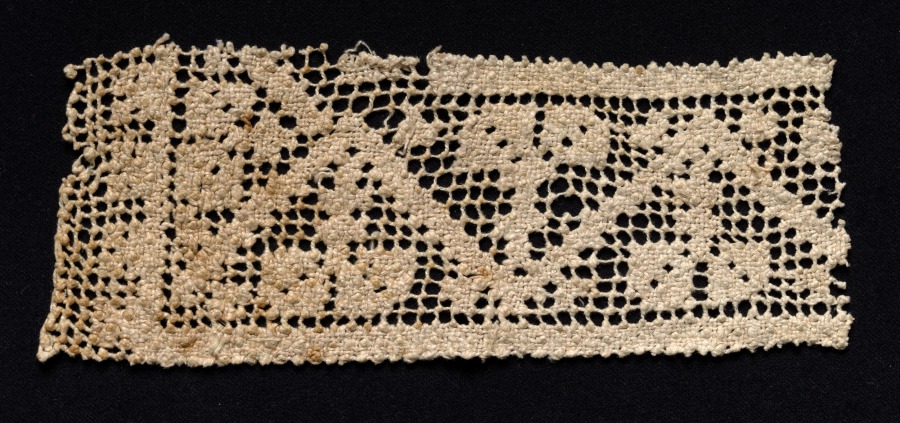
Urban Form: Fragment of a Band with Abstract Pattern
Executive Summary: The Dialectic of Emptiness and Motion
The subject—a fragment of a band bearing an abstract pattern—is not a singular artifact but a conceptual synthesis derived from two distinct East Asian objects: a Japanese temple plaque featuring the Udumbara flower and a Han dynasty bronze mirror depicting deities, a chariot, and the White Tiger. This analysis deconstructs the formal and chromatic tensions between these sources to derive a Minimalist urban silhouette for the 2026 NYC executive wardrobe. The core proposition is that true sophistication lies not in ornamentation but in the controlled interplay between void and form, stillness and implied velocity. The selected color, Onyx, serves as the chromatic anchor—a deep, absorptive black that functions as both absence and presence, mirroring the philosophical duality of the source materials.
I. Formal Deconstruction: The Plaque’s “Negative Topology”
A. Materiality as Narrative
The Udumbara plaque employs wood grain as a natural breathing surface. The artist’s chisel strokes are not representational but topological—each incision is a “cut” into the void, creating a petal-like form through absence rather than addition. This is a subtractive aesthetic, where the flower emerges from the material’s own grain, refusing illusionistic depth. For the executive wardrobe, this translates into garments that derive form from fabric’s inherent properties: a double-faced wool coat where the lapel’s roll is determined by the weave’s tension, not by padding; a silk crepe blouse where the shoulder seam is a single, unbroken line that follows the body’s natural topography.
B. The Principle of “Less is More” as Structural Logic
The plaque’s “subtraction” is not decorative minimalism but a philosophical stance. Every removed sliver of wood is a deliberate negation of the superfluous, leaving only the essential gesture. In silhouette terms, this mandates zero tolerance for extraneous detailing. No visible zippers, no decorative buttons, no contrast stitching. The 2026 silhouette must be monolithic—a single, uninterrupted volume. Consider a floor-length coat in Onyx wool-cashmere: the hem is raw, the sleeves are set with invisible seams, and the closure is a single, hidden magnetic snap. The garment’s power lies in its unbroken surface, which forces the eye to read the body’s movement as the sole ornament.
II. Formal Deconstruction: The Mirror’s “Dynamic Compression”
A. The “Full Composition” as Spatial Tension
The Han mirror employs a “man-man” (满工) layout, where every millimeter of the bronze surface is activated by the White Tiger’s coiled energy. The tiger’s tail curves like a flame, its muscles are rendered as high-relief ridges, and the chariot wheels spin in perpetual motion. This is not chaos but compressed dynamism—a frozen moment of maximum kinetic potential. For the wardrobe, this translates into garments that suggest movement even at rest. A tailored trouser with a single, sharp pleat that flares from the hip to the ankle, mimicking the tiger’s tail; a jacket with a “chariot” shoulder—a slightly extended, sculpted line that implies forward propulsion without actual bulk.
B. The “Cosmic Grid” as Structural Armature
The mirror’s deities and beasts are arranged in a rotational symmetry, echoing the celestial cycles. This is a hidden order beneath apparent complexity. In silhouette, this demands a rigorous internal structure that is invisible from the exterior. A blazer might have a built-in corset of lightweight carbon fiber stays, creating a rigid, architectural torso that contrasts with fluid sleeves. The Onyx fabric is cut on the bias for the body, but the sleeves are cut on the straight grain to create a subtle, directional tension—a “chariot” effect that channels the eye from shoulder to wrist.
III. Chromatic Analysis: Onyx as the “Absorptive Void”
A. The Color of “Emptiness” and “Totality”
Onyx is not a neutral black. It is a deep, non-reflective black that absorbs light rather than reflecting it. This chromatic property directly references the Udumbara plaque’s “void”—the empty space from which the flower emerges. In the wardrobe, Onyx functions as a chromatic eraser, eliminating visual noise and forcing the viewer to attend to silhouette and texture alone. A matte Onyx wool crepe reads as “non-color”, allowing the body’s form to become the primary visual event.
B. The “Mirror’s Patina” as Chromatic Accent
The Han mirror’s bronze surface, after millennia, develops a greenish-black patina—a surface that is both reflective and corroded. To echo this, the Onyx palette can be punctuated by micro-accents of oxidized silver or verdigris in the form of hardware: a single, antique-bronze zipper pull; a belt buckle with a matte, patinated finish. These accents are not decorative but functional anchors, drawing the eye to points of structural articulation (waist, shoulder, cuff) without disrupting the overall chromatic unity.
IV. Silhouette Architecture: The 2026 Executive Uniform
A. The “Udumbara” Coat: Negative Space as Volume
Form: A floor-length, single-seam coat in Onyx double-faced cashmere. The front is entirely flat, with no buttons or lapels. The back features a single, deep pleat that opens only when the wearer walks, revealing a “void” of matte silk lining. The sleeve is cut in one piece with the body, creating a batwing-like extension that falls to the wrist without interruption. This silhouette is static yet alive—the flower’s “emptiness” made wearable.
B. The “White Tiger” Trouser: Compressed Dynamism
Form: A high-waisted, wide-leg trouser in Onyx wool gabardine. A single, sharp pleat originates at the hip and flares to a 24-inch hem. The pleat is not pressed flat but “floats”—a three-dimensional ridge that catches light and shadow, mimicking the tiger’s coiled muscle. The waistband is a “chariot yoke”: a rigid, 2-inch band of leather-backed fabric that holds the silhouette in place without a belt. The hem is raw, cut with a laser to prevent fraying, creating a “frozen motion” effect.
C. The “Mirror” Blazer: Internal Armature
Form: A cropped, single-button blazer in Onyx silk-wool blend. The shoulder is “sculpted” with a hidden carbon-fiber stay that extends the line by 1.5 inches, creating a “chariot” profile—a forward-leaning, assertive shape. The lapel is a “negative lapel”: it is not folded but cut away, leaving a raw edge that reveals the blazer’s internal structure. The button is a single, patinated bronze disc, echoing the mirror’s central boss. The interior is lined with a “cosmic grid” of silk in a subtle, tone-on-tone geometric pattern—visible only when the jacket is open.
V. Conclusion: The Dialectic Resolved
The 2026 Urban Silhouette for Addison Fashion is not a compromise between the Udumbara plaque’s emptiness and the Han mirror’s fullness. It is a synthesis: a silhouette that uses negative space as a structural element (the plaque’s legacy) while compressing dynamic energy into a rigid, architectural form (the mirror’s legacy). The Onyx palette serves as the chromatic void that absorbs all distraction, leaving only the pure, unadorned line of the body in motion. This is the uniform for the executive who understands that power is not displayed but implied—a whisper of the tiger’s coil, a breath of the flower’s emptiness, rendered in the cold, precise language of modern tailoring.