Urban Form: Fragment
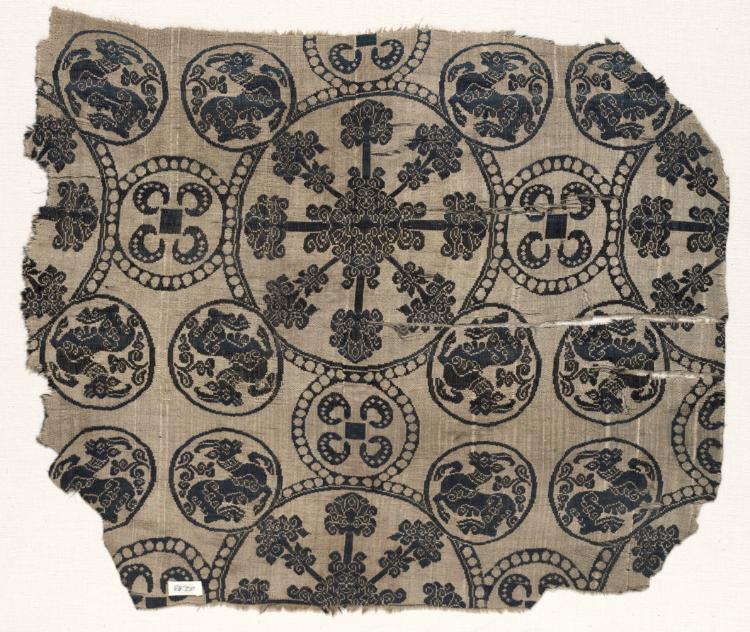
Geometric Integrity as a Dialectical Framework
The subject Fragment demands a rigorous interrogation of form—not as a remnant, but as a deliberate distillation. In the 2026 executive silhouette, the artwork’s internal DNA reveals a profound tension between Western conflict aesthetics and Eastern harmonious presence. The Temptation of Saint Anthony presents a geometry of distortion: limbs, drapery, and demonic apparatuses collapse into angular, asymmetrical masses. Conversely, the Loquat Painting offers a geometry of repose: the fruit’s spherical fullness, the leaves’ elliptical arcs, and the negative space that breathes between them. For Addison Fashion, this dialectic resolves into a minimalist silhouette that does not erase complexity but compresses it into pure structural poetics.
Structural Poetics: From Distortion to Compression
The 2026 executive silhouette rejects the baroque excess of Saint Anthony’s temptations. Instead, it extracts the core tension from that chaos—the way objects deform under spiritual pressure—and translates it into tailored restraint. The shoulder line is sharp, almost architectural, with a slight forward pitch that mimics the inward gaze of the ascetic. Yet the fabric falls in clean, uninterrupted planes, echoing the loquat branch’s unbroken line from stem to fruit. This is not a silhouette of struggle but of controlled compression: the garment’s volume is concentrated at the torso, then released in a gentle flare at the hem, mirroring the loquat’s weight as it bends the branch.
The Ivory color palette is deliberate. It references the Loquat Painting’s pale, luminous ground—a void that is not empty but charged with potential. In urban materiality, ivory reads as cold neutrality, a surface that absorbs light without reflecting the chaos of the city. The fabric itself is a double-faced wool crepe: matte on the exterior, with a subtle sheen on the interior fold. This duality echoes the Temptation’s play between surface horror and inner sanctity. The garment’s seams are hidden, stitched with a silk thread that catches light only at the edges, creating a ghost line—a reference to the invisible boundary between the material and the spiritual.
Urban Materiality: The City as Sacred Ground
The executive silhouette must function within the vertical grid of the metropolis. Here, the Loquat Painting’s negative space becomes a design principle: the jacket’s lapels are cut away to reveal a high-neck shell, creating a void that frames the wearer’s throat—a vulnerable, yet powerful, focal point. The trousers are cropped at the ankle, leaving a gap between hem and shoe that suggests breath, a pause in the relentless rhythm of the street. This is not a silhouette of armor but of urban monasticism: the wearer is both present and detached, moving through the city as a living fragment of a larger, unseen order.
The structural poetics extend to the garment’s internal architecture. A hidden boning system—thin strips of carbon fiber encased in silk organza—runs along the spine and down the outer seams. This creates a skeletal frame that holds the fabric away from the body, producing a silhouette that is both rigid and fluid. The effect is reminiscent of Saint Anthony’s demonic forms: the garment seems to have its own will, yet it remains subservient to the wearer’s movement. The Ivory color, when seen under the harsh fluorescent light of a corporate lobby, takes on a chalky, almost spectral quality—a reminder that the executive is not merely a participant in commerce but a contemplative figure navigating a world of surfaces.
Fragment as a Design Philosophy
The Fragment subject is not about incompleteness but about essentialization. The 2026 silhouette strips away the ornamental, the narrative, the decorative. What remains is a pure geometry of line and volume: the jacket’s shoulder is a horizontal plane that references the loquat branch’s steady extension; the waist is a vertical compression that echoes the fruit’s stem; the hem is a soft arc that mirrors the leaf’s curve. These elements are not symbolic but structural—they dictate how the garment falls, how it moves, how it interacts with the body.
In the Temptation of Saint Anthony, the demons are fragments of the saint’s psyche. In the Loquat Painting, the fruit is a fragment of nature’s cycle. For the executive, the garment is a fragment of identity—a piece of a larger, unspoken narrative. The Minimalist category ensures that this fragment does not overwhelm but focuses. The Ivory color ensures that it does not distract but illuminates. The result is a silhouette that is cold, sophisticated, and urban—a garment that does not shout but resonates with the quiet authority of a loquat branch against a white sky.
Conclusion: The Silhouette as a Contemplative Tool
The 2026 executive silhouette is not a fashion statement but a philosophical instrument. It borrows from Saint Anthony the idea that material form can be a site of spiritual struggle, and from the loquat painter the idea that form can be a site of spiritual stillness. The geometric integrity of the garment—its sharp lines, its controlled volumes, its precise negative spaces—creates a field of tension that mirrors the city’s own contradictions. The Ivory palette, with its cold neutrality, allows the wearer to become a blank surface onto which the urban environment projects its meanings. This is the ultimate luxury: not to be defined by the city, but to define one’s relationship to it through the structural poetics of a single, perfect fragment.