Minimalist
Onyx
Urban Form: Solidarity
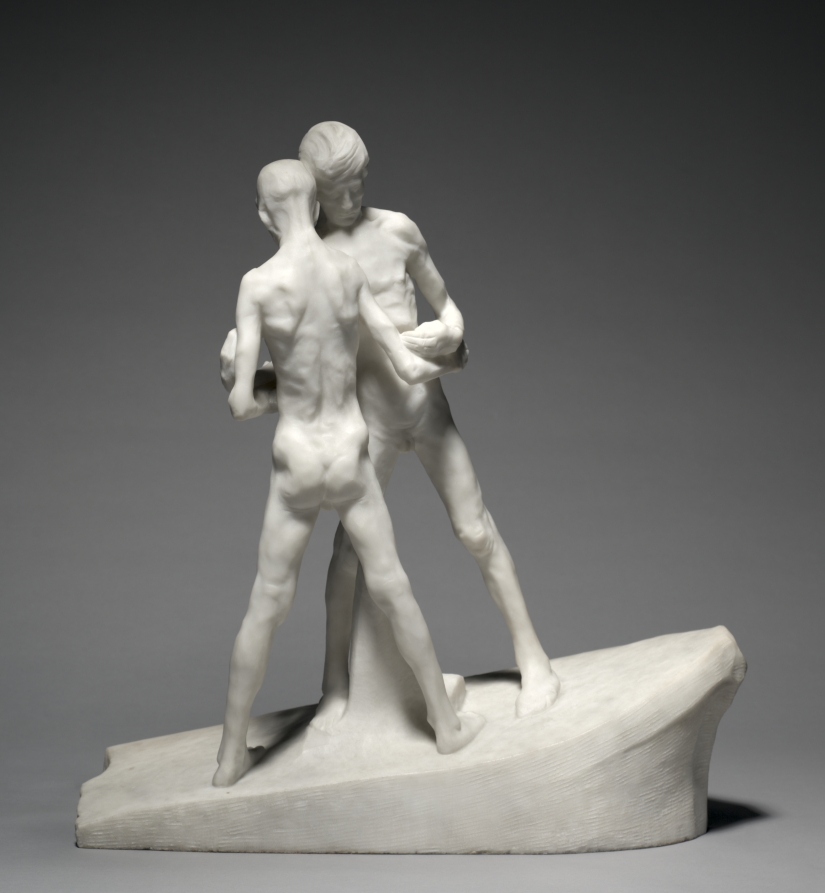
Structural Poetics: The Dialectic of Presence and Absence
The urban silhouette for 2026, as derived from the internal DNA of *The Hunt* and *The Plaque of Udumbara Temple*, is not a compromise between East and West. It is a synthesis of two opposing forces: the violent, kinetic tension of the hunt and the serene, hollowed-out patience of the void. This analysis deconstructs the geometric integrity of these artworks to define a new executive silhouette—one that is simultaneously armored and evacuated, aggressive and contemplative.The Geometry of the Hunt: Kinetic Armature
*The Hunt* provides the structural skeleton. The painting’s power lies in its frozen moment of maximum tension—the bowstring drawn, the horse’s hooves suspended, the stag’s muscles coiled for a flight that will never come. This is not a static image; it is a diagram of potential energy. The silhouette it dictates is one of **sharp, angular vectors** that mimic the bow’s arc and the stag’s antlered crown. The key geometric principle here is the **asymmetrical cantilever**. The hunter’s torso twists against the horse’s forward momentum, creating a diagonal line of force. In garment construction, this translates to a single-shoulder drape or a sharply angled lapel that cuts across the body’s vertical axis. The shoulder line is not soft; it is a **blade-like projection**, echoing the drawn arrow. The fabric must hold its shape as if carved from stone—a heavy, matte wool or a bonded leather that refuses to drape. The waist is cinched, but not with soft fabric. Instead, a rigid, sculpted belt or a structural seam creates a **compression point**, a locus of energy where the silhouette narrows before flaring into a sharp, A-line skirt or a bifurcated pant leg that suggests the horse’s galloping stride. The color Onyx is non-negotiable here. It absorbs all light, creating a void against which the silhouette’s edges are defined with surgical precision. Onyx is the color of the hunter’s shadow, the darkness before the arrow strikes. It is a color of absolute presence, of material density.The Geometry of the Void: Negative Space as Structure
*The Plaque of Udumbara Temple* inverts this logic. Its geometry is not about what is present, but what is absent. The plaque itself is a rectangle of weathered wood, its surface eroded by time. The carved characters are not bold; they are shallow, almost illegible, as if the text is retreating into the material. The “beauty” is in the **negative space**—the grain of the wood, the patina of ash, the silence around the letters. This dictates a silhouette of **subtractive architecture**. The garment is not built up; it is carved out. The fabric is not a shell but a **hollow volume**. Think of a coat that is deliberately oversized in the back, creating a void between the fabric and the wearer’s spine. The front is closed, almost monastic, with a high, standing collar that obscures the neck. The shoulders are not sharp but **softly dropped**, as if the garment is slowly sliding off the body. The sleeves are cut wide and flat, like the wings of a bird that has already taken flight. The structural poetics here are those of **erosion and delay**. Seams are not finished; they are left raw, fraying slightly, as if the garment is aging in real time. Pockets are hidden, not as functional elements but as **architectural recesses**—negative spaces within the volume. The hem is uneven, dipping lower in the back, suggesting a gravitational pull toward the earth. This is not a garment for action; it is a garment for waiting. It is the uniform of the patient observer.Synthesis: The 2026 Executive Silhouette
The 2026 executive silhouette is a **dialectical garment**. It must contain both the hunter’s tension and the monk’s emptiness. The result is a **minimalist armor**—a shell that protects not by its thickness, but by its geometry. The primary silhouette is a **long, columnar coat** in Onyx. The front is clean, almost severe, with a single row of hidden buttons. The collar is a high, mandarin stand that rises to the jawline, creating a **barrier between the wearer and the world**. But the back is where the synthesis occurs. A single, sharp cut is made from the shoulder blade to the hem, creating a **vent that reveals a layer of raw, unbleached linen**—the color of the Udumbara plaque. This is the “wound” of the hunt, the arrow’s path, but it is also the “void” of the temple, the space where meaning is absent. The trousers are **wide and fluid**, but they are anchored by a **structural belt** at the hip—a rigid, black leather band that is not cinched but simply placed, like a frame around a painting. The pant legs fall straight, breaking just above the floor, creating a **negative space between the hem and the shoe**. The shoe itself is a **blade-like loafer** in polished Onyx, with a sharp, elongated toe that extends the line of the foot into a weapon.Urban Materiality: The Fabric of Solidarity
The materiality must reflect the duality. The primary fabric is a **double-faced wool**—one side is a dense, felted Onyx that holds its shape; the other is a **raw, unbrushed charcoal** that catches the light like dust. This fabric is a metaphor for the two artworks: the hard, polished surface of the hunt, and the soft, eroding surface of the plaque. The lining is a **silk charmeuse** in a deep, almost black silver—a color that only appears when the garment moves. This is the “flash” of the stag’s eye, the moment of recognition before the arrow strikes. It is also the “glimmer” of the Udumbara flower, the promise of a bloom that never comes. The stitching is **exposed and architectural**. The seams are not hidden; they are **top-stitched in a contrasting thread**—a pale, bone-white that mimics the carved characters on the plaque. These stitches are not decorative; they are structural, holding the garment together like the sinews of a hunted animal.Conclusion: The Silent Command
The 2026 executive silhouette is not for the loud or the aggressive. It is for the individual who commands through stillness. The Onyx coat is a statement of absolute presence, but the raw linen vent is an admission of absence. The sharp shoulder is the hunter’s aim, but the dropped back is the monk’s surrender. This is solidarity—not as a political slogan, but as a **geometric truth**. It is the understanding that to be truly present, one must also be willing to be absent. The garment is a vessel for this paradox, a wearable architecture of the in-between.
Technical Insight
Technical Insight: Translating Onyx palettes into Minimalist silhouettes for the modern metropolis.