Minimalist
Slate
Urban Form: Figural Pendant
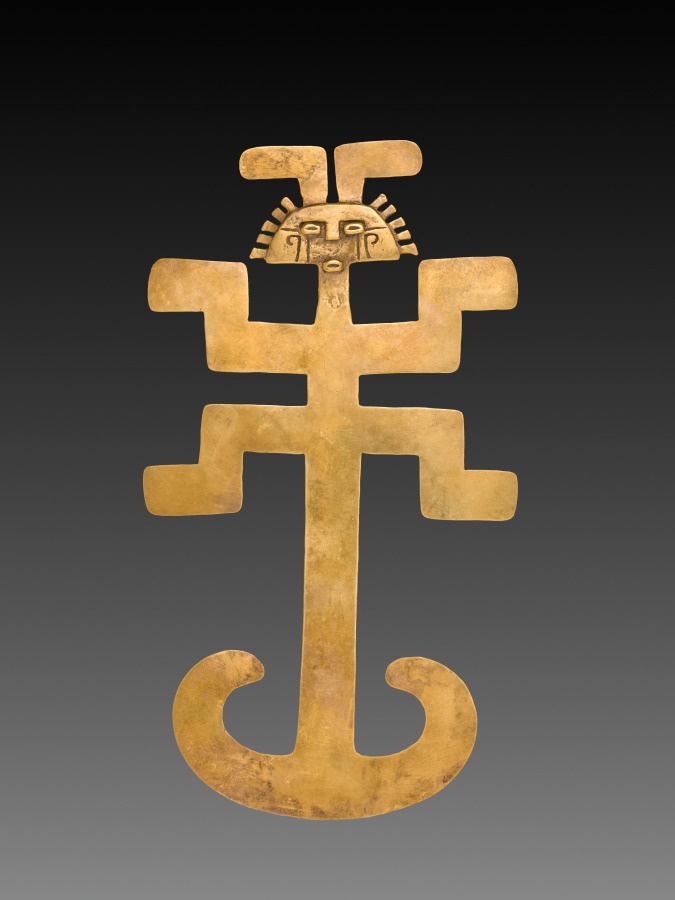
Technical Deconstruction: The Figural Pendant as a Study in Contained Form
I. Form as Philosophical Container
The figural pendant, in its most rigorous architectural iteration, is not an ornament. It is a volumetric problem solved at the scale of the sternum. Drawing from the dialectical tension between Jacques-Louis David’s *The Death of Socrates* and Giorgio Morandi’s *Vases*, we isolate the pendant’s core formal challenge: how to hold emptiness with intention. In David’s composition, the *kylix* (poison cup) is a vessel of terminal narrative. Its form is subordinate to the dramatic gesture—Socrates’ hand reaching toward it, the diagonal thrust of his torso. The cup is a fulcrum, not a shape. Its silhouette is lost in the chiaroscuro of moral theater. Conversely, Morandi’s gray jars are pure silhouette. They exist without context, without story. Their form is their only content. They are, in the language of minimalism, *objects that refuse to signify*. For the 2026 executive wardrobe, the figural pendant must operate in the Morandi register: a closed form that does not narrate. It must be a *negative space* made tangible. The ideal silhouette is a truncated ovoid or a flattened cylinder—geometry that reads as a solid from a distance but reveals a hollow interior upon close inspection. This is the pendant as *architectural model*, not as talisman.II. The Slate Palette: Chromatic Restraint as Power Signal
Color selection is a strategic decision in the urban wardrobe. Slate—a blue-gray that hovers between industrial concrete and twilight sky—offers the optimal chromatic neutrality for the figural pendant. Unlike black (which absorbs all light and reads as void) or ivory (which reflects and reads as surface), slate occupies a middle ground of *material presence*. In the context of the David-Morandi axis, slate is the color of Morandi’s *pittura metafisica*—the hue of objects stripped of symbolic weight. It is the color of a jar that has been painted over so many times that its original identity is lost, leaving only *tonal mass*. For the pendant, slate achieves three objectives: 1. **It negates narrative.** A slate pendant does not evoke antiquity, romance, or spirituality. It is a color without historical baggage. 2. **It harmonizes with the NYC uniform.** The executive wardrobe in 2026 is dominated by charcoal, navy, and black. Slate sits between these tones, acting as a bridge rather than a contrast. 3. **It performs as a shadow.** In low light (subway, lobby, elevator), slate reads as a darker version of itself, creating a subtle volumetric shift against the wearer’s lapel or neckline.III. Silhouette Analysis: The Pendant as Urban Sculpture
The figural pendant must be analyzed through three formal criteria: *profile, mass distribution, and surface treatment*. **Profile:** The pendant should present a clean, uninterrupted contour when viewed from the side. No protruding elements, no asymmetrical appendages. The ideal profile is a gentle convex curve on the front face, flattening to a straight back. This creates a *lens-like* shape that sits flush against the collarbone without tilting forward. **Mass Distribution:** The center of gravity must be low, approximately one-third from the bottom edge. This ensures the pendant hangs with a weighted stillness, resisting the sway of movement. The 2026 executive is in motion—between meetings, across platforms, through revolving doors. A pendant that swings erratically reads as *nervous*. A pendant that hangs with gravitational certainty reads as *composed*. **Surface Treatment:** The surface must be matte, with a micro-texture that diffuses light rather than reflecting it. This is a direct reference to Morandi’s brushwork—the way he built up layers of pigment to create a surface that *absorbs* rather than *announces*. A polished surface would introduce a specular highlight, breaking the silhouette’s integrity. A matte surface maintains the form as a single, unbroken field of slate.IV. The Dialectic of Emptiness and Weight
The pendant’s interior must be hollow. This is not a cost-saving measure; it is a conceptual necessity. The hollow interior references the *empty vessel* of Morandi’s jars—the space that is not filled, the meaning that is not assigned. In David’s painting, the cup is filled with poison. In Morandi’s studio, the jars are filled with air. The pendant, as a wearable object, must choose the latter. A hollow slate pendant weighs approximately 18–22 grams. This is the optimal weight for a piece that must feel *present* without feeling *burdensome*. The wearer should be aware of its existence only when they touch it—a tactile reminder of the form’s integrity.V. Application to the 2026 NYC Executive Wardrobe
The figural pendant is not a statement piece. It is a *systemic* piece—one that operates within a larger vocabulary of minimalism. It pairs with: - **A slate or charcoal double-breasted blazer** (structured shoulder, suppressed waist) to create a monochromatic field where the pendant reads as a subtle volumetric interruption. - **A high-neck knit in black or ivory** to provide a contrasting ground against which the pendant’s silhouette can be read. - **A leather tote in matte black** to echo the pendant’s material restraint. The pendant should be worn at a length of 18–20 inches, resting at the sternal notch. This placement aligns with the body’s vertical axis, reinforcing the wearer’s posture. It is a piece that *disciplines* the silhouette rather than decorating it.VI. Conclusion: The Pendant as Silent Object
The figural pendant, in its slate minimalism, resolves the David-Morandi dialectic by choosing neither. It does not seek to elevate the wearer to heroic status (David’s path), nor does it retreat into pure objecthood (Morandi’s path). Instead, it occupies the space *between*—a form that acknowledges its own materiality while refusing to narrate. In the 2026 executive wardrobe, this is the ultimate power move: to wear an object that says nothing, and in doing so, says everything about the wearer’s command of form, color, and silence.
Technical Insight
NYC Perspective: Translating Slate tones into Minimalist silhouettes.