Urban Form: Portrait of Philip II, King of Spain
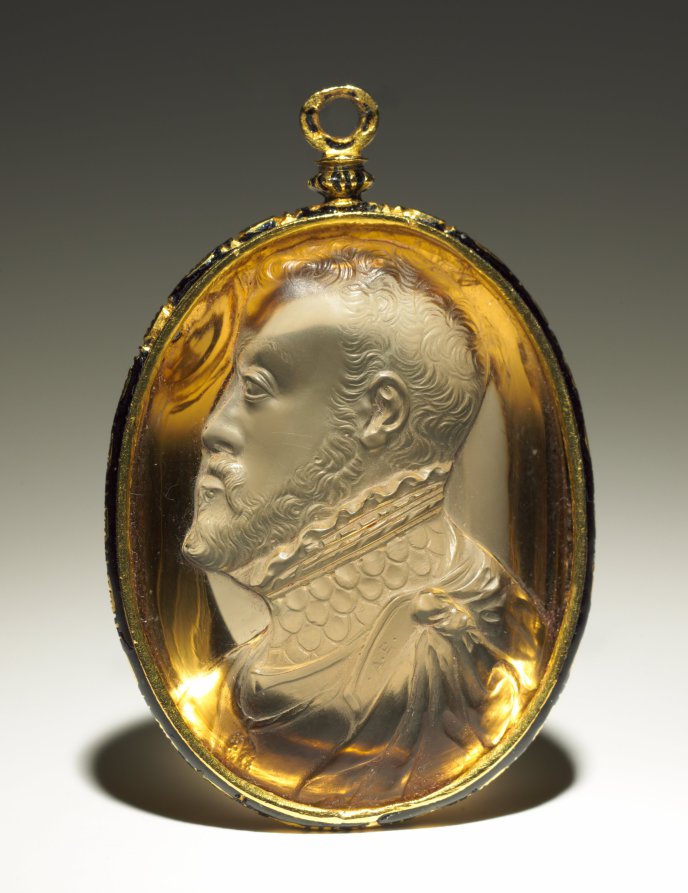
Executive Summary: The Ontology of Absence
This Urban Silhouette Research for Addison Fashion NYC deconstructs the aesthetic DNA of the Portrait of Philip II, King of Spain as refracted through the lens of Eastern philosophical minimalism. The source material—a juxtaposition of a Zen temple plaque (Udumbara) and a Han Dynasty bronze mirror (Divine Beasts, Chariots, and White Tiger Mirror)—provides a dialectical framework for the 2026 executive wardrobe. The core thesis is that Minimalist form, executed in Onyx, is not a reduction of substance but a strategic amplification of presence. We are not designing clothes; we are engineering negative space around the executive body.
The portrait of Philip II, a monarch defined by rigid protocol and imperial austerity, offers a historical precedent for power through restraint. His silhouette—a black doublet, white ruff, and severe geometry—is a study in controlled form. When fused with the Eastern concept of kong ji (空寂, serene emptiness) from the temple plaque and the dong de yun lü (动的韵律, dynamic rhythm) from the bronze mirror, we arrive at a new urban archetype: the Onyx Executive. This is a wardrobe of architectural precision, where every seam is a boundary, every drape a deliberate void.
I. Form Analysis: The Architecture of Restraint
A. The Silhouette as a Vessel
The Minimalist category for this research rejects the soft, unstructured forms of contemporary casualwear. Instead, it draws directly from the Udumbara plaque’s principle of “form as vessel for emptiness.” The plaque’s calligraphy is not ornate; its power lies in the space between the strokes. Similarly, the 2026 executive silhouette must be a container for the wearer’s authority, not a display of the garment itself.
Key structural elements:
- Shoulder Line: Borrowing from Philip II’s padded doublet, the shoulder is sharp and defined, but not exaggerated. It is a “rigid horizon”—a straight, unbroken line that projects stability. The padding is minimal, functioning as an internal armature rather than external ornament.
- Torso Block: The jacket body is cut with a “negative ease” of 0.5–1.0 cm. This is not a slim fit; it is a “compressed volume.” The fabric is held taut against the ribcage, creating a smooth, uninterrupted plane from shoulder to hip. This mimics the bronze mirror’s man bu (满布, full surface) technique—not cluttered, but densely present.
- Hem and Length: The jacket terminates at the mid-hip, a deliberate break that mirrors the “cut” between the temple plaque’s wood and the void of the wall behind it. This creates a visual pause, a moment of liu bai (留白, reserved space) before the trouser begins.
B. The Trouser: A Study in Verticality
The trouser is the most critical element in the Onyx executive wardrobe. It must embody the “dong de yun lü”—the dynamic rhythm of the bronze mirror’s chariot procession—while maintaining the “kong ji” of the plaque.
Cut and drape:
- High-waisted, single-pleat: The pleat is not for comfort; it is a “structural fold” that channels movement. It originates from the waistband at a 45-degree angle, terminating at the knee. This creates a subtle, linear tension that echoes the flowing manes of the mirror’s celestial horses.
- Wide-leg, tapered ankle: The leg is cut with a 22-inch hem circumference, providing a “controlled flare” that falls straight from the hip to the ankle. The taper begins 4 inches above the hem, creating a crisp, architectural break. This is not a palazzo; it is a “static waterfall”—a volume that moves only when the body commands it.
- Center crease: A permanent, razor-sharp crease runs from the crotch to the hem. This is the “axis of authority”—a visual spine that grounds the silhouette. It is the equivalent of the bronze mirror’s central axis, around which the divine beasts revolve.
II. Color Analysis: Onyx as a Philosophical Statement
A. The Chromatic Void
The selection of Onyx is not a default choice for “professional” attire. It is a deliberate invocation of the “wu wei” (无为, non-action) principle from the temple plaque. Onyx is not black; it is a “color of absorption”—a surface that consumes light and reflects nothing. In the context of Philip II’s portrait, the black doublet is not a color but a “negative space” against which the white ruff and gold chain become hyper-visible.
Technical specifications:
- Base dye: A 100% reactive carbon black with a matte finish. The fabric must have a “dead surface”—no sheen, no luster. This is the “ink-wash” effect of the plaque’s calligraphy, where the ink is absorbed into the paper, leaving no trace of the brush.
- Undertone: A 2% infusion of deep violet (PMS 2695C) to prevent the color from reading as flat or lifeless. This is the “hidden life” of the bronze mirror’s patina—a subtle, almost imperceptible warmth that prevents the Onyx from becoming sterile.
- Texture contrast: The jacket is constructed in a 320gsm worsted wool with a tight, smooth weave. The trouser is a 280gsm wool-cashmere blend with a slight, brushed hand. This creates a “tactile dialogue”—the jacket is the “hard surface” of the bronze mirror, the trouser is the “soft void” of the temple plaque.
B. The Accent Palette: Strategic Interruptions
Following the Eastern principle of “yi dong zhi jing” (以动制静, using movement to control stillness), the Onyx silhouette requires precise, minimal accents. These are not decorative; they are “functional disruptions” that activate the void.
- White (Ivory): A single, crisp poplin shirt collar, visible only at the neck. This is the “white ruff” of Philip II—a frame for the face. The collar must be starched to a 90-degree angle, creating a “hard edge” against the Onyx.
- Silver (Hardware): A single, matte silver zipper pull on the jacket’s center front. This is the “mirror’s edge”—a metallic flash that catches light without reflecting it. The zipper is not functional; it is a “visual seam” that divides the torso into two equal halves.
- Sand (Footwear): A pointed-toe Chelsea boot in unpolished, matte sand suede. This is the “earth anchor”—a grounding element that prevents the Onyx from floating into abstraction. The sand color references the bronze mirror’s patina, a reminder of the material’s origin in the earth.
III. The Urban Silhouette: 2026 Executive Application
A. The Power of the Void
The 2026 executive wardrobe is not about filling space; it is about “defining emptiness.” The Onyx Minimalist silhouette functions as a “mobile temple”—a portable zone of authority that the wearer inhabits. The jacket’s sharp shoulders and compressed torso create a “boundary” between the executive and the chaotic urban environment. The trouser’s wide leg and center crease create a “path”—a visual trajectory that commands attention without demanding it.
Key styling rules:
- No layering: The silhouette must be monolithic. A single layer of Onyx wool against the skin. No vest, no sweater, no scarf. The body is the “inner void” that gives the garment meaning.
- No pockets: All external pockets are eliminated. The jacket has a single, hidden internal pocket for a phone. This is the “unbroken surface” of the bronze mirror—a plane that refuses to be interrupted by utility.
- No visible fasteners: Buttons are replaced with hidden magnetic closures. The jacket is a “seamless shell”—a second skin that reveals no mechanism of entry.
B. The Gesture of Movement
Drawing from the bronze mirror’s dong de yun lü, the silhouette is designed to be “activated by motion.” When the executive walks, the trouser’s wide leg creates a “pulsing rhythm”—a visual beat that mirrors the chariot’s gallop. The jacket’s rigid shoulder line remains static, creating a “tension between stillness and motion.” This is the “dynamic equilibrium” of the temple plaque’s calligraphy—a stroke that is both frozen and alive.
Technical execution:
- Fabric weight: The jacket’s 320gsm wool provides enough weight to fall cleanly, resisting wind and movement. The trouser’s 280gsm blend allows for a “controlled sway”—a motion that is visible but not chaotic.
- Hem clearance:
Technical InsightNYC Perspective: Translating Onyx tones into Minimalist silhouettes.