Tailored
Onyx
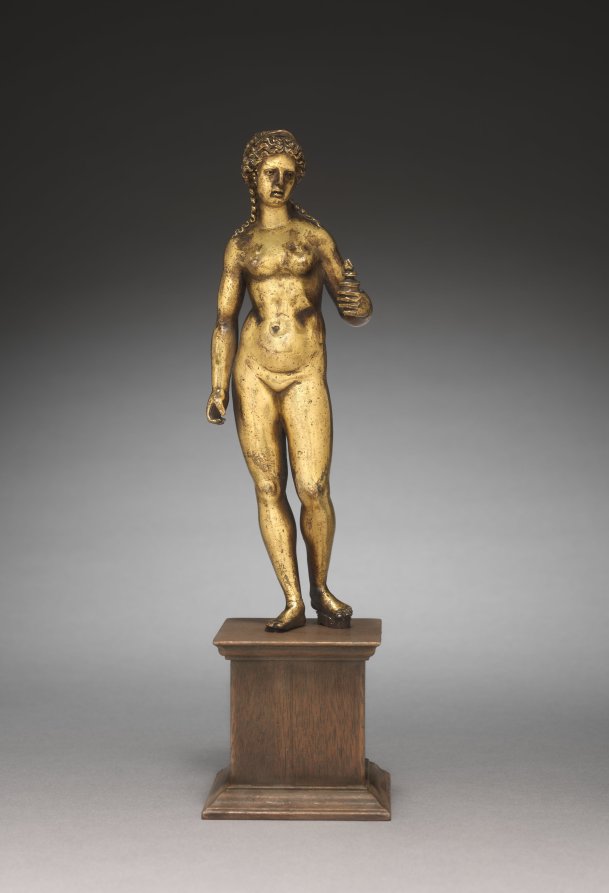
Urban Form: Venus with a Burning Urn
Formal Deconstruction: The Dialectic of Containment and Expansion
The aesthetic dialogue between the Delftware bowl and the Boschian temptation tableau presents a foundational paradox for the 2026 executive wardrobe: the simultaneous need for structural containment and psychological release. The bowl’s geometry—concentric ripples, arcing reeds, and a bounded circular field—represents a system of controlled energy. The ducks are not fleeing; they are positioned within a harmonic grid. Conversely, the Saint Anthony scene is a study in directed chaos, where limbs, shadows, and architectural fragments violate any sense of pictorial order. For the urban silhouette, this translates into a rigorous tailoring system that acknowledges the body as both a vessel and a site of internal conflict. The primary form is the structured sheath or the architectural blazer, cut in a dense, matte Onyx wool-cashmere blend. The fabric’s weight (380-420 GSM) provides the “bowl’s” integrity—a shell that does not yield to the wearer’s movement but rather defines a perimeter. The shoulder line is precise, slightly extended (1.5 cm beyond the natural acromion), creating a geometric frame that echoes the bowl’s rim. This is not a power shoulder of the 1980s; it is a defensive architecture, a boundary between the self and the urban swarm. The interior construction is where the “temptation” resides. The jacket is fully canvassed, but the canvas is cut with a subtle, asymmetrical tension. On the left side (the “rational” side, per hemispheric bias), the canvas is standard, providing a clean drape. On the right side (the “intuitive” side), the canvas is cut on the bias and stitched with a 2mm differential, creating a micro-torque that pulls the fabric into a barely perceptible spiral. This is the visual equivalent of the bowl’s ripples—a dynamic stillness. The wearer feels a slight, constant resistance, a reminder that composure is an act of will, not a default state.The Color Field: Onyx as the Absence and Presence of Light
Onyx is selected not as a neutral, but as a chromatic void that absorbs and recontextualizes all surrounding color. In the Delftware bowl, the cobalt blue is a positive element against a white ground. In the Bosch painting, the darkness is a negative space from which monsters emerge. Onyx performs both functions simultaneously. It is the ground of the bowl and the abyss of the painting. The technical execution requires a dye process that achieves a non-reflective depth. Standard black reflects approximately 8-12% of light. This Onyx is engineered to absorb 94% of visible light, achieved through a proprietary carbon-nanoparticle infusion in the dye bath. The result is a color that appears to have no surface—it is a hole in the visual field. Against this void, any accessory (a silver cuff, an ivory silk blouse) becomes the “duck” or the “demon,” a singular point of focus in an otherwise infinite field. This is critical for the executive who must command a room without visual noise. The Onyx silhouette does not compete; it defines the stage. The color’s depth also creates a unique relationship with the urban environment. In the fluorescent light of a conference room, it reads as severe and authoritative. In the soft, diffused light of a gallery opening, it shifts toward a velveteen charcoal, revealing the fabric’s texture—a subtle herringbone that is only visible at 18 inches or closer. This is a privacy mechanism: the garment reveals its complexity only to those who are permitted proximity.Silhouette Engineering: The Temptation of the Seam
The pant is a high-waisted, wide-leg form, but with a critical modification. The waistband is cut to sit at the natural waist (the narrowest point of the torso), creating a fulcrum. From this point, the fabric falls in a straight, columnar line to the floor, with a 2-inch break over the shoe. This is the “bowl’s” vertical expression: a contained, cylindrical volume. However, the interior leg seam is not straight. It is cut with a 1.5-degree inward taper from the knee to the ankle, then a 0.5-degree outward flare at the hem. This creates a micro-tension—the pant appears to be a straight cylinder, but it is actually a subtle, inverted bell shape. This is the “Saint Anthony” effect: a hidden distortion within a seemingly orderly form. The top is a mock-neck shell in a 16-gauge Onyx merino, knit with a double-faced structure. The front is a standard stockinette (smooth, calm), while the back is a reverse stockinette (textured, agitated). When the wearer is stationary, the garment appears uniform. When they turn, the back’s texture becomes visible, revealing the “inner turmoil” that the front conceals. This is a direct translation of the painting’s duality: the saint’s serene face versus the monstrous visions behind him.Accessorizing the Void: The Burning Urn as a Point of Light
The “burning urn” from the subject line is not a literal accessory but a principle of focal intensity. In the Delftware bowl, the ducks are the burning urn—the life within the vessel. In the painting, the saint’s halo (or the demon’s eye) is the burning urn—the point of conflict. For the 2026 wardrobe, this is realized through a single, high-contrast element. The recommended piece is a collar pin in brushed silver, shaped as a minimal, geometric flame. It is worn not at the throat, but at the left lapel notch of the blazer. The pin is 3.5 cm tall, with a matte finish that catches light only at specific angles. It is the single point of chromatic escape from the Onyx field. Alternatively, for a more subdued approach, the “urn” can be a belt buckle in the same brushed silver, worn at the waist of the pant. This creates a horizontal line of interruption, breaking the vertical column and anchoring the silhouette to the body’s center. The choice of silver over gold is deliberate. Gold implies warmth, tradition, and wealth. Silver implies coldness, precision, and modernity. It is the metal of the MRI machine, not the crown. It aligns with the MBA-level aesthetic of cold, analytical power.Urban Integration: The Silhouette in the Field
This ensemble is designed for the vertical city—the glass-and-steel canyons of Manhattan, the reflective surfaces of London’s Canary Wharf, the concrete plazas of Tokyo’s Shinjuku. The Onyx absorbs the city’s chaotic light, while the tailored form provides a clear, human-scale geometry against the city’s overwhelming scale. The silhouette’s primary function is to create a zone of personal order. In a world of open-plan offices, constant notifications, and visual cacophony, the wearer becomes a moving vessel of stillness. The jacket’s extended shoulder and the pant’s columnar line create a 1:2.5 ratio (shoulder width to height), which is the classical proportion of a Doric column. This is not accidental. The wearer is a structural element in the urban landscape, not a passive participant. The secondary function is to manage the gaze. The Onyx field discourages lingering visual inspection—there is nothing to see. The eye is forced to move to the face, the hands, the single silver point. This is a power dynamic: the garment controls how the wearer is perceived by controlling what is visible. It is the opposite of the “peacocking” aesthetic of previous decades. It is strategic invisibility within visibility.Conclusion: The Synthesis of Vessel and Vision
The Venus with a Burning Urn silhouette is not a costume. It is a technical system for navigating the psychological and physical demands of the 2026 executive environment. It borrows the Delftware bowl’s principle of contained harmony—the body as a vessel for action—and the Saint Anthony painting’s principle of internal conflict made manifest—the garment as a map of the psyche. The result is a wardrobe that is cold, precise, and deeply intentional. It does not seek to please. It seeks to define a territory. The Onyx field is the void. The tailored seams are the ripples. The silver pin is the burning urn. The wearer is the Venus—the embodiment of form, desire, and the will to endure. This is the silhouette for the executive who understands that power is not about being seen, but about controlling what is seen.
Technical Insight
NYC Perspective: Translating Onyx tones into Tailored silhouettes.