Minimalist
Slate
Urban Form: Architecture of the Middle Ages: Chapel in St. Jacques, Dieppe
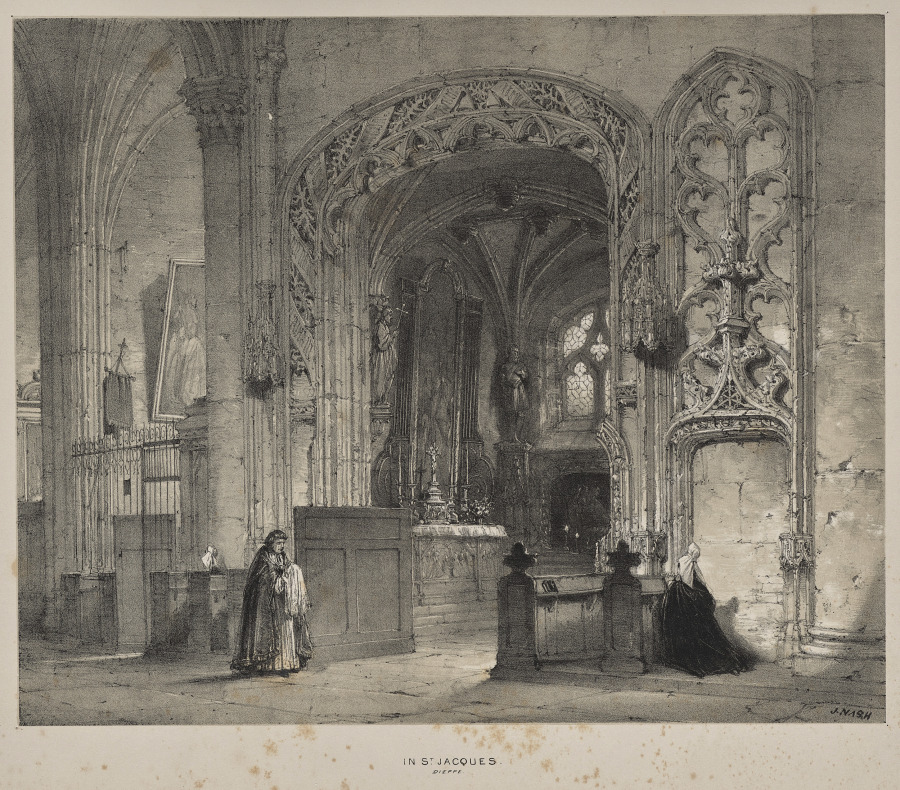
Geometric Integrity and the Architectural Void
The Chapel of St. Jacques in Dieppe presents a definitive study in vertical compression and spatial negation—a medieval grammar that directly informs the 2026 executive silhouette. The chapel’s ribbed vaults and pointed arches do not merely support stone; they articulate a system of structural tension where mass is rendered weightless through precise geometric articulation. Each pier, each flying buttress, is a line of force made visible. For Addison Fashion, this translates into a silhouette that eschews volume for linear clarity. The 2026 executive is not draped; she is constructed. The shoulder line is a corbel—sharp, projecting, and unyielding. The waist is a triforium—a compressed band of negative space that separates the upper torso from the lower column. The hemline falls as a plumb line, referencing the chapel’s vertical thrust toward the heavens, yet grounded in the urban grid.Structural Poetics: The Logic of Compression and Release
The chapel’s interior is a study in controlled compression. The nave’s height is exaggerated by the narrowness of the bay widths, creating a sensation of upward pressure. This is not a space of expansion but of directed energy. The executive silhouette for 2026 mirrors this: a tailored jacket with a suppressed waist and a high, narrow armhole. The fabric—a worsted wool in slate—is cut with zero ease at the shoulder, forcing the garment to stand away from the body only at the chest, where a subtle drape mimics the chapel’s ribbed vaulting. The sleeve head is set high, almost architectural, with a slight forward pitch that echoes the chapel’s eastern orientation. The pant is a straight leg, cut from the hip with no break at the hem, terminating precisely at the ankle bone. This is not a garment for movement; it is a garment for presence. The interior of the chapel is defined by its voids—the empty spaces between columns, the dark recesses of the side aisles. In the same way, the 2026 silhouette is defined by what it omits. There is no excess fabric, no decorative flourish. The only ornament is the seam itself—a structural line that serves as both join and articulation. The back of the jacket features a single vertical seam, mimicking the chapel’s central spine. The front closure is a hidden placket, creating a seamless plane of slate from collarbone to hem. This is minimalism as a form of asceticism—a refusal to decorate, a commitment to the pure logic of the form.Urban Materiality: Slate and the Medieval Palette
The color slate is not a neutral; it is a geological statement. It references the limestone and flint of the Dieppe region, the grey of the English Channel under a winter sky. In the context of the 2026 executive, slate functions as a ground—a base upon which light and shadow perform. The fabric is a double-faced wool with a matte finish, its surface slightly irregular to catch ambient light without reflecting it. This is not a color that announces itself; it is a color that absorbs. It is the color of the chapel’s stone after rain—dark, dense, and silent. The materiality extends to the hardware. Buttons are replaced by magnetic closures set into the seam, invisible to the eye. The zipper tape is matte black, the teeth fine and precise. The lining is a silk-wool blend in a slightly lighter shade of slate, creating a subtle interiority that is felt rather than seen. This is urban armor—a second skin that protects without insulating, that structures without constraining.The Dialectic of Void and Volume: A Philosophical Tailoring
The chapel’s apse—the eastern termination of the nave—is a semicircular void that receives the morning light. It is a space of culmination, where the vertical thrust of the architecture meets the horizontal plane of the altar. In the 2026 silhouette, this dialectic is resolved in the coat. A long, single-breasted overcoat in slate wool-cashmere, cut with a slight A-line from the shoulder to the hem. The front is unadorned, the collar a simple notch that folds back to reveal the lining. The back features a single pleat at the center, allowing for a controlled release of fabric when the wearer moves. This is the void made wearable—a garment that contains space without filling it, that defines the body by what it leaves empty. The coat’s hem falls to mid-calf, a length that references the chapel’s nave height without mimicking it. The sleeve is cut in two pieces, with a slight curve at the elbow to accommodate the arm’s natural arc. The shoulder is dropped by half an inch, creating a subtle slope that softens the otherwise rigid line. This is the only concession to the body’s organic form—a reminder that even the most architectural garment must serve the human figure.Conclusion: The 2026 Executive as Urban Monolith
The Chapel of St. Jacques in Dieppe is not a building of ornament; it is a building of structure. Its beauty lies in the logic of its construction—the way each stone supports the next, the way light is channeled through the voids, the way the entire edifice rises from the earth as a single, unified gesture. The 2026 executive silhouette for Addison Fashion is a direct translation of this logic: a garment that is not worn but inhabited, that does not decorate but defines. In slate, in minimalism, in the precise articulation of seam and void, the urban professional becomes a monolith—a figure of quiet authority, grounded in the medieval past, yet fully present in the contemporary city.
Technical Insight
Technical Insight: Translating Slate palettes into Minimalist silhouettes for the modern metropolis.