Urban Form: Je T'aime (No. 632)
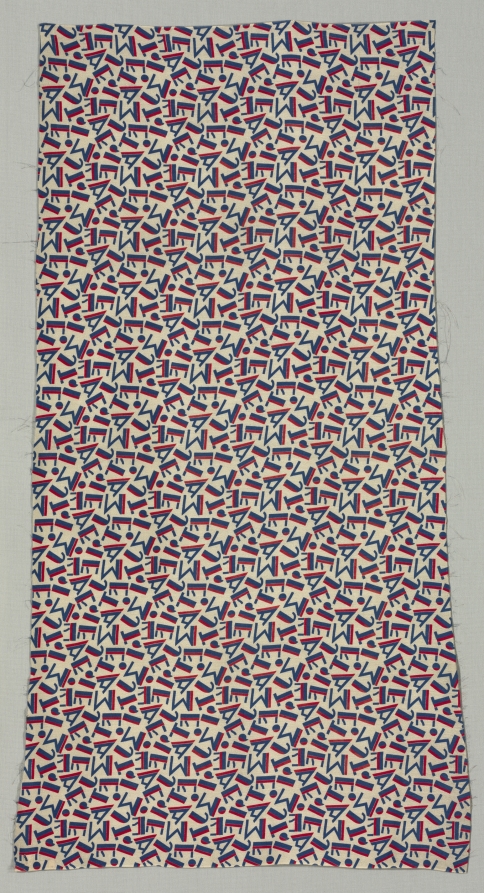
Structural Poetics: The Dialectic of Terminal Form
The Je T’aime (No. 632) research subject presents a definitive architectural paradox: the simultaneous embodiment of heroic resistance and transcendental dissolution. For the 2026 executive silhouette, this artwork demands a rigorous re-evaluation of how volume, line, and void interact at the threshold of material existence. The internal DNA—juxtaposing the Death of Socrates with the Stele with Sakyamuni and Bodhisattvas—is not a mere cultural comparison but a tectonic blueprint for urban armor. The garment becomes a vessel for two opposing yet convergent forces: the geometric will of the West and the chromatic surrender of the East.
Geometric Integrity: The Socratic Line
The Socratic vessel operates through a language of compressed geometry. The philosopher’s posture—a vertical spine, an arm extended upward toward the ideal—translates into a silhouette defined by sharp, unyielding shoulders and a rigid, columnar torso. The minimalist ethos here is not about absence but about extreme precision. Every seam must function as a line of force, a vector pointing toward an invisible truth. The fabric, ideally a dense Onyx wool or bonded crepe, must hold its shape without drape, mimicking the stone of the original artifact. The collar is a clean, architectural stand—neither lapel nor notch, but a pure geometric ring that frames the neck as a pedestal frames a bust. The sleeve insertion is a set-in sleeve with a high armhole, creating a clean, unbroken line from shoulder to wrist. This is the heroic silhouette: a form that declares its own permanence, its refusal to yield to gravity or time. The hem is sharp, falling just below the hip, creating a clear terminus—a visual full stop. This is the urban poetics of resistance: the garment as a shield against entropy.
Chromatic Surrender: The Sakyamuni Veil
In direct counterpoint, the stele introduces a fluid, mineral logic. The Buddha’s reclining form is not a line but a wave—a continuous, unbroken flow that rejects angularity. For the 2026 executive, this translates into a secondary layer: an overcoat or duster in a liquid, matte fabric—perhaps a washed silk or a micro-crêpe with a subtle, granular texture that recalls the mineral pigments of the original. The silhouette here is volumetric but weightless. The shoulders are soft, dropped, and slightly extended, creating a sense of enveloping space rather than containment. The fabric is cut on the bias, allowing it to pool and fold around the body like water around a stone. The color is a deep, Onyx black, but not a flat black—a black with undertones of charcoal and indigo, a black that absorbs light rather than reflecting it. This is the silhouette of surrender: not a collapse, but a conscious release of structure. The garment does not fight the body; it accompanies it, allowing the wearer to move through the city as a bodhisattva moves through a dream—untouched by the chaos of the street.
The Synthesis: A Two-Part Urban Armor
The definitive 2026 executive silhouette is not a single garment but a dialectical system. It consists of two distinct yet complementary pieces:
1. The Inner Shell (Socratic): A structured, single-breasted jacket with a high, stand collar and a clean, unadorned front. The back is cut in one piece, with a single vertical seam at the center to emphasize the spine’s verticality. The sleeves are set with a zero-ease construction, creating a taut, almost architectural fit. The fabric is a heavy, double-faced wool in Onyx, pressed to a matte finish. This is the armature—the rational, heroic core that provides the wearer with a sense of unassailable presence.
2. The Outer Veil (Sakyamuni): A floor-length, unlined coat cut from a single width of fabric. The shoulders are dropped, the sleeves are wide and kimono-like, and the front falls open, with no buttons or closures. The fabric is a liquid silk satin in a slightly lighter shade of Onyx—almost a deep, mineral gray. The hem is raw, left unfinished to suggest the impermanence of form. This is the veil of compassion—the layer that softens the hard geometry of the inner shell, allowing the wearer to move through the urban landscape with a sense of fluid authority.
Urban Materiality: The Onyx Spectrum
The choice of Onyx as the primary color is deliberate. Onyx is not a neutral; it is a void with texture. In the context of the 2026 executive, it represents the urban night—the moment when the city’s hard edges dissolve into shadow. The fabric must be treated to have a low luster, a surface that catches light only at the edges, like a polished stone. The inner shell uses a matte, brushed wool to absorb light, while the outer veil uses a satin with a subtle, granular sheen to reflect it. This creates a dynamic interplay of absorption and reflection, a visual dialogue between the material and the immaterial.
Conclusion: The Terminal Gesture
The Je T’aime (No. 632) silhouette is a study in terminal aesthetics. It asks: when the body is at its limit—whether through death or enlightenment—what form does it take? The answer is a dual form: a rigid, geometric shell that points toward the ideal, and a fluid, mineral veil that dissolves into the void. For the 2026 executive, this is not a costume but a philosophical uniform. It is the armor of the rational mind and the robe of the awakened heart, worn simultaneously. The silhouette is minimalist in its reduction, Onyx in its chromatic depth, and urban in its materiality. It is a garment that does not merely clothe the body but inscribes it with the eternal question: how do we face the end? The answer, in this collection, is with structure and surrender—a perfect, silent equilibrium.