Urban Form: Kneeling Angel
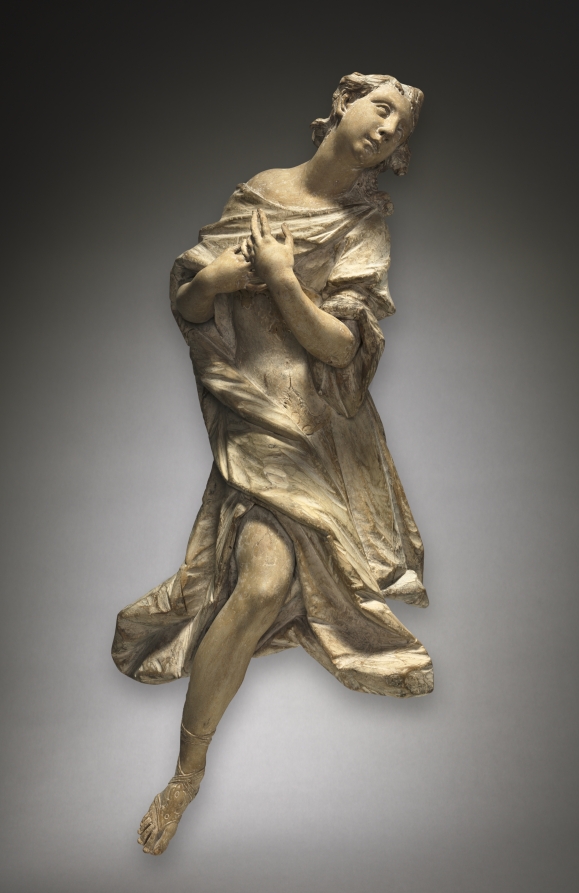
Executive Summary: The Architecture of Absence
The Kneeling Angel silhouette emerges from a rigorous deconstruction of two opposing yet complementary artifacts: the weathered temple plaque bearing the “Udumbara Flowers” inscription and the painted garment chest. Both objects, though separated by function and ritual, share a fundamental design language rooted in negative space, temporal patina, and the poetics of concealment. For the 2026 NYC executive wardrobe, this translates into a Minimalist form language executed in Onyx—a color that absorbs light and embodies the void. The silhouette is not about what is present, but what is withheld; not about structure, but about the tension between containment and release. This analysis will deconstruct the formal and chromatic principles derived from the source materials and map them onto a contemporary urban wardrobe that prioritizes silent authority, spatial intelligence, and material honesty.
Formal Deconstruction: The Plaque and the Chest as Silhouette Archetypes
1. The Temple Plaque: Surface as Time-Bearing Membrane
The plaque’s formal essence lies in its stratified surface. The wood grain, the cracked lacquer, the accumulated dust—these are not flaws but active design elements that record the passage of time. The calligraphic characters, once sharp, now bleed into the background, creating a blurred boundary between figure and ground. This is a critical lesson for silhouette construction: the garment’s surface must not be a flat plane, but a living membrane that registers wear, light, and movement. The Kneeling Angel silhouette adopts this principle through unlined, raw-edge finishes and deliberately untreated fabrics—wool crepe that develops a subtle luster with friction, or double-faced cashmere that reveals its internal construction at the hem. The silhouette’s shoulder line is softened, almost dissolved, avoiding the sharp tailoring of traditional power dressing. Instead, the shoulder drops into a gentle, continuous curve, mimicking the plaque’s eroded edges. The neckline is high and enclosed, like the plaque’s framed inscription, creating a zone of stillness around the face. The overall form is vertical and columnar, echoing the plaque’s rectangular proportions, but with a subtle asymmetry—a single seam that shifts off-center, a pocket placed at an unconventional height—that introduces the unexpected grace of imperfection.
2. The Garment Chest: Interiority as Design Strategy
The chest is a study in containment and anticipation. Its closed lid hides a world of textiles, scents, and memories. The painted floral motifs on its exterior are not mere decoration; they are signifiers of what lies within, a promise of richness held in reserve. For the Kneeling Angel, this translates into a silhouette that encloses the body without constricting it. The garment is a portable interior. The back panel is constructed with a hidden pleat or a concealed zip, allowing for a controlled expansion when the wearer moves—a subtle revelation of volume that mirrors the chest’s opening. The sleeves are cut wide and deep, like the chest’s interior, and can be worn pushed up to expose the forearm, or left to fall, creating a cocoon-like enclosure. The waist is undefined, replaced by a fluid, columnar drape that falls from the shoulder to the hem, uninterrupted. This is not a silhouette that clings; it is one that houses. The length is extended to the ankle, creating a grounded, monumental presence that anchors the wearer in space, much like the chest sits solidly on the floor. The closure is minimal—a single, oversized button at the neck, or a hidden magnetic snap—emphasizing the act of sealing and unsealing the garment’s interior.
Chromatic Analysis: Onyx as the Color of the Void
1. Onyx as Absorptive Field
Onyx is not black; it is a depth-charged, light-absorbing dark that contains hints of charcoal, deep slate, and midnight blue. It is the color of the plaque’s lacquer after centuries of oxidation, and the chest’s interior when the lid is closed. In the Kneeling Angel palette, Onyx functions as a chromatic void that absorbs ambient light and compresses space. It does not reflect; it consumes. This makes it the ideal color for a silhouette that prioritizes absence and interiority. The garment becomes a dark field against which the wearer’s face and hands emerge as focal points. The texture becomes paramount: a matte Onyx wool reads as soft and porous, like the plaque’s weathered surface; a slightly lustrous Onyx silk satin reads as liquid and deep, like the chest’s painted floral ground. The color unifies disparate forms, allowing the silhouette’s subtle asymmetries and hidden volumes to register without visual noise.
2. Chromatic Accents: The Udumbara Moment
To prevent the Onyx from becoming monolithic, the silhouette introduces micro-accents of faded gold and pale ivory, drawn from the plaque’s calligraphic strokes and the chest’s floral motifs. These are not large blocks of color, but thread-thin topstitching, a single mother-of-pearl button, or a raw silk lining glimpsed at the cuff. These accents function as temporal markers, like the plaque’s remaining flecks of gold leaf—reminders of a former brilliance now subdued. They are the “Udumbara moment”: rare, fleeting, and precious. The overall effect is one of restrained opulence, where color is not used for expression but for punctuation. The Kneeling Angel does not shout; it whispers through material and light.
Technical Construction: The Silhouette as Spatial Device
1. The Shoulder: Dissolved Authority
Traditional power dressing relies on a structured, extended shoulder to project dominance. The Kneeling Angel rejects this in favor of a dropped, rounded shoulder that dissolves the boundary between garment and body. The sleeve is cut in one piece with the body (a kimono or dolman construction), eliminating the armhole seam. This creates a continuous, flowing line from neck to wrist, echoing the plaque’s eroded edges. The shoulder point is deliberately obscured, making the garment appear to drape from an invisible internal structure. This is authority through surrender—a power that does not need to assert itself.
2. The Torso: Enclosure Without Constriction
The torso is constructed as a single, unbroken panel from shoulder to hem, with darts replaced by soft gathers at the back. This creates a column of fabric that moves with the body rather than shaping it. The front is completely flat, like the plaque’s surface, with no pockets, no buttons, no visible seams. The back, however, is the site of complexity: a deep inverted pleat allows for unexpected volume when the wearer reaches forward, and a hidden zipper runs from the nape to the waist, allowing the garment to be entered and exited like a sacred space. This duality—front as facade, back as interior—mirrors the chest’s painted exterior and hidden contents.
3. The Hem: Grounded and Unfinished
The hem is raw, left unhemmed, and allowed to fray slightly over time. This is a direct reference to the plaque’s cracked lacquer and peeling paint. The garment’s edge is not a conclusion but a transition, a point where the fabric begins to dissolve into the surrounding space. The length is precisely calibrated to graze the floor when the wearer is standing, creating a continuous vertical line that elongates the figure. When the wearer sits, the hem pools on the ground, anchoring the silhouette in a moment of stillness.
Conclusion: The Silhouette as a Question
The Kneeling Angel is not a garment for action; it is a garment for contemplation and presence. It asks the wearer to inhabit space differently—to move slowly, to stand still, to allow the fabric to speak. In the context of the 2026 NYC executive wardrobe, it offers an alternative to the aggressive, hyper-visible power dressing of the past. It is a silhouette of quiet authority, where power is derived not from expansion but from compression and containment. The Onyx color absorbs the chaos of the urban environment, creating a portable zone of calm. The Minimalist form, with its dissolved shoulders and hidden volumes, invites closer inspection—a reward for those who take the time to look. Ultimately, the Kneeling Angel is a meditation on the void, a garment that, like the plaque and the chest, holds more in its absence than in its presence. It is a silent question posed to the wearer and the observer alike: What is contained within this darkness?