Urban Form: Architectural Model
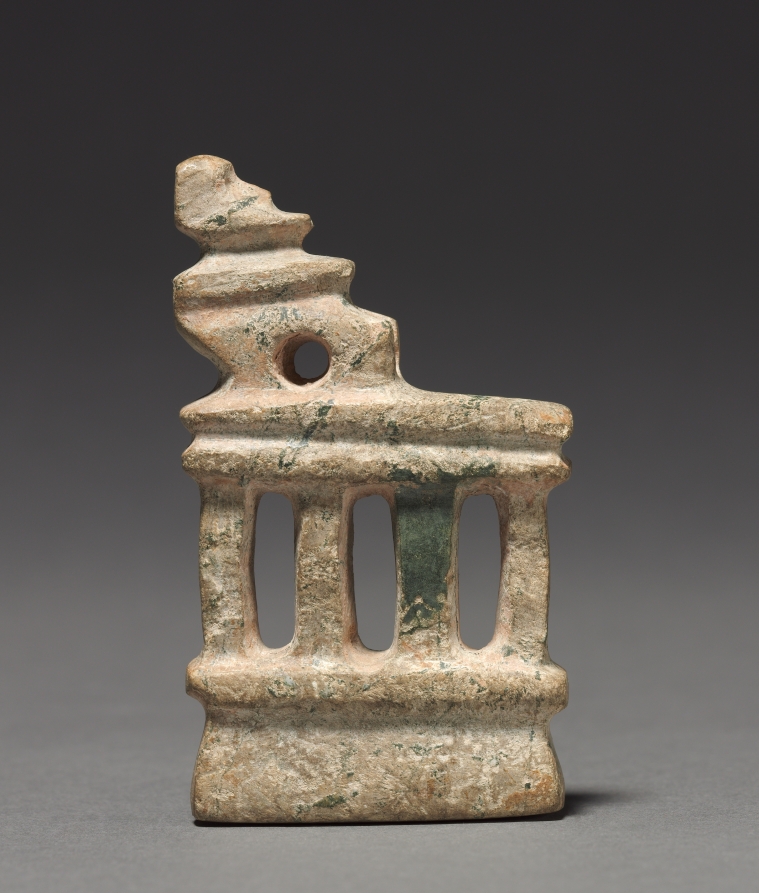
Geometric Integrity as Urban Armature
The architectural model under analysis—a synthesis of the Metropolitan Museum of Art’s Bodhisattva and the Walters Art Museum’s Bull-Headed Humanoid Amulet—presents a dialectic of sacred form that directly informs the 2026 executive silhouette. For Addison Fashion, this is not a mere stylistic reference but a structural poetics of urban materiality. The Bodhisattva’s idealized, flowing drapery and the amulet’s compressed, symbolic mass converge into a single architectural principle: the body as a vessel for transcendent geometry. The 2026 silhouette must therefore reject organic softness in favor of minimalist rigor, where each line serves as a tectonic statement.
The Bodhisattva’s Verticality: A Study in Ascension
The Bodhisattva’s posture—serene, upright, with hands in a mudra of fearlessness or granting—embodies a vertical axis of spiritual gravity. The garment’s rhythmic folds are not mere fabric but linear conduits that guide the eye upward, away from earthly weight. For the executive silhouette, this translates into a columnar structure that elongates the torso. The 2026 coat, for instance, should feature a seamless, uninterrupted front panel from shoulder to hem, with internal boning at the spine to maintain a rigid, statuesque posture. The fabric—a dense, matte Onyx wool-cashmere blend—absorbs light, eliminating any suggestion of volume or drape. This is not clothing; it is architectural cladding for the urban professional.
The Bodhisattva’s idealized proportions—a head-to-body ratio that implies divinity—demand a silhouette that abstracts the human form. Shoulders are squared via a cantilevered pad that extends beyond the natural acromion, creating a horizontal counterpoint to the vertical line. The waist is suppressed only slightly, not to emphasize femininity but to introduce a subtle hourglass tension within the overall cylinder. This echoes the Bodhisattva’s own balance of compassion (softness) and enlightenment (rigor). The result is a minimalist armor that projects authority without aggression, a silent command of space.
The Amulet’s Compression: Symbolic Mass in Miniature
In stark contrast, the Bull-Headed Amulet operates on a principle of compression. Its small scale and tight, seated posture concentrate divine power into a dense, portable symbol. For the 2026 silhouette, this informs the shoulder and neckline architecture. The bull’s head—a symbol of strength and protection—is reinterpreted as a sculptural collar that rises from the garment’s body, not as a separate piece but as an integral extrusion of the fabric. This collar is asymmetrical, higher on one side, mimicking the amulet’s off-center, protective gaze. It is constructed from molded leather over a carbon-fiber substructure, ensuring it retains its shape without collapsing under its own weight.
The amulet’s functional symbolism—its role as a personal, protective object—translates into pockets and closures that are not decorative but ritualistic. A single, hidden magnetic seam at the left hip, for example, allows the wearer to access an interior pocket designed to hold a digital talisman (a smartphone or keycard). This is urban materiality at its most refined: the garment becomes a second skin of security, where every element serves a purpose. The Onyx color palette—deep, absorbing, non-reflective—enhances this sense of enclosed power, as if the wearer carries a fragment of ancient mystery within the modern grid.
Structural Poetics: The Dialectic of Flow and Fixity
The dialogue between the Bodhisattva’s flowing drapery and the amulet’s fixed symbolism creates a structural tension that defines the 2026 executive silhouette. The Bodhisattva’s garment, though idealized, suggests movement—the fabric seems to breathe, to ripple with an inner life. The amulet, by contrast, is static, a frozen glyph of power. Addison Fashion’s silhouette must reconcile these opposites: the fluidity of urban movement (walking through a glass atrium, gesturing in a boardroom) with the fixity of architectural form.
This is achieved through articulated panels in the garment’s back and sleeves. The front remains a monolithic column (the Bodhisattva’s verticality), while the back incorporates laser-cut, geometric perforations that allow for subtle expansion during movement. These perforations are not random; they follow a grid pattern derived from the amulet’s own symbolic geometry—a series of concentric squares that echo the bull’s head’s circular, protective gaze. The sleeves are cut with a sharp, angular hem that ends at the wrist bone, exposing the hand as a tool of agency, much like the Bodhisattva’s exposed palm in the mudra.
Urban Materiality: Onyx as a Tectonic Statement
The choice of Onyx as the primary color is deliberate. It is not black; it is a geological black with undertones of deep charcoal and silver, reminiscent of polished basalt or obsidian. This color absorbs and neutralizes the chaotic light of the urban environment, allowing the silhouette to exist as a negative space within the city’s visual noise. The fabric itself is a double-faced wool with a liquid finish on the exterior and a matte, brushed interior. This duality mirrors the Bodhisattva’s inner serenity and outer presence, as well as the amulet’s hidden, protective interior.
For the 2026 executive, this materiality is not decorative but functional. The fabric’s weight (approximately 400 grams per square meter) ensures it drapes with authority, never clinging or wrinkling. The seams are felled and pressed to a razor-thin edge, creating a continuous surface that reads as a single, sculpted form. Buttons are replaced with magnetic closures set into the fabric, invisible to the eye. The garment’s structural integrity is maintained by a hidden internal frame of lightweight aluminum stays, sewn into the lining at the shoulders, spine, and hips. This frame does not restrict movement; it guides it, ensuring that every gesture is deliberate and controlled.
Conclusion: The Silhouette as Sacred Object
The 2026 executive silhouette, as derived from the Bodhisattva and the Bull-Headed Amulet, is not a fashion statement but a manifestation of urban transcendence. It is a minimalist armor that protects the wearer from the city’s entropy while projecting an aura of unassailable calm. The Onyx palette, the columnar structure, the sculptural collar, and the articulated panels all serve a single purpose: to transform the human body into a living architectural model, a vessel for the sacred within the secular grid. This is the definitive urban silhouette for 2026—a synthesis of ancient spiritual geometry and modern executive power, rendered in the coldest, most sophisticated terms.