Oversized
Onyx
Urban Form: Architectural Model
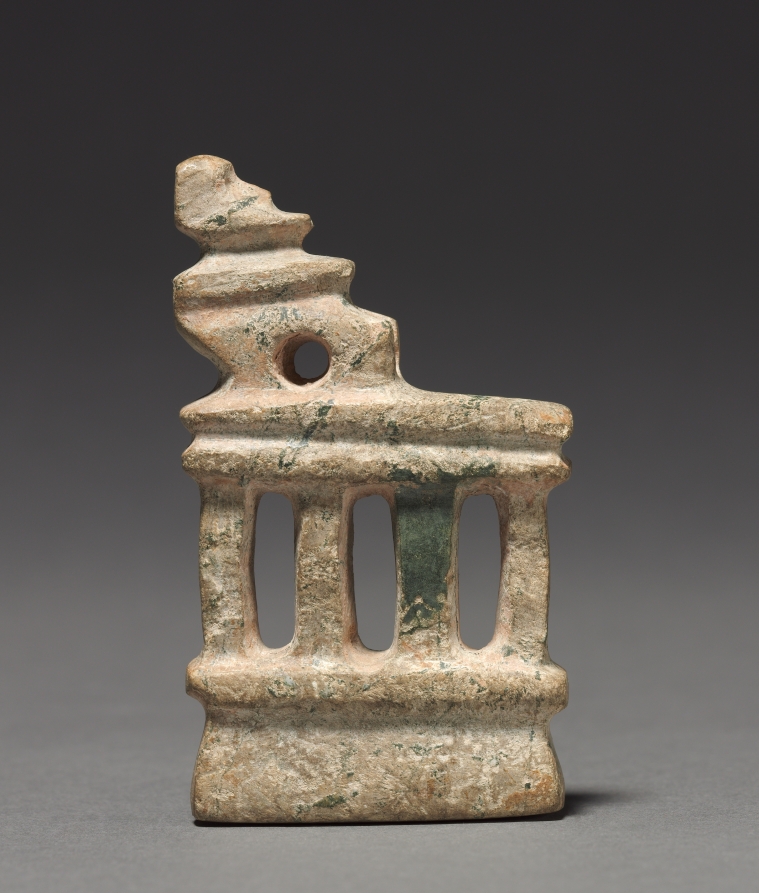
Structural Poetics: The Architectural Model as Urban Silhouette
The subject under analysis—an architectural model derived from the dual aesthetic of the Japanese “Udonge” plaque and the medieval European *Chest for Storing Garments*—presents a definitive paradigm for the 2026 executive silhouette. This is not a mere garment; it is a volumetric statement on presence and absence, a study in negative space and material gravitas. The core proposition is the *oversized* form as a vessel for conceptual weight, where volume is not about excess but about the deliberate framing of emptiness. The chosen palette of **Onyx**—a deep, absorptive black with subtle undertones of charcoal and obsidian—anchors this silhouette in urban materiality, evoking the polished concrete and shadowed recesses of a contemporary metropolis.Geometric Integrity: The Cube and the Void
The geometric integrity of this silhouette is rooted in the paradox of the two source artifacts. The Udonge plaque, a wooden signifier of an invisible flower, teaches us that form can be a container for the intangible. The medieval chest, a closed cubic volume, demonstrates that the most potent aesthetic tension lies in what is *withheld*. Translating this into garment architecture requires a rigorous adherence to primary geometries: the cube, the rectangle, and the plane. The 2026 executive silhouette, therefore, is defined by a **hard-shouldered, extended trapezoid**. The shoulder line is not padded in the traditional sense but structured with a cantilevered effect, as if the garment’s own weight creates a horizontal plane. This is achieved through internal boning and a densely woven Onyx wool-cashmere blend, which holds a crisp, architectural edge. The torso descends in a clean, unbroken line, with no waist suppression. This is a deliberate rejection of the tailored, body-conscious form. Instead, the garment creates a **secondary architecture** around the body—a mobile enclosure. The sleeve is a critical point of geometric study. It is set with a high, square armhole, creating a sharp, almost 90-degree angle from the shoulder to the upper arm. The sleeve itself is a straight, wide cylinder, falling to the wrist without tapering. This is the *chest* logic: a closed, defined volume that obscures the limb’s natural contour. The interior of the sleeve, like the medieval chest, remains an unseen space, a void that the wearer inhabits but the observer can only infer. The garment’s length extends to the mid-calf, reinforcing the vertical, monolithic quality. The hem is raw and unweighted, a subtle nod to the *wabi-sabi* imperfection of the Udonge plaque’s materiality—the wood grain and ink bleed that speak of time and process.Urban Materiality: Onyx and the Concrete Canvas
The choice of **Onyx** is not arbitrary. It is the color of the urban night, of wet asphalt, of the deep shadows between skyscrapers. In the context of this silhouette, Onyx functions as an absorptive field. It does not reflect light; it consumes it. This aligns with the aesthetic mechanism of “suspension” and “emptiness” identified in the source analysis. The garment becomes a dark, monolithic block against the city’s chaotic visual noise. The fabric is a double-faced wool with a subtle, unbrushed surface—a matte finish that mimics the texture of honed stone or cast concrete. This is not the soft, yielding luxury of a traditional overcoat; it is a hard, resilient luxury. The materiality further echoes the “unseen” interior. The garment’s lining is a contrasting **Ivory** silk, a hidden flash of light and softness. This is the *Udonge* principle: the flower that is not seen on the surface but exists within the beholder’s mind. The wearer knows of this interior light; it is a private, conceptual space. The observer, seeing only the Onyx exterior, is left to imagine the warmth and luminosity within. This duality—the hard exterior and the soft interior—is the core of the silhouette’s structural poetics. It is a garment that guards a secret, a closed chest that invites contemplation.Silhouette as Urban Statement
For the 2026 executive, this silhouette is a tool of power through restraint. It rejects the kinetic, body-conscious tailoring of the past decade. Instead, it proposes a **static, monumental presence**. The wearer does not move *within* the garment; the garment moves *with* the wearer as a single, unified volume. This is the “物自身” (thing-in-itself) made wearable. The oversized proportions are not about comfort or ease; they are about creating a **field of influence**. The garment occupies space, defines a perimeter, and establishes a zone of authority. The structural poetics are further refined in the detailing. The closure is a single, hidden magnetic placket, creating a seamless front plane—a pure, uninterrupted surface. Pockets are integrated into the side seams, invisible from the exterior, preserving the geometric purity. The collar is a high, standing band, like the frame of the Udonge plaque, that cradles the neck without constricting. It is a gesture of containment, a border between the wearer’s interior world and the external environment.Conclusion: The Unfinished and the Invisible
This Urban Silhouette Research concludes that the definitive 2026 executive silhouette is not a new shape, but a new *philosophy of volume*. It is a response to the contemporary condition of material excess, offering instead a form of aesthetic asceticism. The oversized, Onyx form is a vessel for the “unfinished” and the “invisible”—the Udonge flower that never blooms, the chest that is never opened. It is a garment that achieves its power not by what it reveals, but by what it withholds. In the urban landscape, it stands as a silent, monolithic question, a dark block of potential, a piece of architecture that walks. The wearer becomes the curator of this void, and the garment, the sacred frame.
Technical Insight
Technical Insight: Translating Onyx palettes into Oversized silhouettes for the modern metropolis.