Urban Form: Standing Buddha
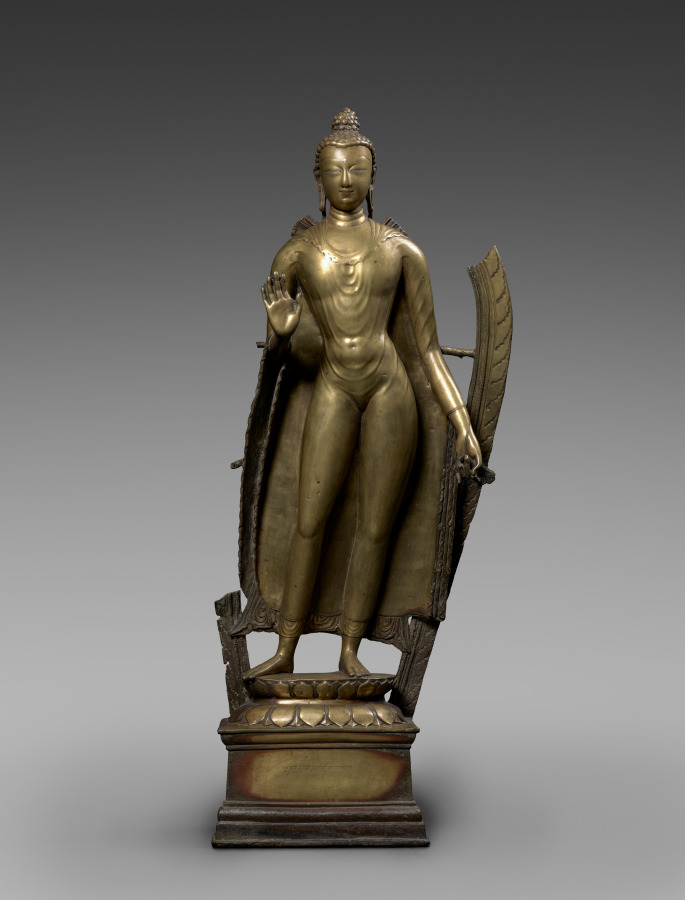
Technical Analysis: The Standing Buddha as Urban Silhouette Archetype
The Standing Buddha, as a sculptural form, presents a masterclass in geometric integrity and contained dynamism. For Addison Fashion’s 2026 executive silhouette, it serves not as a literal reference but as a profound structural blueprint. Its aesthetic authority lies in the resolution of profound tension into absolute stillness—a principle that must define the next generation of urban minimalism. This analysis deconstructs its architectural poetics to formulate a silhouette of rigorous calm and formidable presence.
Structural Poetics: The Column and the Contour
The primary geometric assertion of the Standing Buddha is the vertical column. This is not a static pillar but a subtly modulated line, a spine of serene authority. The silhouette for 2026 must embody this principle through unbroken vertical seaming and rigorously engineered internal canvassing. The goal is to create a line that elongates and centers the wearer, projecting an immovable core amidst urban flux. The Buddha’s slight contrapposto—a gentle shift in weight—introduces a silent kineticism. Translated into tailoring, this manifests not in overt asymmetry, but in the precise, inward articulation of a garment’s structure. A single, deliberate dart may curve to follow the scapula; a trouser’s hang may be calibrated to suggest movement in stasis. The silhouette rejects the decorative in favor of the anatomically essential.
Further, the artwork’s treatment of volume is didactic. The form is contained expansion. The rounded, full shoulders and the gentle swell of the torso are held within a definitive, clean contour. For our 2026 executive, this dictates a move away from deconstructed softness and toward architectural containment. Outerwear will feature armholes cut with geometric precision, allowing for a controlled, rounded shoulder that references monastic drapery without yielding to its fluidity. The torso will be shaped through minimalist internal construction—perhaps a single curved seam at the back—creating a sense of sheltered space, a “prepared void” for the body, much like the sacred space within the *Roundback Armchair*.
Urban Materiality: Stone Translated to Cloth
The materiality of the sculpture—the implied coldness of stone, worn smooth by time—directs our fabric and finish lexicon. The designated Slate color is not a mere hue but a material philosophy. It is the color of weathered stone, of fog against steel, of intellectual gravity. It must be rendered in fabrics with inherent density and a muted, tactile hand.
Key materials for the 2026 silhouette include: Double-faced wool of the highest gauge, allowing for sharp, self-edged finishes that mirror the Buddha’s clean contour; Tech-silk blends with a mineral sheen, engineered for drape that falls with the heaviness of carved marble rather than the flutter of chiffon; and Compressed, paper-felted cottons that provide a monolithic, matte surface, echoing the artifact’s patina of age. Surface treatment is critical. We will employ micro-graining and controlled brushing to suggest the passage of time, a sophistication that speaks of legacy rather than novelty. Seams will be flat-locked or recessed, becoming shadow-lines rather than interruptions, much like the subtle delineations in the Buddha’s robe that define form without breaking it.
The 2026 Executive Silhouette: A Dialectic of Mass and Absence
Informed by this analysis, the definitive 2026 Addison executive silhouette is a study in monolithic minimalism. It resolves the dialectic presented in the internal DNA—between the “filled overflow” of the suffering Christ and the “invitation of emptiness” of the Lohan chair. Our silhouette occupies the tense, potent space between.
The overcoat is the primary vessel. Cut as a single, sweeping column in Slate tech-wool, it features a rounded, built shoulder and a torso that expands imperceptibly before tapering to a clean, weighted hem. It encloses the wearer, creating a threshold space—a secular sacredness. Beneath it, the suit or separates adhere to the principle of “negative fullness.” A tunic-style top, with a high neck and dolman sleeve cut in one piece with the body, offers ease without volume. Trousers are cut with a slight, permanent curve through the leg, suggesting the Buddha’s poised stance, terminating in a precise, uncuffed break over a minimalist shoe.
The ultimate geometric integrity lies in what is removed. Pockets are seamlessly integrated or omitted. Hardware is reduced to magnetic closures or hidden snaps. The silhouette’s power is its psychic armor, its ability to project a centered, immovable presence. It is urban armor not of aggression, but of profound calm. It does not shout; it absorbs sound. It translates the Standing Buddha’s eternal composure into a language of contemporary authority, where the most powerful statement is a silhouette of severe, silent, and sophisticated geometric grace.