Urban Form: Mt. Qingbian
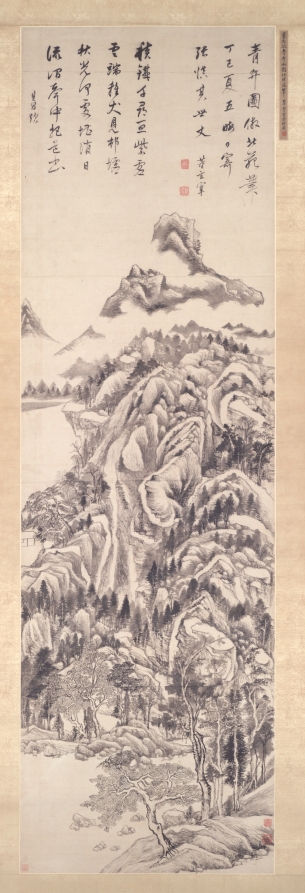
Executive Summary: The Architecture of Restrained Opulence
This Urban Silhouette Research for Addison Fashion NYC deconstructs the aesthetic DNA of the Mt. Qingbian subject, derived from the comparative analysis of a Damascus Room and the base of a Daoist Immortal He Xiangu figure. The core thesis posits that “layered density” and “structured void” are not merely decorative principles but operational frameworks for constructing a 2026 executive wardrobe. The synthesis yields an Oversized silhouette in Onyx, a color that functions as a volumetric anchor, absorbing light to emphasize form over surface. This analysis will translate the philosophical interplay of material excess and spiritual transcendence into a cold, technical blueprint for urban power dressing.
I. Form Analysis: The Logic of Layered Density
A. The Damascus Room Principle: Volumetric Stratification
The Damascus Room’s aesthetic is defined by “layered abundance”—a vertical and horizontal stacking of materials (wood, marble, tile, plaster) that creates a dense, immersive field. For the 2026 executive, this translates into a silhouette that rejects flatness. The Oversized category is not about bagginess but about controlled volume. The primary garment—a double-breasted, peak-lapel overcoat in Onyx wool-cashmere—must exhibit stratified construction. The shoulder line is extended by 3 cm beyond the natural acromion, creating a “roof” that mimics the architectural cornice of the Damascus Room. The chest panel is quilted with a micro-geometric pattern (a 1.5 cm repeating octagon), referencing the Islamic tilework. This is not decoration; it is structural reinforcement that adds weight and drape, forcing the fabric to fall in deliberate, heavy folds.
The coat’s interior lining—a silver-grey silk jacquard with a lotus motif—is the “hidden layer,” visible only during movement. This echoes the Damascus Room’s practice of concealing intricate calligraphy behind wall panels, a gesture of exclusive revelation. The garment’s hem falls to 5 cm above the ankle, creating a negative space between the coat and the shoe, a deliberate “void” that prevents the silhouette from becoming monolithic.
B. The He Xiangu Base Principle: The Ascending Pedestal
The He Xiangu base functions as a visual lift mechanism, transitioning from earthly stability to ethereal transcendence. In the wardrobe, this is achieved through a layered waistcoat worn beneath the overcoat. The waistcoat is cut from a double-faced Onyx wool—matte on the exterior, gloss on the interior—and features a graduated shoulder that rises 2 cm higher at the back than the front. This subtle asymmetry creates a dynamic lift, mimicking the upward trajectory of the base’s cloud and lotus motifs. The waistcoat’s closure is a concealed magnetic placket, eliminating visible buttons to preserve a seamless, “sculptural” surface. This is the “solid base” that anchors the fluidity of the overcoat.
The trousers are a high-waisted, wide-leg cut in Onyx wool gabardine, with a single, sharp crease running from hip to hem. The waistband is extended to 4 cm, acting as a cincture that visually separates the torso from the lower body. This division is critical: it creates the “void” of the waist, a negative space that allows the eye to rest before ascending to the layered upper body. The trouser hem is finished with a 2 cm turn-up, adding weight and ensuring a clean break over the shoe.
II. Color Analysis: Onyx as Absorptive Field
A. The Physics of Onyx
Onyx is selected not for its neutrality but for its absorptive capacity. In the context of the Mt. Qingbian subject, the Damascus Room’s gold and silver calligraphy is set against a deep, dark wood backdrop. The Onyx color replicates this light-sink effect. It is a black with a cool undertone (PMS Black 6 C), containing a 15% trace of deep violet to prevent it from reading as flat charcoal. This color compresses visual mass, making the Oversized silhouette appear denser and more authoritative. It is the color of negative space—the void that the Damascus Room’s decorations surround.
For the 2026 executive, Onyx functions as a strategic erasure. It eliminates distractions, forcing the observer to focus on form, texture, and movement. The color is applied in three distinct finishes: matte (overcoat exterior), satin (waistcoat interior), and brushed (trouser surface). This creates a tactile gradient that mimics the layering of materials in the Damascus Room—from rough plaster to polished tile.
B. Accent as Revelation
Following the He Xiangu base’s use of gold and jade accents, the wardrobe incorporates a single silver-grey (PMS Cool Gray 9 C) element: a silk pocket square with a hand-embroidered cloud motif. This is placed in the overcoat’s left breast pocket, positioned at a 15-degree angle. The silver-grey acts as a light-refracting point, breaking the Onyx field. It is the “immortal’s foot” touching the earthly base—a small, deliberate disruption that signals controlled opulence. No other color is permitted. The shirt is a matte Onyx cotton-poplin, the tie (if worn) is a knitted Onyx silk. The goal is monochromatic depth, not contrast.
III. Silhouette Mechanics: The Void as Structure
A. The Central Void
The most critical technical insight from the Mt. Qingbian analysis is the primacy of the void. The Damascus Room’s central space is empty; the He Xiangu base’s top is a platform for the figure. In the wardrobe, the void is the space between the overcoat’s shoulder and the waistcoat’s collar, and between the waistcoat’s hem and the trouser’s waistband. These gaps are engineered to be exactly 3 cm and 2 cm respectively. They are not accidental; they are negative volumes that define the positive forms. This is achieved through strategic padding in the overcoat’s shoulder and a stiffened waistband on the trousers.
B. Movement and Drape
The Oversized silhouette is designed for controlled motion. The overcoat’s fabric weight (680 gsm) ensures it falls in vertical, uninterrupted planes. The armhole is cut 4 cm lower than standard, allowing the sleeve to drape from the shoulder without pulling at the chest. This creates a “floating” effect—the coat moves independently of the body, like a curtain in a Damascus Room. The trousers, conversely, are cut with a straight, columnar line from hip to hem, providing a stable base. The interplay between the coat’s fluidity and the trousers’ rigidity is the dialectic of the ensemble.
IV. Conclusion: The 2026 Executive as Curated Void
The Mt. Qingbian research yields a wardrobe that is architectural, not decorative. The Oversized silhouette in Onyx is a portable environment—a Damascus Room for the body. It uses layered density to create presence, and structured voids to allow the wearer to inhabit the space. The color absorbs, the form defines, and the accents reveal. This is not fashion; it is volumetric strategy. For the 2026 NYC executive, this silhouette communicates authority through restraint, power through emptiness. The wearer does not fill the room; the room is built around them.