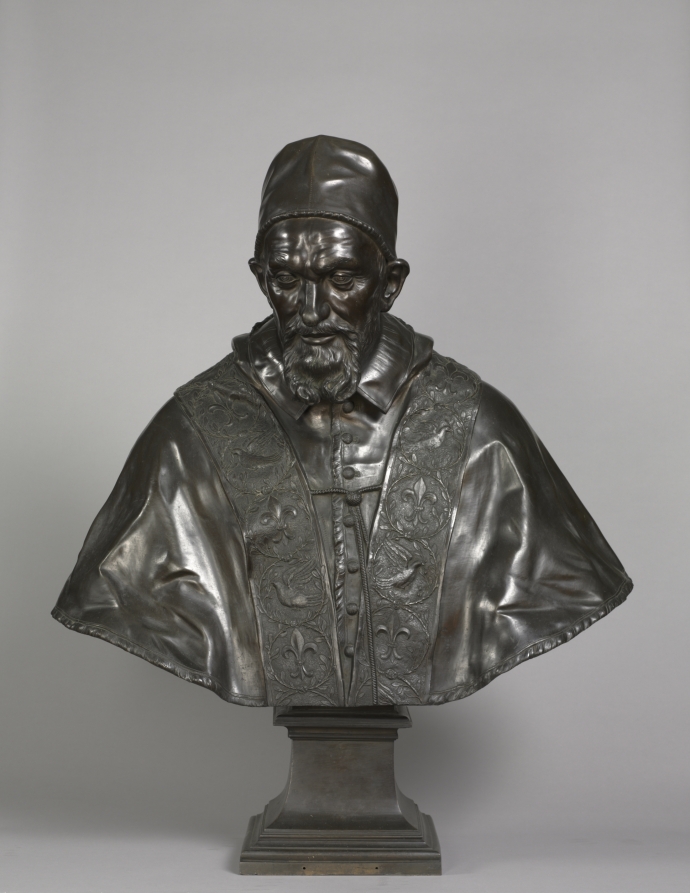
Urban Form: Portrait of Pope Innocent X Pamphili
Form as Philosophical Armature: Deconstructing the Oversized Silhouette
The urban silhouette for 2026 must reconcile two opposing temporalities—the static, object-bound death of Socrates and the kinetic, suspended death of the hunt. In the *Portrait of Pope Innocent X Pamphili*, we find a third term: the subject as a monument of power, draped in fabric that both conceals and reveals. For Addison Fashion NYC, the oversized silhouette emerges as the operative formal strategy, not as a gesture of casual comfort, but as a deliberate architectural container for the body’s relationship to time and mortality.The oversized form, when executed in Onyx, operates as a mobile reliquary. It does not follow the body; it frames it. The shoulder line extends beyond the anatomical—creating a horizontal axis that references the static, measured composition of Socrates’ deathbed. The drape falls in controlled, vertical folds, echoing the pleats of Innocent X’s cassock, which anchor the figure in ecclesiastical authority. This is not volume for volume’s sake; it is volume as a negative space that holds the wearer in a state of perpetual, dignified suspension.
The Static Object: Socrates and the Weight of Fabric
In *The Death of Socrates*, the philosopher’s body is rendered as an object among objects—a vessel emptied of life, surrounded by the material remnants of thought. The oversized silhouette in Onyx borrows this principle: the garment becomes a container for absence. The fabric’s weight, ideally a double-faced wool or a dense Japanese cotton, creates a gravitational pull that mimics the downward trajectory of Socrates’ hand. The hemline, falling just below the knee in a tailored coat or a structured tunic, anchors the silhouette to the ground, preventing any upward, aspirational movement.
The key technical detail is the shoulder seam. It must be dropped by 3 to 4 inches beyond the natural acromion, creating a horizontal line that bisects the torso. This is not a slouch; it is a deliberate architectural cantilever. The sleeve, cut with a slight bell or a straight, wide tube, hangs without tension, allowing the arm to move within a void. This echoes the empty space around Socrates’ cup—the void that signifies the moment after the poison has been taken. The garment does not move with the wearer; it moves around them, creating a temporal lag that forces the observer to register the body as a static monument within the urban flux.
The Kinetic Suspension: The Hunt and the Unfinished Gesture
Conversely, *The Hunt* demands a silhouette that captures the pre-explosive moment. The oversized form, when cut in a lighter fabric—a silk-wool blend or a technical crepe—can achieve a different kind of tension. Here, the volume is not about weight but about potential energy. The coat or jacket is cut with a double-breasted closure that is left open, creating a V-shaped negative space that draws the eye upward and outward, mimicking the trajectory of the hunter’s arrow.
The critical element is the back panel. It must be cut with a center pleat or a box pleat that releases fabric when the wearer moves. This is the formal equivalent of the hunter’s drawn bowstring—a moment of maximum tension before release. When the wearer walks, the pleat opens and closes, creating a rhythmic oscillation that mirrors the panting of the hounds in the painting. The sleeve, in this iteration, is cut with a slight gather at the cap, allowing for a 15-degree forward rotation of the arm. This is not a static sleeve; it is a sleeve that anticipates action.
Color as Temporal Register: Onyx and the Spectrum of Absence
Onyx is not black. Black is absolute, a void that absorbs all light. Onyx, in the context of this analysis, is a deep, sedimentary gray-black that retains a subtle, mineral undertone—a hint of silver or slate in its depths. It is the color of the aftermath: the residue of the poison in the cup, the shadow cast by the hunter’s arrow, the velvet of Innocent X’s cape. For the 2026 executive wardrobe, Onyx functions as a neutral that contains memory.
Onyx as the Color of the Object
In the Socratic mode, Onyx is applied to matte, dense fabrics—flannel, melton wool, or boiled cashmere. The surface is non-reflective, absorbing ambient light and creating a soft, velvety depth. This is the color of the philosopher’s final gesture, a color that does not announce itself but rather withdraws from the visual field. In a tailored overcoat, this Onyx creates a silhouette that is monolithic, a single block of color that denies the body’s segmentation. The lapels, cut wide and peaked, are the only points of contrast, their edges catching the faintest light.
Onyx as the Color of the Unfinished
In the hunting mode, Onyx is applied to textured, reactive fabrics—a silk faille with a subtle rib, a wool crepe with a slight sheen, or a technical nylon with a micro-herringbone weave. The surface catches light at specific angles, creating a dynamic shimmer that shifts with movement. This is the color of the arrow in flight, a color that is never fully present because it is always in transition. In a pair of wide-leg trousers, this Onyx reads as a dark, liquid column that breaks into folds at the ankle, echoing the froth of the hunting dogs’ mouths.
Technical Synthesis: The 2026 Executive Silhouette
The final garment—a single, defining piece for the NYC executive—must synthesize these two temporalities. The Onyx Oversized Coat is the answer. It is cut with a raglan sleeve that extends into a wide, integrated shoulder, creating the static, horizontal line of the Socratic object. The body is A-line, falling from the shoulder to a hem that hits mid-calf, with a single, deep center vent at the back that allows for the kinetic release of the hunt.
The fabric is a double-faced wool-silk blend: matte Onyx on the exterior, with a subtle, silver-gray silk lining that flashes at the lapel and the vent. This lining is the color of the unseen—the interior of the cup, the space between the hunter and the prey. The closure is a single, oversized horn button at the sternum, a nod to the solitary, decisive gesture of Socrates’ hand. The pockets are welted and horizontal, set at the hip, creating a line that bisects the vertical fall of the coat.
This is not a coat for movement. It is a coat for being seen moving. It forces the wearer into a deliberate, measured gait—a walk that is both a procession and a pursuit. The Onyx absorbs the city’s light, while the silver lining catches it at the moment of transition. The oversized volume contains the body as a reliquary contains a relic: with reverence, with distance, and with the knowledge that what is inside is both present and absent.
For the 2026 executive, this is the uniform of the aesthetic of the aftermath. It acknowledges that every action is already a memory, every gesture a residue. The coat does not protect the wearer from time; it frames them within it, a monument to the moment just after the poison has been taken, just before the arrow finds its mark.