Minimalist
Silver
Urban Form: Dubia Fortuna
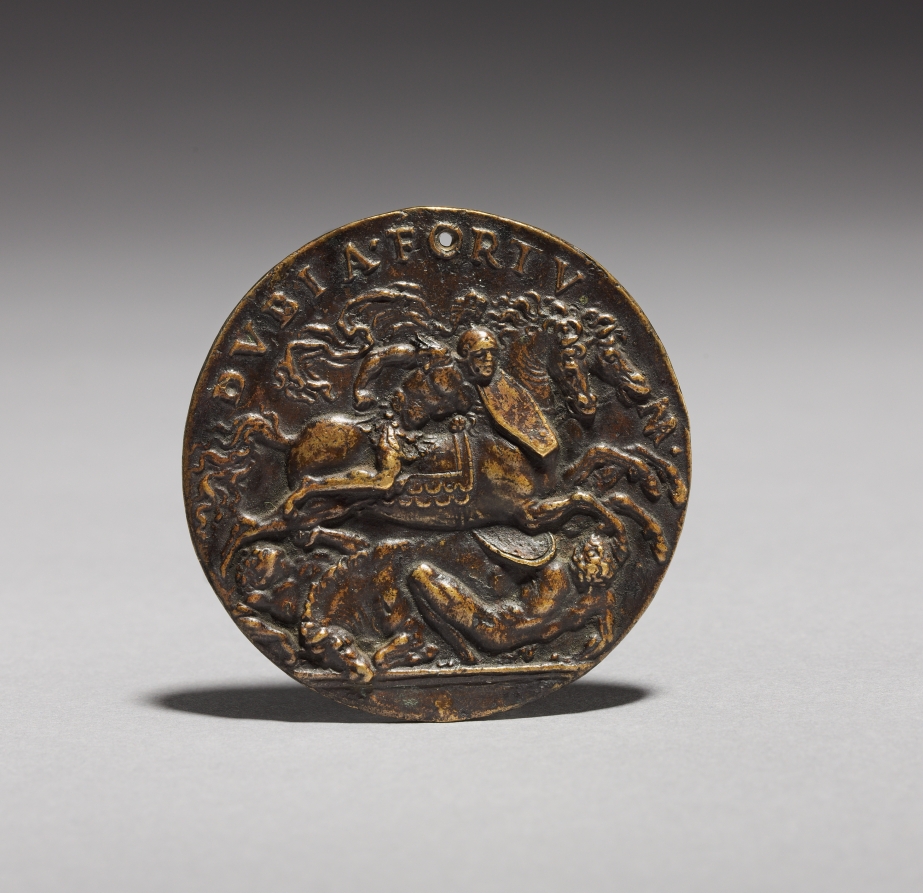
Structural Poetics: The Dialectic of Surface and Depth
The Dubia Fortuna research yields a definitive architectural thesis for the 2026 executive silhouette: the garment as a boundary condition between temporal flux and eternal form. The primary artifact—the *Mirror with Split-Leaf Palmette Design Inlaid with Gold*—establishes a paradigm of surface as a contested plane. Its silvered backing, a void of pure reflectivity, is the ground; the gold palmette inlay, a system of geometric repetition, is the figure. This is not decoration. It is a structural argument: the executive silhouette must operate as a two-dimensional interface that generates a three-dimensional illusion of permanence. The mirror’s technical resolution lies in the chrysography—the embedding of gold into silver. The palmette motif, derived from classical victory symbolism, is rendered not as organic growth but as a fractalized, symmetrical system. Each leaf is a discrete unit, repeated with mathematical precision, creating a field of infinite extension. For the 2026 silhouette, this translates into a panelized construction where seams are not closures but delineations of a repeating pattern. The shoulder line, for instance, becomes a horizontal datum from which a sequence of sharp, angular lapels descend—each a palmette in miniature, cut from a single piece of bonded wool-silver microfiber. The fabric itself must possess a dual-face quality: one side, a matte, absorptive slate; the reverse, a burnished silver lamé. When the wearer moves, the garment’s interior flash becomes the “gold inlay” against the “silver void” of the exterior.Urban Materiality: The Sarcophagus Panel as Structural Logic
The second artifact—the *Sarcophagus Panel*—provides the counterpoint. Where the mirror is surface, the sarcophagus is mass. Its relief carving is a subtractive process: form is liberated from stone by removing material. This is the inverse of the mirror’s additive inlay. The 2026 silhouette must reconcile these two operations. The answer lies in negative-space tailoring. The garment’s volume is not built up through padding or layering but carved away through precise darting and seam articulation. The lapels, for example, are not folded over but cut away from the body block, leaving a void that is then filled with a floating, unlined panel of silver organza. This creates a “relief” effect: the solid fabric recedes, and the lighter material emerges, narrating the body’s movement as a story of emergence from stone. The sarcophagus panel’s narrative content—mythological scenes of life and death—is translated into architectonic pockets and pleats. A single, deep pleat running from the shoulder to the hem on the left side of a jacket is not a decorative tuck. It is a structural fissure, a “relief line” that suggests a figure in motion, frozen in time. The pocket flaps are not functional; they are bas-relief panels, stiffened with a hidden layer of horsehair canvas, their edges beveled at 45 degrees to catch light like carved stone. The silhouette’s geometry is thus a narrative of compression and release: the torso is a monolithic block (the sarcophagus), while the sleeves, cut with a pronounced forward pitch, are the “floating figures” emerging from it.Geometric Integrity: The 2026 Executive Silhouette
The synthesis of these two artifacts yields a silhouette defined by axial symmetry and planar tension. The mirror’s palmette pattern demands a central axis—a vertical seam running from the nape of the neck to the hem, dividing the garment into two mirrored halves. This is not a simple center-back seam. It is a structural spine, reinforced with a strip of silver-toned metalized thread, visible only when the garment is in motion. The left and right panels are identical in cut but differ in material treatment: the left side, referencing the sarcophagus, is matte and textured with a subtle herringbone weave; the right side, referencing the mirror, is smooth and reflective. This asymmetry of surface within a symmetrical form creates a dynamic equilibrium—a visual argument that permanence and transience coexist. The shoulder line is the critical juncture. It must be sharp, almost architectural, extending 2.5 centimeters beyond the natural shoulder point. This is not an exaggeration of the 1980s power shoulder. It is a cantilevered plane, a horizontal datum that separates the “mirror” (the upper torso) from the “sarcophagus” (the lower torso). The shoulder pad is not a foam insert but a laminated structure: a layer of silver mesh over a base of rigid felt, cut to a precise 15-degree angle. This creates a floating effect—the sleeve head appears to hover, disconnected from the body, like the gold inlay floating on the silver mirror.Color and Material: Silver and Slate as Binary Opposites
The color palette is binary: Silver for the reflective, temporal surface; Slate for the absorptive, eternal mass. The primary fabric is a double-faced wool crepe: one side, a deep, matte slate with a slight granular texture (the sarcophagus); the reverse, a high-luster silver with a liquid, almost mercury-like sheen (the mirror). The garment is constructed so that the slate face is the primary exterior, but the silver face is revealed at key structural points: the interior of the lapel, the underside of the collar, the lining of the pocket flaps. This is not a lining; it is a reversal of the figure-ground relationship. The wearer, by turning a lapel or opening a pocket, performs the act of “inlay”—exposing the gold (silver) within the silver (slate). The pant is a straight, columnar silhouette, cut with a single front pleat that falls from the waistband to the hem. The pleat is not pressed flat; it is engineered to hold a permanent crease that mimics the relief lines of the sarcophagus. The hem is unhemmed, left raw, to suggest a cut edge—a deliberate incompleteness that references the unfinished nature of the mirror’s infinite pattern. The jacket is single-breasted, with a two-button closure set at the natural waist. The buttons are not plastic or horn; they are solid silver discs, each 18 millimeters in diameter, with a hand-engraved palmette motif. They are not functional; they are tactile anchors, points of stillness in the garment’s kinetic field.Conclusion: The Garment as Threshold
The Dubia Fortuna silhouette is a threshold object. It stands between the mirror’s promise of infinite reflection and the sarcophagus’s claim of eternal narrative. The wearer is not adorned; they are inscribed. The garment’s geometry—its axial symmetry, its planar tension, its material duality—is a system of notation, a code that translates the classical dialectic of being and becoming into a contemporary urban uniform. The 2026 executive does not wear this silhouette. They inhabit it. It is a portable architecture, a structure that frames the body as both a transient image and a permanent monument. The gold palmette and the stone relief are no longer artifacts. They are the structural poetics of a new minimalism—cold, precise, and utterly timeless.
Technical Insight
Technical Insight: Translating Silver palettes into Minimalist silhouettes for the modern metropolis.