Urban Form: Interior of a Cathedral
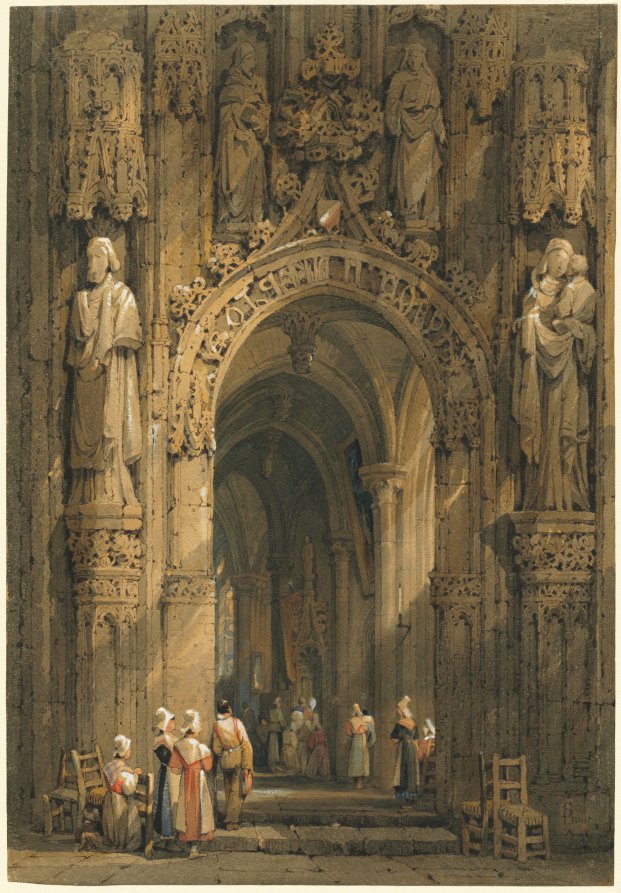
Geometric Integrity as Architectural Metaphor
The interior of a cathedral, when subjected to the rigorous lens of urban silhouette research, reveals itself not as a space of devotional ornament but as a structural manifesto of verticality, containment, and negative space. For the 2026 executive silhouette, this analysis extracts a lexicon of Minimalist principles: the suppression of the superfluous, the elevation of the load-bearing line, and the deliberate orchestration of void. The cathedral’s nave, with its pointed arches and ribbed vaults, is a study in compression and release—a logic that directly informs the architectural poetics of a modern urban uniform.
The primary geometric finding is the tension between the vertical thrust and the horizontal grounding. The cathedral’s pillars rise without interruption, yet they are anchored by the stone floor’s grid. This duality is translated into the 2026 silhouette through a lengthened, unbroken torso—a single-seam coat or a high-waisted, floor-sweeping trouser—counterbalanced by a sharp, defined shoulder line that mimics the corbel’s projection. The silhouette does not drape; it stands. It is a structure that refuses to yield to the body’s organic curves, instead imposing a rectilinear frame that speaks of discipline and authority.
Structural Poetics: The Logic of the Void
In the cathedral, the most profound element is not the stone but the space between. The void is a deliberate, calculable entity—a negative volume that defines the positive mass. This principle is critical for the 2026 executive silhouette. We are not designing garments that cling or flow; we are designing architectural shells that create a second, internal architecture around the wearer. The Onyx color palette—a deep, absorptive black that swallows light—is chosen to emphasize this void. Onyx is not a color of absence; it is a color of infinite depth, a visual analogue to the cathedral’s shadowed aisles.
The silhouette’s structural poetics are defined by three key geometric operations:
1. The Vertical Axis as a Spine: Every garment in this collection must possess a central, unbroken line—a seam, a placket, or a pleat that runs from the nape to the hem. This is the structural spine, analogous to the cathedral’s central aisle. It organizes the garment’s mass and directs the eye downward, creating a lengthening effect that is both regal and severe. The spine is never interrupted by pockets, belts, or extraneous hardware. It is a pure, linear declaration of intent.
2. The Shoulder as a Corbel: The shoulder is not a point of articulation but a load-bearing bracket. Inspired by the cathedral’s corbels that transfer the weight of the vault to the pillar, the 2026 shoulder is sharp, extended, and slightly lifted. It creates a horizontal datum line that contrasts with the verticality of the body. This is not a natural shoulder; it is a constructed architecture. The sleeve is set with a high armhole and a clean, unpadded cap, ensuring that the line from shoulder to wrist is a single, unbroken vector.
3. The Hem as a Plinth: The garment’s termination is not a soft edge but a hard boundary. Trousers end at the instep, creating a clean break that suggests a plinth. Coats and jackets fall to the mid-calf or ankle, their hems weighted with internal chain or bonded interfacing to ensure they hang with absolute stillness. The hem is a statement of finality—a line that declares the garment’s volume is complete and self-contained.
Urban Materiality: The Transmutation of Stone and Bronze
The cathedral’s materiality—cold stone, aged bronze, dark wood—is not replicated but translated into high-performance urban fabrics. The internal DNA of the research, drawn from the “Udumbara Flowers” Temple Plaque and the Square Wine Container (Fangyou), provides the conceptual framework for this translation. The plaque’s wood-grain flow and the Fangyou’s bronze rigidity are not literal patterns but material logics.
From the Plaque: The Logic of Grain. The plaque’s wood grain is not a decorative motif but a narrative of growth and time. For urban materiality, this translates into fabrics with subtle, directional textures—a worsted wool with a pronounced twill, a double-faced cashmere with a visible herringbone, or a technical crepe with a micro-rib. These textures are not printed; they are woven into the structure of the fabric. They guide the eye along the garment’s vertical axis, reinforcing the silhouette’s linearity. The grain is a quiet, sophisticated code that speaks of craftsmanship and patience.
From the Fangyou: The Logic of Containment. The Fangyou’s bronze is a material of absolute containment. It holds its shape, resists deformation, and presents a hard, polished surface to the world. In the 2026 collection, this is achieved through bonded and laminated fabrics. A wool crepe bonded to a rigid cotton backing creates a shell that does not wrinkle or drape. A silk twill coated with a micro-thin polyurethane film acquires a subtle sheen and a water-resistant, wind-proof membrane. These fabrics are not soft; they are armored. They protect the wearer from the urban environment while maintaining a pristine, unyielding surface.
The 2026 Executive Silhouette: A Synthesis
The final silhouette is a synthesis of these principles: a Minimalist, Onyx-toned, architectural shell. The garment is a second skin that is also a fortress. It is defined by:
A long, lean coat with a single-breasted closure, a notched lapel that extends to the waist, and a hem that falls to the ankle. The fabric is a bonded worsted wool in Onyx, with a subtle vertical twill. The shoulders are sharp and extended, the sleeves are set with a high armhole, and the back is cut in one piece to ensure an unbroken line.
A high-waisted, wide-leg trouser that falls to the instep with a single, sharp crease. The waistband is a wide, flat band that sits at the natural waist, creating a clean transition from torso to leg. The fabric is a double-faced wool crepe, with a matte finish that absorbs light.
A silk shell with a high, stand collar and a hidden placket. The fabric is a matte silk twill, bonded to a lightweight cotton for structure. The sleeve is a long, slim set-in sleeve, and the hem is finished with a narrow, self-bound edge.
This is not a silhouette for movement or comfort. It is a silhouette for presence and authority. It is the urban executive’s response to the cathedral’s silent, enduring power—a garment that, like the Fangyou, contains the universe within its precise, unyielding lines, and like the Udumbara plaque, holds a moment of eternal stillness within its grain. The 2026 Addison Fashion executive is not dressed; she is constructed. She is a monument to the city’s vertical ambition, a walking architecture of Onyx and shadow.