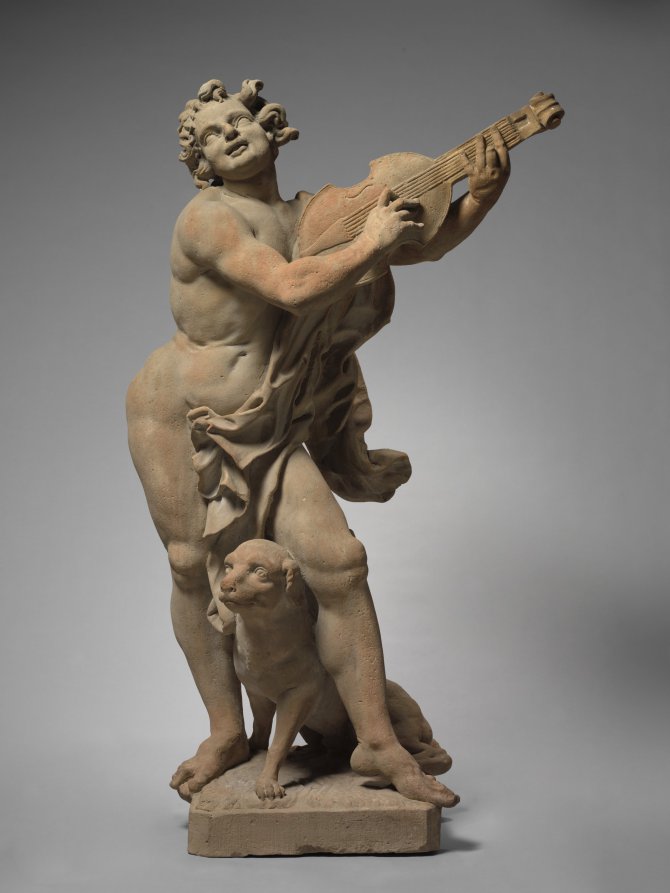
Urban Form: Orpheus and Cerberus
Structural Poetics: The Dialectic of Containment and Release
The urban silhouette for 2026, as derived from the Orpheus-Cerberus dialectic, is not a garment but a habitable vessel. The internal DNA provided—the tension between David’s The Death of Socrates and the anonymous Greek Cup and Stand—demands a form that reconciles narrative drama with absolute geometric silence. The 2026 executive must inhabit a silhouette that is both a monument to reason and a receptacle for the void. This is the core of our research: a minimalist architecture that does not suppress emotion but contains it within a precise, unyielding shell.
Geometric Integrity: The Socratic Line and the Ceramic Curve
The primary structural challenge is the fusion of two opposing geometries: the rigid, rational line of David’s neoclassical composition and the organic, inward-curving volume of the ancient cup. The 2026 silhouette rejects the soft, draped fluidity of prior seasons. Instead, it adopts a compressed verticality. The shoulder line is not padded but carved—a clean, horizontal plane that references the bedstead of Socrates, a platform for finality. The torso follows a cylindrical, almost architectural logic, narrowing to a defined waist that acts as the “stem” of the vessel. This is not a cinched waist but a structural pivot point, where the upper body’s narrative weight meets the lower body’s silent foundation.
The hemline is the critical juncture. It must not flutter or drape. It must terminate with the finality of a cut, like the rim of the cup. For trousers, this means a tapered, high-waisted form that falls straight to the ankle, with no break over the shoe—a clean, uninterrupted line from hip to ground. For skirts, the preferred length is mid-calf to floor, cut on the straight grain to create a columnar volume. The fabric must hold its shape, not cling to the body. The garment is a shell that the wearer inhabits, not a second skin. The interior volume is the “emptiness” of the cup—a space of potential, of quietude, of the soul’s final repose.
Urban Materiality: Onyx as the Substance of Finality
The chosen color, Onyx, is not a mere shade. It is a material condition. Onyx black absorbs light, creating a surface that is both opaque and infinitely deep. It is the color of the poison cup’s shadow, of the void between the cup and its stand, of the unspoken. In urban environments of glass and steel, Onyx provides a counter-narrative—a refusal of transparency, a commitment to interiority. The fabrics selected must echo this density: double-faced wool for its ability to hold a sharp crease and a sculptural shoulder; matte-finish microfiber for its liquid, non-reflective fall; and bonded jersey for its weight and stillness. No sheen, no texture that catches the light. The surface must be as uninterrupted as the glaze on the ancient cup.
The materiality must also speak to the urban condition. The 2026 executive moves through a city of hard angles and reflective surfaces. The Onyx silhouette is a negative space within that chaos. It does not compete with the city’s noise; it absorbs it. The fabric’s weight ensures the garment falls with a gravity that mimics the pull of the earth, grounding the wearer in a moment of Socratic stillness. Pockets are concealed, blade-cut seams—functional but invisible, preserving the purity of the form. Fastenings are magnetic or hidden, eliminating any visual interruption. The garment is a monolith, a single, unbroken volume from shoulder to hem.
The Orpheus-Cerberus Silhouette: The Executive as Vessel
This silhouette is named for the mythic descent: Orpheus, the poet of emotion, and Cerberus, the guardian of the threshold. The 2026 executive is both. She is the poet of structure and the guardian of the void. The garment’s geometric integrity is its Cerberus—a rigorous, unyielding form that guards the inner self from the chaos of the external world. Yet the interior volume is its Orpheus—a space of pure potential, of lyricism, of the soul’s quiet song. The silhouette does not express emotion; it houses it.
The key construction detail is the internal structure. A lightweight, fusible canvas is sewn into the jacket’s front panels, creating a rigid, architectural shell. The back panel is cut with a single, central seam that allows for slight movement without compromising the overall cylindrical form. Sleeves are set with a high, narrow armhole, limiting the range of motion to create a deliberate, measured gesture—the hand that reaches for the cup, not the hand that gesticulates. The trouser waistband is faced with a stiffened cotton, ensuring it sits as a clean, unbroken ring around the body. Every detail is an act of subtraction, a stripping away of the non-essential until only the pure container remains.
This is not a silhouette for comfort. It is a silhouette for presence. It demands that the wearer inhabit it with the same stillness as Socrates awaiting the hemlock. The reward is not ease but authority—the authority of a form that has resolved its internal contradictions into a single, perfect, silent statement. The 2026 executive does not wear a garment. She enters a structure. She becomes the cup, the stand, and the void between them. She is the perfect paradox: a monument to the ephemeral, a vessel for the infinite.