Minimalist
Ivory
Urban Form: Bust of a Classical Hero or Emperor
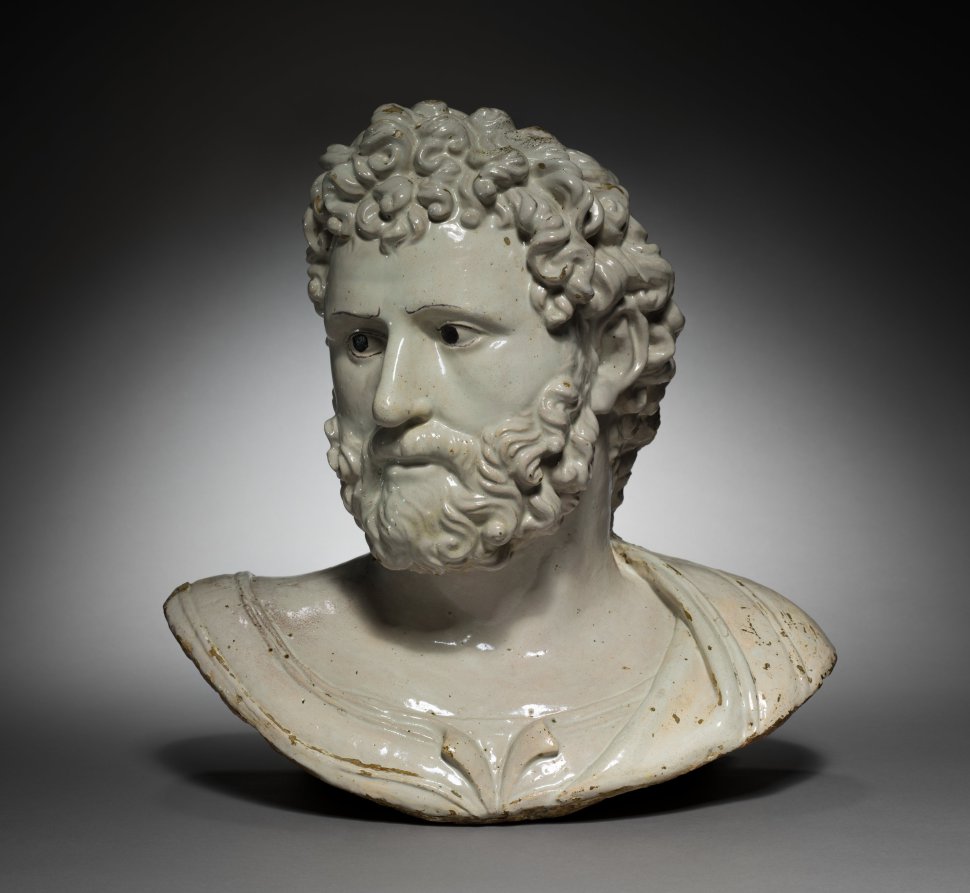
Geometric Integrity: The Bust as Architectural Prototype
The bust of a classical hero or emperor presents a definitive study in volumetric compression and structural hierarchy. Unlike the full figure, which disperses attention across limbs and gesture, the bust concentrates all expressive energy into the torso, shoulders, and cranium. This truncation is not a limitation but a deliberate architectural reduction—a fragment that implies the whole through rigorous formal logic. The geometry is fundamentally pyramidal. The broad shoulders form the base, tapering upward through the neck to the apex of the head. This inverted pyramid creates an inherent stability, a gravitational pull toward the center. The clavicles and sternocleidomastoid muscles become load-bearing beams, while the trapezius defines the lateral boundaries. Every plane is faceted with purpose: the jawline cuts a sharp horizontal, the brow ridge projects as a cantilever, the cheekbones create shadowed recesses. There is no organic softness—only engineered tension. For the 2026 executive silhouette, this translates directly into shoulder architecture. The power shoulder returns, but not as the exaggerated, padded dome of the 1980s. Instead, it manifests as a clean, sculpted extension—a shoulder seam that terminates with geometric precision, echoing the bust’s terminal edge. The jacket’s lapel becomes a structural element, not merely decorative: its notch aligns with the clavicle’s horizontal, creating a visual datum line. The collar stands away from the neck, mimicking the bust’s plinth-like separation from the body.Structural Poetics: The Language of Compression and Release
The bust’s power lies in its compression. The neck is shortened, the shoulders squared, the chest flattened into a planar surface. This compression generates a latent energy—a sense of contained force waiting to be released. In the classical bust, this is the hero’s stoic restraint, the emperor’s disciplined authority. In fashion, this translates to the tailored jacket that hugs the torso without constricting, the trousers that fall with a clean break, the shirt that skims rather than drapes. The Ivory palette chosen for this analysis is not arbitrary. Ivory is the color of marble, of the original busts that have survived millennia. It is a non-color, a neutral that absorbs light rather than reflecting it. This aligns with the minimalist ethos: the garment becomes a canvas for shadow and structure, not a spectacle of pigment. The ivory suit or coat in 2026 will be a study in tonal variation—the slight warmth of the fabric against the coolness of the skin, the matte finish of the wool against the subtle sheen of a silk lining. The release comes at the hem and the sleeve opening. Just as the bust terminates abruptly at the mid-chest, the executive jacket should end with a clean, unadorned line. No vents, no flaps, no extraneous details. The sleeve should finish at the wrist bone, allowing the hand to emerge as the only organic element—much like the head emerges from the bust’s truncated torso.Urban Materiality: The Fabric as Structural Membrane
The classical bust is carved from stone or cast in bronze—materials that are permanent, unyielding, and monumental. Urban materiality demands a translation of these qualities into textiles that can move through the city’s chaos while retaining their architectural integrity. For the 2026 executive silhouette, this means fabrics that mimic stone’s weight and bronze’s density without sacrificing wearability. Consider a double-faced wool with a felted finish. The surface is matte, almost chalky, absorbing ambient light like marble. The weight is substantial—400 grams per square meter minimum—so the garment hangs with the gravitational pull of a plinth. The weave is tight, almost impermeable, creating a barrier between the body and the urban environment. This is not a fabric that breathes; it is a fabric that protects. Alternatively, a bonded jersey with a metallic core can evoke bronze’s rigidity while allowing stretch. The outer layer is a matte nylon, the inner layer a fine merino, and between them, a thin sheet of copper-infused polyurethane. The result is a fabric that holds its shape like armor but moves with the body’s micro-gestures. The copper content oxidizes over time, developing a patina that mirrors the aged bronze of classical sculpture.Proportion and the 2026 Executive Silhouette
The bust’s proportion is defined by the ratio of head to torso. In classical sculpture, this ratio is approximately 1:3—the head occupies one-third of the total height. This creates a sense of monumentality, of the intellect dominating the physical. For the 2026 executive, this translates into a lengthened torso and a shortened leg line. The jacket extends to the mid-thigh, the trousers are cropped at the ankle, and the waist is suppressed but not cinched. The overall effect is a column of fabric that elongates the upper body while grounding the lower. The shoulder-to-waist ratio is equally critical. The bust’s shoulders are broad, the chest deep, the waist narrow. This V-shape is the archetype of power. In tailoring, this is achieved through a dropped shoulder seam and a suppressed waist. The jacket’s back is cut with a center seam that follows the spine’s curve, creating a subtle hourglass from behind. The front is flat, almost board-like, with no darts or princess seams to disrupt the plane.Conclusion: The Bust as a Blueprint for Urban Authority
The classical bust offers a masterclass in reduction. It strips the human form to its essential geometry, removing all that is extraneous and amplifying what remains. For the 2026 executive silhouette, this translates into a wardrobe of architectural precision—garments that are not worn but inhabited, that do not drape but stand. The Ivory palette reinforces this austerity, while the urban materiality ensures the garments can withstand the city’s abrasions. The result is a silhouette that commands without shouting, that asserts authority through stillness rather than movement. It is the uniform of the modern emperor—not one who conquers territories, but one who navigates the vertical canyons of glass and steel with the same stoic grace as a marble hero in a forgotten temple.
Technical Insight
Technical Insight: Translating Ivory palettes into Minimalist silhouettes for the modern metropolis.