Fluid
Ivory
Urban Form: Bacchanale
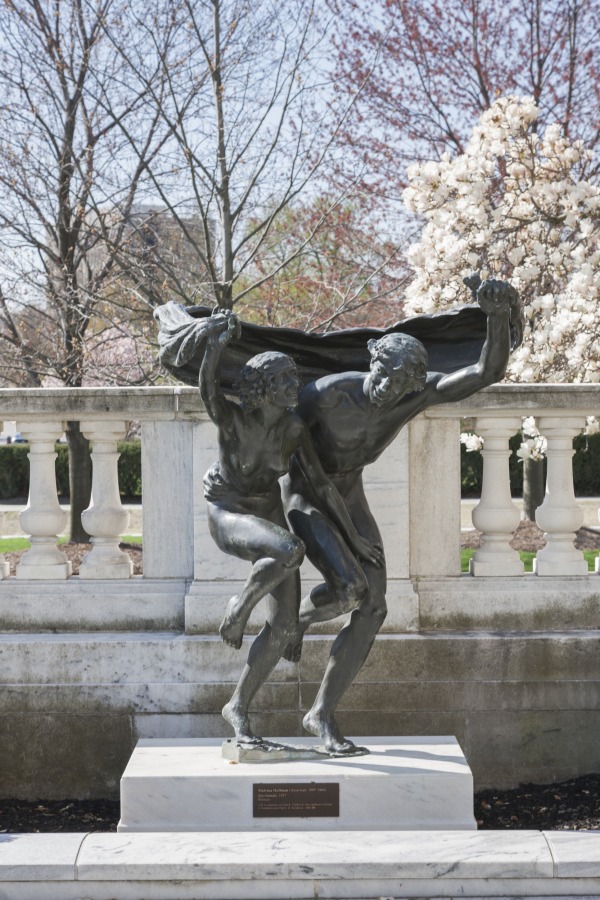
Technical Deconstruction: The Bacchanale Silhouette
The subject “Bacchanale” is a misdirection. It evokes Dionysian frenzy, yet the DNA source—a dialogue between a Qing dynasty porcelain vase and a modern crabapple painting—demands a disciplined, almost ascetic interpretation. The true aesthetic is not abandon, but controlled release. For the 2026 NYC executive, this translates into a silhouette that is neither rigid nor slack, but fluid with structural intent. The core principle is the translation of “气韵” (spiritual resonance) into volumetric engineering. We are not designing for static display; we are designing for the kinetic experience of the urban landscape—the subway, the glass tower, the evening negotiation.Form: The “Moving Landscape” as Garment Architecture
The porcelain vase is described as a “moving landscape,” a microcosm where mountain, figure, and flower coexist in a continuous visual loop. The garment must replicate this cyclical, non-hierarchical flow. The primary formal strategy is the elimination of sharp, terminating seams. Shoulder seams are dropped and softened into a raglan or dolman construction, allowing the fabric to drape from the neckline as a single, unbroken plane. The waist is not cinched but suggested through a subtle, internalized drawstring or a bias-cut panel that creates a gentle, shifting volume—a “waist” that is felt rather than seen. The silhouette is elongated and columnar, but with a crucial twist: the hem is asymmetrical, echoing the “游观” (roaming gaze) experience of the vase. One side falls to the mid-calf, the other to the ankle, creating a diagonal tension that propels the eye forward. This is not a static hemline; it is a line of force. The back panel is cut longer than the front, a deliberate nod to the “far mountains” receding into the distance. This creates a train effect that, in motion, generates a secondary silhouette—a ghost of volume trailing behind the wearer. The sleeve is the most critical element. It is not a tube but a sculptural appendage. The underarm is cut with a deep gusset, allowing the arm to lift without distorting the bodice. The sleeve itself is wide, almost bell-shaped, but the volume is concentrated at the forearm, tapering to a narrow, elongated cuff that covers the knuckles. This is the “flower” in the composition—a burst of volume that is immediately contained. The cuff is fastened with a single, hidden ivory button, a gesture of restraint that prevents the silhouette from becoming sloppy.Color: The Architecture of Ivory
The selected color is Ivory. This is not a neutral. It is a complex, layered tone that functions as a canvas for light and shadow. The DNA source emphasizes the “温润光泽” (warm, moist luster) of famille rose porcelain and the “墨色浓淡” (ink density) of the painting. Ivory, in this context, is the synthesis of both. It is the color of unglazed porcelain, of raw silk, of the negative space in a Chinese painting. The technical execution of this color is paramount. The fabric must be a double-faced wool-cashmere blend, one side brushed to a matte, almost powdery finish (the “ink”), the other side left with a subtle, satin-like sheen (the “glaze”). The garment is constructed with the matte side as the primary exterior, but the lapels, cuffs, and hem are turned to reveal the lustrous reverse. This creates a dialogue of finishes—a visual “breathing” that mimics the interplay of ink and paper. The color is not flat; it is a field of subtle tonal shifts. The interior of the garment is lined in a pure silk charmeuse dyed to a slightly warmer, creamier ivory. This is invisible to the observer but felt by the wearer—a private, sensory experience that mirrors the “静观” (quiet contemplation) of the crabapple painting. The lining is not merely functional; it is a secret, a layer of intentionality.Construction Details: The “格物致知” (Gewu Zhizhi) Approach
The painting’s philosophy of “investigating things to attain knowledge” is applied to every seam and stitch. The garment is constructed using a modified kimono sleeve technique, but with Western tailoring precision. The shoulder seam is not a straight line but a gentle curve, following the natural slope of the body. The seam allowance is not pressed open but pressed to one side, creating a subtle, raised ridge that catches the light—a “calligraphic” line. The pockets are hidden, inset, and angled. They are not functional in the traditional sense; they are architectural features that disrupt the fabric’s flow, creating a tension point that grounds the silhouette. The left pocket is placed at a 15-degree angle, the right at a 20-degree angle. This asymmetry is deliberate, echoing the “虬曲的枝干” (gnarled branches) of the crabapple. The pocket openings are bound with a narrow strip of the same silk charmeuse used for the lining, a subtle, almost invisible detail that rewards close inspection. The hem is finished with a rolled, hand-stitched edge, not a machine-stitched one. This is a labor-intensive process that creates a soft, organic line, as opposed to a hard, industrial one. The weight of the hem is critical: it must be heavy enough to create a clean drape but light enough to allow the fabric to “breathe” and move with the body. A fine chain is sewn into the hem of the longer back panel to provide the necessary weight without adding bulk.Urban Integration: The 2026 Executive
This is not a garment for the boardroom. It is a garment for the transitional space—the gallery opening, the client dinner, the after-hours negotiation. It is designed to be worn over a simple, high-neck shell in a darker tone (Onyx or Slate) and paired with a tailored, straight-leg trouser in the same dark tone. The contrast is the point: the fluid, ivory outer layer against the sharp, dark underlayer. This is the “macro” and “micro” of the DNA source—the expansive vase and the focused painting. The silhouette is anti-trend. It does not conform to the current obsession with sharp shoulders or exaggerated volume. It is a study in controlled release, in the tension between movement and stillness. For the 2026 executive, who operates in a world of constant flux, this garment offers a mobile, adaptable presence. It is a second skin that is both protective and expressive, a “moving landscape” that shifts with the wearer’s trajectory through the city. The ivory color, in its refusal to be a statement, becomes the ultimate statement: a quiet, confident assertion of a personal, curated aesthetic.
Technical Insight
NYC Perspective: Translating Ivory tones into Fluid silhouettes.