Urban Form: Woman in Profile
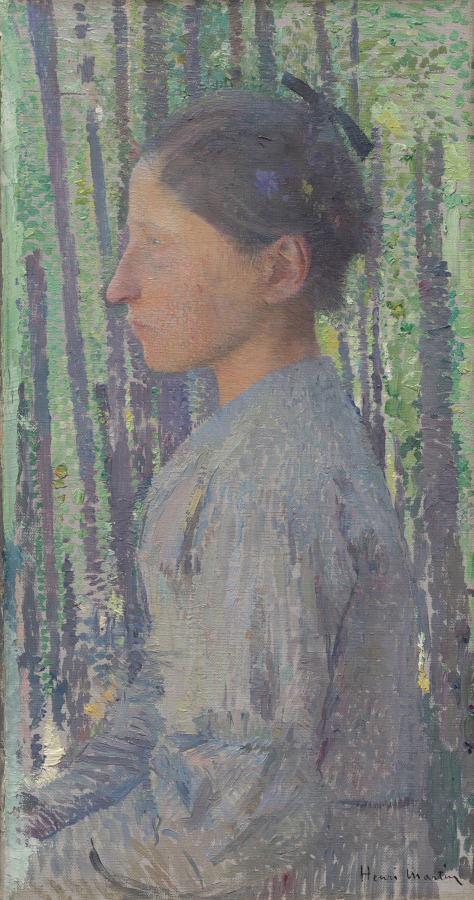
Technical Analysis: The Onyx Profile — A Study in Minimalist Urban Silhouette
The subject, a woman in profile, presents a foundational case study for the 2026 NYC executive wardrobe. This is not a study of the face, but of the line — the continuous, unbroken contour from crown to collarbone, the negative space between the nape and the shoulder, the precise angle of the jaw. In the context of Addison Fashion’s urban poetics, this profile is a silhouette of intention. It demands a garment architecture that respects the body’s geometry without ornamentation, where every seam is a structural decision and every fabric weight a philosophical choice.
The chosen color, Onyx, is not merely black. It is the deepest, most absorbent black — a color that refuses reflection, that consumes light and defines form through absence. In the 2026 executive wardrobe, Onyx functions as the void against which structure is read. It is the color of the 瓦形砚 (tile-shaped inkstone) after centuries of use: not shiny, but matte, worn, and deeply resonant. It is the ink of the 三句教示詩 (Three-Phrase Teaching Poem) — not the ink on paper, but the ink in the mind, the potential before the stroke.
I. Form: The Profile as Architectural Section
The woman’s profile, when analyzed as a vertical section, reveals three critical zones for garment construction:
1. The Cranial-Cervical Apex (Crown to Nape)
The line from the top of the head to the base of the skull is the primary vertical axis. In a minimalist garment, this axis must be uninterrupted. A collar that breaks this line — a Peter Pan collar, a wide lapel — introduces visual noise. The 2026 executive wardrobe demands a stand collar or a mandarin collar that rises precisely to the occipital bone, creating a continuous, unbroken column. This is the “孤峰頂上” (solitary peak) — the garment as a single, unadorned form rising from the body.
2. The Cervical-Thoracic Transition (Nape to Shoulder)
This is the most critical juncture. The profile shows a subtle inward curve at the nape, then a sharp outward projection at the shoulder. The garment must honor this curve without exaggerating it. A dropped shoulder or a raglan sleeve would soften the line, introducing a fluidity that contradicts the minimalist ethos. Instead, the 2026 wardrobe requires a set-in sleeve with a high armhole, creating a crisp, angular transition. The shoulder seam should align with the acromion process, not beyond it. This is the “筆跡即心跡” (brushstroke is mind-stroke) — the seam as a precise, unapologetic mark.
3. The Thoracic-Cervical Angle (Jaw to Collarbone)
The profile reveals a sharp, almost 90-degree angle between the jawline and the anterior neck. This is the negative space that defines the garment’s neckline. A deep V-neck would bisect this angle, creating a distracting diagonal. A crewneck would hide it entirely. The optimal solution is a keyhole neckline or a high, asymmetrical slit that reveals the angle without exposing it. This is the “道在瓦甓” (the Way is in the tile) — the revelation of beauty in the most mundane, structural detail.
II. Color: Onyx as Material Philosophy
Onyx is not a color; it is a material state. In the context of the 2026 executive wardrobe, it represents the absorption of all light and the refusal of all ornament. This is a direct translation of the “不立文字” (not relying on words) principle from the 三句教示詩. The garment does not speak; it is. The color Onyx allows the silhouette to be read purely as form, without the distraction of hue or pattern.
However, Onyx is not flat. In high-quality textiles, it reveals depth through texture. A double-faced wool crepe in Onyx will show a subtle sheen where the fabric folds, while a matte Japanese cotton sateen will absorb all light, creating a void-like presence. The 2026 executive wardrobe must use both: the crepe for structured pieces (blazers, trousers) and the sateen for fluid pieces (dresses, tops). This duality mirrors the “金石永固” (metal and stone endure) versus “時光消蝕” (time erodes) tension in the 瓦形硯銘文. The crepe is the stone — it holds its shape. The sateen is the ink — it flows and fades.
III. Silhouette: The Minimalist Profile in Motion
The 2026 NYC executive woman does not stand still. She walks, she gestures, she sits in meetings, she enters elevators. The silhouette must maintain its integrity across all states. This requires a modular approach to garment construction:
1. The Torso: A Single, Unbroken Column
The blazer or top must be cut with zero ease at the waist, creating a straight line from shoulder to hip. This is the “瓦形” (tile shape) — a flat, unadorned surface. The hem should fall at the hip bone, not below, to avoid creating a second horizontal line. The back should be cut with a center seam that follows the spine’s natural curve, ensuring the garment does not pull or wrinkle when the arms move forward.
2. The Sleeve: A Precision Instrument
The sleeve must be cut with a two-piece construction to allow for the arm’s natural rotation. The outer seam should align with the lateral epicondyle (the bony point of the elbow), creating a visual line that echoes the profile’s angularity. The cuff should be minimal — a 1-inch band that sits at the wrist bone, not over the hand. This is the “化俗為雅” (transforming the mundane into elegance) — the sleeve as a tool, not a decoration.
3. The Pant: A Vertical Continuation
The pant must be cut with a straight, wide leg that falls from the hip without tapering. The hem should graze the top of the shoe, creating a continuous vertical line from shoulder to floor. The waistband should be hidden — no belt loops, no visible button. This is the “以心傳心” (mind-to-mind transmission) — the garment’s construction is invisible, but its effect is absolute.
IV. The 2026 Executive Wardrobe: A System of Silence
The final wardrobe is not a collection of pieces, but a system of relationships. Each garment must be able to pair with any other, creating a modular, monochromatic wardrobe. The Onyx color ensures that the eye reads the silhouette, not the color. The minimalist form ensures that the body, not the garment, is the subject.
This is the “器以載道” (the vessel carries the Way) — the garment as a vessel for the executive’s presence. It does not shout. It does not distract. It simply holds space for the woman within. In the 2026 NYC landscape of noise and excess, this is the ultimate luxury: a garment that is silent, precise, and absolute.
The profile, in Onyx, is not a portrait. It is a statement of intent. It says: I am here. I am not performing. I am working.