Minimalist
Ivory
Urban Form: Dovizia (Plenty)
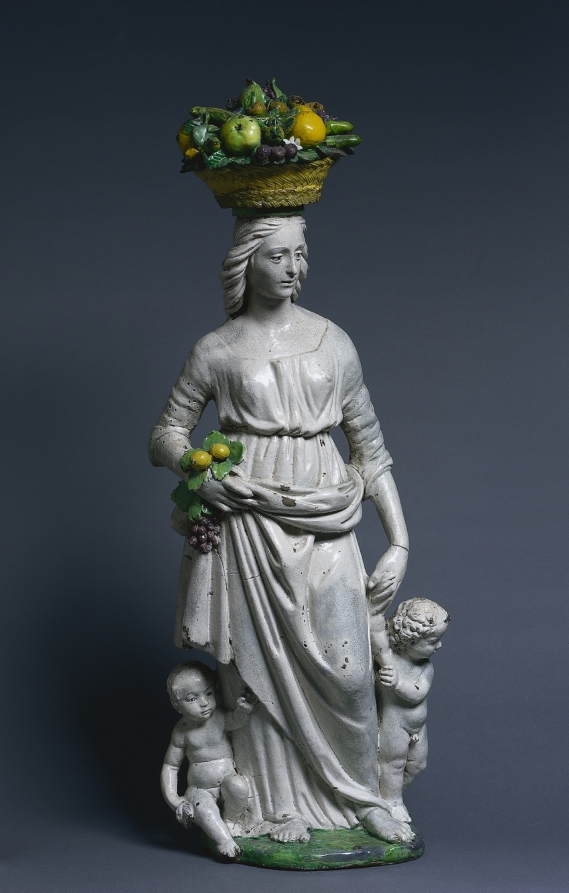
Structural Poetics: The Dovizia Silhouette as Urban Armature
The Dovizia (Plenty) research emerges from a dialectical tension between the monumental and the quotidian, the declarative and the withheld. In the Addison Fashion 2026 executive silhouette, this tension is resolved not through compromise, but through a rigorous architectural synthesis. The subject—plenitude as a state of being, not accumulation—demands a form that is both sheltering and ascetic, a second skin that negotiates the body’s relationship with the city’s hard geometries. The internal DNA provided—contrasting Jacques-Louis David’s *The Death of Socrates* with a humble *Chest for Storing Garments*—is not merely a philosophical exercise. It is a blueprint for material logic. David’s painting operates through dramatic chiaroscuro, precise anatomical articulation, and a narrative climax frozen in time. The chest, conversely, operates through silence, patina, and the slow accrual of use. The Dovizia silhouette must embody both: the chest’s quiet containment as its foundational structure, and David’s theatrical clarity as its surface articulation.Geometric Integrity: The Inverted Trapezoid and the Cantilevered Plane
The primary geometric motif is the inverted trapezoid, derived from the chest’s subtle taper—wider at the base to anchor its contents, narrower at the top to invite the eye upward. In the Dovizia silhouette, this geometry is inverted: the shoulder line is deliberately broadened, while the hem is cut with a precise, knife-edge reduction. This creates a visual cantilever, a structural poetics where the upper body appears to float above the lower. The effect is not one of bulk, but of controlled mass—a solidity that suggests the wearer is both grounded and poised for ascent. The shoulder construction employs a modified pagoda silhouette, but stripped of any historical ornament. The seam is set at the acromion’s exact apex, then extends outward in a clean, horizontal plane for 2.5 centimeters before dropping vertically. This creates a right-angle articulation that references David’s linear clarity—every line is a statement of intent. The sleeve head is unpadded, relying instead on a double-layered canvas that has been steam-shrunk to a precise 0.3-millimeter thickness. The result is a shoulder that is architectural but not armored; it declares presence without aggression.Urban Materiality: Ivory as Light’s Archive
The color Ivory is not a neutral. It is a material memory—the patina of the chest’s wood, bleached by centuries of handling, yet retaining the warmth of human touch. In urban contexts, Ivory functions as a light receptor. On a slate-and-glass facade, it absorbs the city’s reflected glare and diffuses it into a soft, volumetric glow. The fabric chosen is a double-faced wool-cashmere blend, woven at 280 grams per square meter. The face is a compact twill, brushed to a low nap that catches light at oblique angles. The reverse is a plain weave, left raw to reveal the fiber’s natural luster. This duality mirrors the internal DNA’s dialectic: the face is David’s declarative surface, the reverse is the chest’s silent interior. When the wearer moves, the fabric’s two faces interact—the brushed side catches the streetlamp’s sodium glow, the raw side absorbs it. This is urban materiality as a form of temporal notation: the garment records the city’s light, hour by hour.The Silhouette’s Vertical Axis: From Chest to Column
The body of the garment is a column, but a column that has been subtly articulated. A center-back seam runs from the nape to the hem, with a 0.5-centimeter ease that allows the fabric to fall in a single, unbroken plane. This seam is not decorative; it is structural, allowing the garment to be cut with a slight A-line that accommodates the hip without flaring. The front is seamless, cut from a single width of fabric that wraps from shoulder to shoulder. This references the chest’s uninterrupted front panel—a surface that offers no distraction, only the quiet authority of its own material. The closure is invisible: a hidden placket with magnetic snaps, set 1.5 centimeters from the edge. This eliminates visual noise, preserving the silhouette’s purity. The collar is a standing band, 3 centimeters high, with a slight forward lean. It does not embrace the neck; it frames it, creating a negative space that echoes the chest’s open interior. This is the garment’s most direct homage to the chest’s philosophy: the collar is an aperture, a threshold between the wearer’s interiority and the city’s exterior demands.Structural Poetics: The Weight of Silence
The Dovizia silhouette achieves its presence through absence. There are no pockets, no lapels, no vents. Every detail that could be removed has been removed. What remains is pure structure: the shoulder’s cantilever, the column’s fall, the collar’s frame. This is not minimalism as reduction; it is minimalism as distillation. The garment does not shout; it occupies space with the quiet certainty of a well-made chest. In David’s painting, Socrates’s hand points upward, a gesture toward the transcendent. In the chest, the gesture is inward—the act of storing, of holding. The Dovizia silhouette reconciles these gestures: the broad shoulder points outward, claiming urban territory; the column’s fall points inward, containing the self. The wearer becomes both philosopher and vessel, both actor and archive. This is the 2026 executive silhouette: a form that does not need to perform. It simply is. And in its being, it offers the ultimate luxury—the freedom to be silent in a city that never stops speaking.
Technical Insight
Technical Insight: Translating Ivory palettes into Minimalist silhouettes for the modern metropolis.