Urban Form: Architectural Model
Geometric Integrity as a Framework for Power
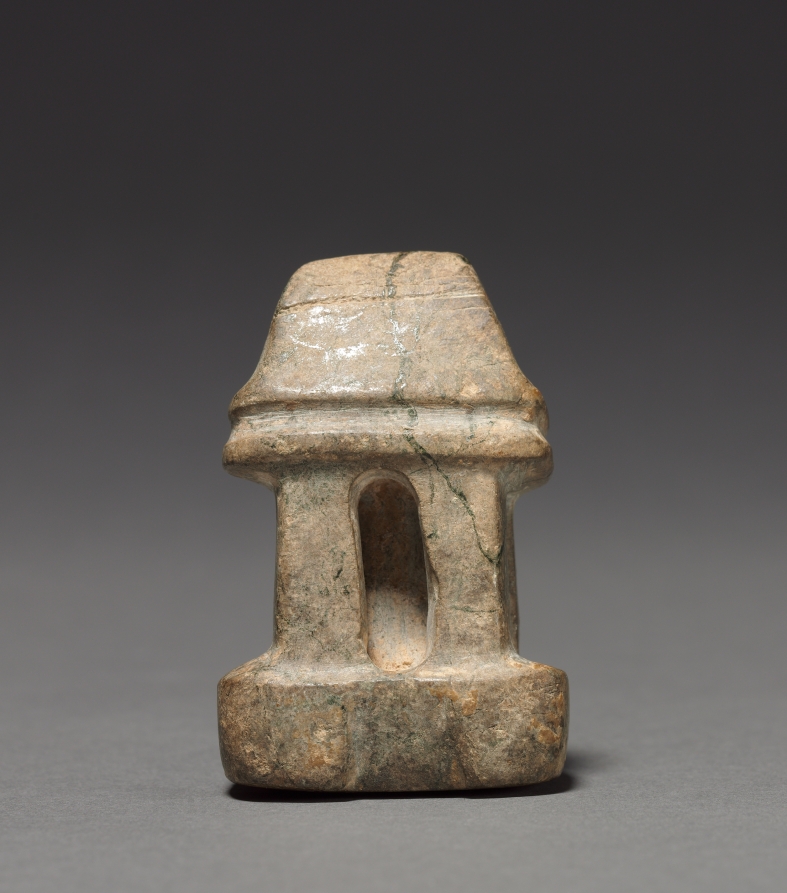
The architectural model presented—a dialogue between Frémiet’s *Jeanne d’Arc* and the Shang-Zhou *Jade Axe*—offers a definitive lexicon for the 2026 executive silhouette. The former embodies a vertical, tensile dynamism; the latter, a horizontal, compressed authority. For Addison Fashion, the synthesis yields a silhouette defined by **structural poetics**: a rigorous, almost brutalist geometry that eschews ornament for the pure articulation of mass and void. The 2026 executive is not draped; she is constructed. Her form is a habitable sculpture, a mobile monument to urban materiality.The Vertical Axis: The “Incarnated Sublime” as Line
Frémiet’s bronze captures a spiraling ascent. The gaze moves from the planted feet, through the torque of the armored torso, to the raised standard and the upturned face. This is a vector of transcendence. In our translation, this becomes the primary vertical seam—a continuous, unbroken line from the clavicle to the hem, often articulated through a central zip or a stark, pressed crease in a double-faced wool coat. The silhouette is elongated, the shoulder line sharp and slightly extended, not for breadth, but to create a clear architectural overhang. The jacket’s lapel is reduced to a near-invisible blade, a mere incision in the fabric’s plane. The material—a dense, matte slate wool—absorbs light, mimicking the bronze’s patina without its gloss. This is not a soft drape; it is a rigid shell that encases the body, allowing movement only within a defined, geometric envelope. The “incarnated sublime” is rendered as a disciplined, vertical line—a silent declaration of purpose.
The Horizontal Plane: “Internalized Majesty” as Volume
The *Jade Axe* offers a counterpoint: a power that is not ascending but immanent. Its authority lies in its static, symmetrical mass, its polished surface, and the ritualized space it occupies. For the 2026 silhouette, this translates into the sculpted sleeve and the structured yoke. The sleeve is not set in; it is carved from the same block of fabric as the body, creating a continuous, monolithic volume. The shoulder is a clean, horizontal plane—a “roof” over the torso, echoing the axe’s blade. The waist is not cinched but subtly defined through negative space, a void between the upper and lower volumes. The trousers or skirt fall in a straight, uncompromising column, with a slight break at the shoe, grounding the figure. The internalized majesty of the jade is expressed through the fabric’s weight and finish: a slate-toned, high-density cotton or a technical wool that holds a crease like a carved edge. There is no drape, only fall. The garment’s authority is not in its narrative but in its pure, volumetric presence.
Urban Materiality: The Dialectic of Bronze and Jade
The core tension in this research is the material dialectic between the “drama of force” (bronze) and the “eternity of substance” (jade). The 2026 executive wardrobe must reconcile these. The answer lies in a new materiality: technical minimalism.
Surface as a Record of Process
Frémiet’s bronze bears the marks of its making—the seam lines, the rough patches, the green patina of age. This is a surface that records history. In our collection, this is translated through micro-textures woven into the fabric: a subtle herringbone in a worsted wool, a faint slub in a silk-wool blend, or a barely perceptible grid in a bonded jersey. These are not patterns; they are structural memories of the loom. The color, Slate, is chosen for its ability to absorb and modulate light, revealing these textures only in motion or under direct light. The garment’s surface becomes a quiet chronicle of its own construction.
Volume as a Ritual Space
The *Jade Axe* is not a tool but a vessel for ritual. Its value is in its non-functionality. The 2026 executive silhouette must similarly create a ritualized space around the body. This is achieved through negative volume. A coat is cut with a deliberate excess of fabric at the back, creating a cape-like silhouette that falls without clinging. A blazer is constructed with a floating lining, allowing the outer shell to maintain its architectural shape independent of the body’s movement. The garment does not follow the body; it precedes it, defining a territory of authority. The wearer inhabits a mobile architecture, a personal, portable sanctuary of power.
Structural Poetics: The 2026 Executive Uniform
The definitive silhouette is a three-part system: a long, single-breasted coat with a notched collar reduced to a mere slit; a high-waisted, straight-leg trouser with a single, sharp crease; and a sleeveless, high-neck shell top. The coat’s shoulder is a clean, horizontal line, echoing the jade axe’s blade. The trouser falls in an unbroken column, its volume just wide enough to suggest a pedestal. The shell top is a second skin, a negative space that anchors the ensemble.
The structural poetics lie in the interplay of these volumes: the coat’s rigid shell, the trouser’s static column, and the top’s absence. The color, Slate, unifies them into a single, monolithic entity. The only “ornament” is the precision of the cut—the exact angle of a seam, the millimeter of a hem, the weight of a fabric. This is the urban materiality of the 2026 executive: a wardrobe that is not worn, but inhabited. A silent, powerful geometry that speaks of discipline, authority, and a profound understanding of the space one occupies. It is the *Jeanne d’Arc* of the boardroom and the *Jade Axe* of the city—a fusion of vertical aspiration and horizontal command, rendered in the cold, sophisticated language of minimalist luxury.