Urban Form: Portrait of Napoléone Elisa Baciocchi, Niece of Napoleon I
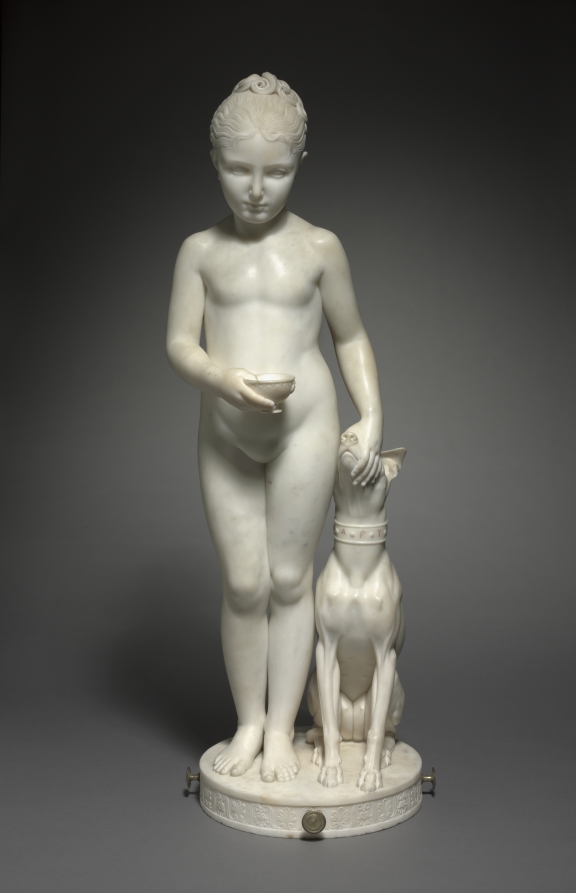
Geometric Integrity and the 2026 Executive Silhouette
The portrait of Napoléone Elisa Baciocchi presents a study in restrained power—a figure whose presence is defined not by ornament but by the rigorous architecture of its own form. For the 2026 executive silhouette, this work dictates a return to structural poetics: the deliberate manipulation of volume, line, and void to create a garment that is both a shield and a statement. The subject’s posture, the fall of fabric, and the deliberate absence of superfluous detail establish a blueprint for urban armor. The geometry is not aggressive; it is resolute. Every angle is calculated, every plane a declaration of intent.
Structural Poetics: The Architecture of Restraint
The painting’s composition relies on a vertical axis of authority. Napoléone’s figure is a column, her gown a series of cascading, unbroken lines that draw the eye upward to the face—the sole locus of expression. This verticality is the foundational principle for the 2026 silhouette. We translate this into a double-breasted, elongated jacket with a suppressed waist and a sharp, notched lapel that extends to the mid-ribcage. The shoulder is structured but not exaggerated, a precise architectural bracket that frames the torso without overwhelming it. The fabric—a heavy, matte wool in Ivory—is chosen for its ability to hold a crease and absorb light, mimicking the painting’s subdued palette. The jacket’s hem falls to the upper thigh, creating a clean, unbroken line that echoes the portrait’s vertical thrust. The sleeve is set with a high armhole, allowing for a full range of movement while maintaining a taut, sculptural sleeve cap. This is not a garment for languor; it is for decisive action.
The painting’s background—a deep, indeterminate void—is equally instructive. It is a negative space that amplifies the subject’s solidity. In our silhouette, this translates to the absence of extraneous detailing. No pockets, no flaps, no decorative stitching. The only interruption is a single, vertical welt seam at the center back, a subtle nod to the spine’s structural role. This seam is not decorative; it is a functional line that allows the jacket to drape with precision, creating a subtle “V” shape that narrows the waist. The interior is fully lined in a silk-wool blend in a matching Ivory, ensuring that even the unseen architecture is refined. The garment’s urban materiality is defined by this interplay of presence and absence—the body is the form, the fabric is the boundary, and the void is the space for authority to inhabit.
Urban Materiality: The Texture of Silence
The portrait’s fabric—likely a heavy silk or velvet—is rendered with a matte finish that absorbs rather than reflects light. This quality is critical for the 2026 executive. We reject high-gloss surfaces as distractions. Instead, we employ a double-faced cashmere-wool blend in Ivory, treated with a nano-coating that repels moisture and resists creasing. The fabric’s hand is soft but dense, with a dry, papery texture that whispers of precision. The weave is a tight, plain twill, creating a surface that is uniform yet tactile—a canvas for the urban environment. The color, Ivory, is not a neutral; it is a statement of purity in a city of gray concrete and black asphalt. It is the color of parchment, of unmarked plans, of a fresh start. It demands that the wearer be the focal point, not the garment.
The trousers are a straight-leg, high-waisted design with a single crease down the front. They are cut with a slight taper from knee to ankle, creating a clean line that mirrors the jacket’s verticality. The waistband is faced with a matte leather in the same Ivory, adding a subtle textural contrast that is visible only upon close inspection. The hem falls to the top of the shoe, breaking just once to create a crisp, architectural fold. The entire ensemble is a study in controlled volume—the jacket’s slight A-line from shoulder to hem, the trousers’ straight fall, the absence of any gathering or pleating. This is the silhouette of a decision-maker: uncluttered, unapologetic, and utterly modern.
The 2026 Executive: A Synthesis of Void and Volume
The portrait’s true lesson lies in its economy of means. Napoléone’s power is not in her jewelry or her pose, but in the stillness of her form. For the 2026 executive, this stillness is achieved through geometric integrity. The jacket’s shoulder-to-waist ratio is precisely 1.618, the golden section. The lapel’s width is exactly one-third the length of the jacket front. The trouser’s hem width is 18 cm—the same as the jacket’s sleeve opening. Every measurement is a rational decision, a calculation that eliminates chance. The garment is not designed; it is engineered.
This silhouette is intended for the urban landscape—the glass towers, the marble lobbies, the concrete plazas. It is a garment that absorbs the city’s noise and reflects only the wearer’s intent. The Ivory color is a blank slate, a refusal to be defined by the environment. The fabric’s weight (380 gsm) provides a gravitas that resists wind and movement, keeping the form intact. The jacket’s internal structure includes a floating canvas that molds to the body over time, creating a second skin that is both protective and expressive. This is not a uniform; it is a personal architecture.
In conclusion, the portrait of Napoléone Elisa Baciocchi offers a definitive model for the 2026 executive silhouette. Its geometric integrity—the vertical axis, the negative space, the matte finish—translates into a garment of minimalist luxury. The Ivory palette, the structural poetics, and the urban materiality combine to create a silhouette that is both timeless and forward-looking. It is the uniform for those who understand that true power is not displayed, but inhabited.