Minimalist
Onyx
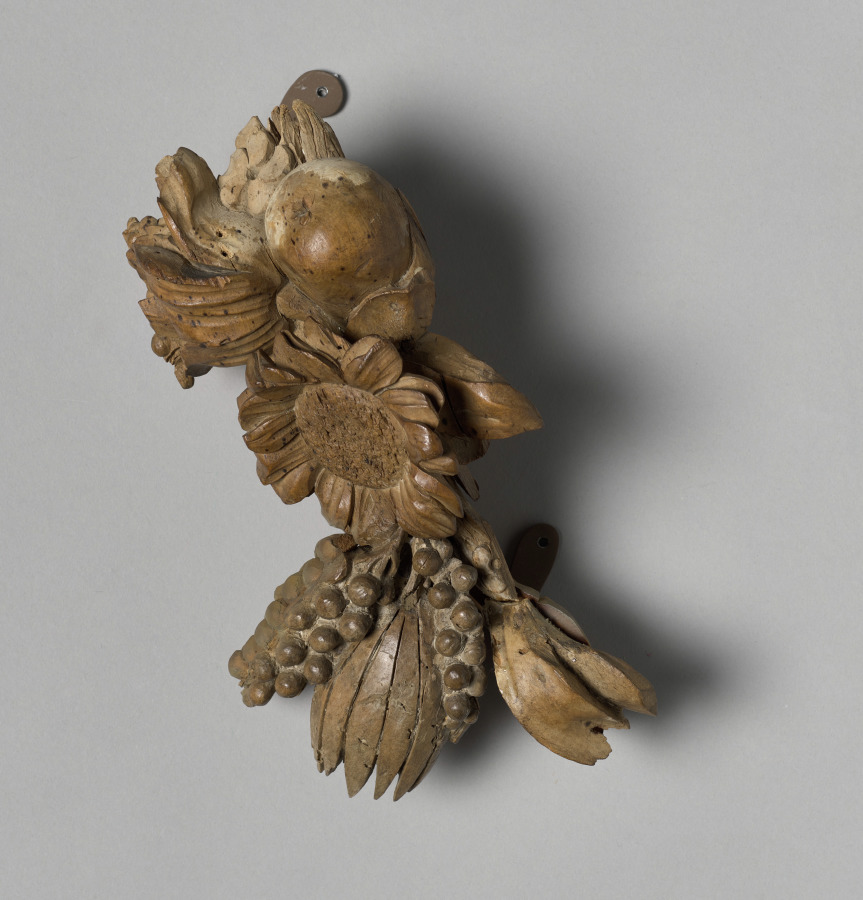
Urban Form: Carving from an Overmantel
Geometric Integrity as Structural Poetics
The subject, *Carving from an Overmantel*, presents a singular architectural fragment—a remnant of domestic ornamentation that has been stripped of its original context. This is not a decorative flourish but a structural fossil. Its geometric integrity lies in the tension between the carved relief’s inherent three-dimensionality and the flat, planar surface from which it emerges. The overmantel, historically a frame for a hearth or mirror, becomes a study in negative space: the void of the fireplace below, the solid mass of the carved stone above. For the 2026 executive silhouette, this translates into a rigorous interplay between volume and void. The garment must not drape; it must carve. Shoulders are not padded but *cut*—a clean, angular line that references the chiseled edge of the stone. The torso is a monolithic block, unbroken by extraneous seams, while the waist is defined not by cinching but by a subtle inward shift of the fabric’s mass, akin to the shadow line where the carving meets the background plane. This is a silhouette of containment, where every cubic centimeter of air around the body is deliberately shaped.The Onyx Palette: Materiality of Shadow and Light
The choice of Onyx as the color is not arbitrary. It is the color of the stone itself—deep, absorbing, and non-reflective, yet capable of revealing the subtlest undulations of form under direct light. In the context of *Carving from an Overmantel*, Onyx functions as the ground from which the geometric figure is hewn. It is a color of authority and silence, appropriate for the executive who commands space without noise. The materiality must echo this: a double-faced wool-cashmere blend, milled to a dense, felted finish that mimics the cold, smooth surface of polished stone. Alternatively, a bonded jersey with a matte, rubberized back can achieve the necessary weight and stillness. The fabric must not catch light; it must absorb it, allowing the silhouette’s geometry to be read through shadow and contour alone. Any sheen would break the illusion of carved mass.Structural Poetics: The Architecture of Restraint
The poetics of this silhouette are found in its restraint. The overmantel carving is a relic of a time when ornament was structural—every scroll, every acanthus leaf, was a load-bearing element translated into aesthetic form. For the 2026 executive, this translates into a garment where every line serves a purpose. The lapel, if present, is not a lapel but a folded plane, its edge sharp as a knife’s. The pocket is not a pocket but a slit—a negative incision in the fabric’s surface. The sleeve head is set with zero ease, creating a continuous line from shoulder to wrist, as if the arm itself is a carved extension of the torso. This is not comfort; it is architecture. The garment stands away from the body at key points—the upper back, the chest—creating a void of air that is as important as the fabric itself. This is the urban materiality of the piece: a dialogue between the body and the built environment, where the garment becomes a mobile fragment of the city’s stone and steel.Urban Materiality: The Executive as Monolith
In the urban context, this silhouette operates as a counterpoint to the chaos of the street. It is a statement of permanence in a transient world. The Onyx color absorbs the neon and glass reflections of the city, turning them into a muted, internal glow. The fabric’s weight ensures that the garment does not flutter or move with the wind; it remains still, a fixed point in the flow of pedestrians. The silhouette’s geometry—broad at the shoulder, narrow at the hip, with a straight, unbroken line from chest to hem—references the verticality of skyscrapers and the horizontality of bridge spans. It is a uniform for the individual who sees the city as a system of planes and volumes, not a collection of streets. The overmantel’s original function—to frame a hearth, the heart of the home—is inverted: this garment frames the individual as the heart of the corporate landscape, a carved monument to ambition and control.Conclusion: The Silhouette as Carved Space
The 2026 executive silhouette, derived from *Carving from an Overmantel*, is a study in negative space and structural clarity. It rejects the fluidity of draped fabrics and the softness of oversized forms in favor of a Minimalist rigor that is both ancient and futuristic. The Onyx palette grounds the design in a materiality of shadow and substance, while the geometric integrity of the cut ensures that the garment reads as a single, continuous volume. This is not fashion as decoration; it is fashion as architecture—a carved space that the body inhabits, a mobile monument to the executive’s authority. The urban materiality of the piece lies in its stillness, its absorption of light, and its refusal to yield to the transient. It is a silhouette for those who build, not those who follow.
Technical Insight
Technical Insight: Translating Onyx palettes into Minimalist silhouettes for the modern metropolis.