Minimalist
Slate
Urban Form: Turtle Baby
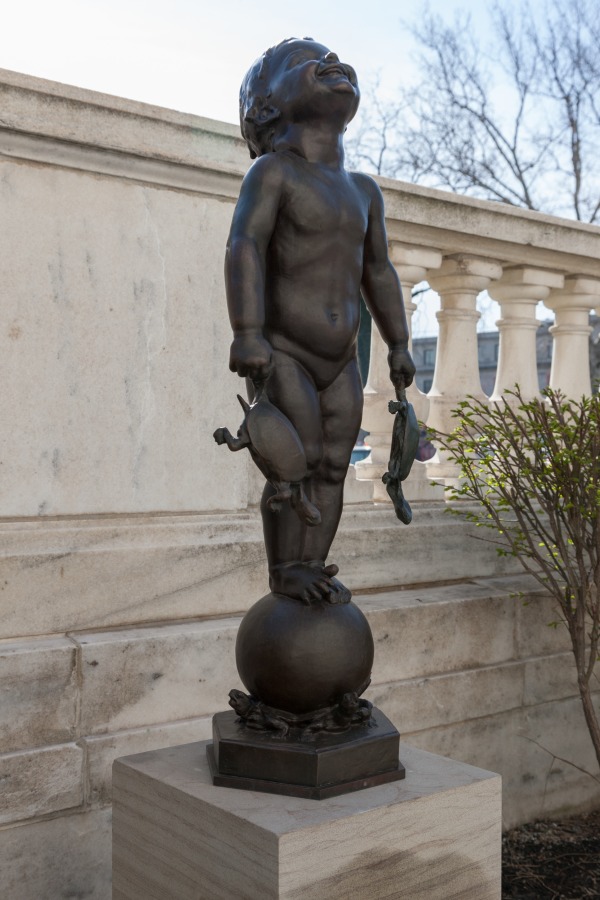
Executive Summary: The Dialectic of Containment and Dissolution
The subject, designated “Turtle Baby,” presents a compelling paradox for the 2026 NYC executive wardrobe. Drawing from the dual DNA sources of Jacques-Louis David’s *The Death of Socrates* (1787) and the unadorned ceramic vessel *Jar*, we are confronted with two opposing yet interdependent aesthetic logics. The first is a hyper-rational, sculptural idealization of the human form—a body rendered as a monument to intellectual transcendence. The second is a raw, anti-heroic materiality—a container that accepts decay as an inherent property of existence. For the urban professional navigating the vertical canyons of Manhattan, this dialectic translates into a critical wardrobe tension: the need to project an aura of unassailable control (the Socratic ideal) while simultaneously acknowledging the fragility and temporality of the physical self (the *Jar*). The 2026 silhouette must therefore be a study in **contained dissolution**—a form that is rigorously structured yet subtly porous, allowing for the breath of mortality. The chosen palette, **Slate**, serves as the chromatic bridge between these poles: a color of stone, of urban pavement, of the philosopher’s cold logic, yet also a hue that absorbs light without reflecting glory, a color of quiet entropy.I. Form: The Geometry of Restraint and the Fracture of the Ideal
A. The Socratic Silhouette: Rational Architecture
David’s *Socrates* is a masterclass in **geometric stasis**. The philosopher’s torso is a perfect, illuminated triangle, his extended arm a rigid diagonal, his seated posture a study in vertical authority. This is the body as a Platonic ideal—muscular, symmetrical, and utterly resistant to the gravitational pull of death. For the executive wardrobe, this translates into a foundational silhouette of **sharp, unyielding structure**. The 2026 Addison collection will deploy a **tailored, double-breasted jacket** with a suppressed waist and a pronounced, almost architectural shoulder. The lapels are not merely folded fabric but a sharp, linear gesture—a visual declaration of intent. The length is extended, grazing the mid-thigh, creating a vertical line that elongates the torso and mimics the columnar stability of a classical pillar. The fabric is a heavyweight, high-twist wool with a matte finish, chosen for its ability to hold a crease and resist the soft, organic draping that would suggest vulnerability. This is the **armor of reason**, a garment that says: “I am not subject to the whims of the body.”B. The Jar Silhouette: The Aesthetics of the Void
In direct opposition, the *Jar* offers a form defined by **interiority and volume**. It is not a statement of the body’s surface, but a container for what the body holds. Its beauty lies in its lack of pretension—the imperfect curve, the slight asymmetry, the unglazed lip that invites touch and, inevitably, chipping. This translates into the **second layer** of the 2026 silhouette: a **fluid, unconstructed shell** that sits *over* the Socratic core. Imagine a long, single-seam coat in a felted wool-silk blend. It has no darts, no defined shoulder, no closure. It hangs from the shoulder, falling in a soft, columnar drape that obscures the precise geometry of the jacket beneath. The hem is raw, left unfinished to suggest a state of becoming or unbecoming. The sleeves are cut wide, creating a negative space around the arms—a visual echo of the *Jar*’s hollow interior. This is the **garment of acceptance**, a form that does not fight the body’s eventual collapse but instead provides a dignified, quiet space for it to exist.C. The Fracture: The Point of Tension
The true innovation of the “Turtle Baby” research lies not in either form alone, but in the **gap between them**. The 2026 executive must not choose between the Socratic monument and the earthen vessel. The wardrobe must *perform* the tension. This is achieved through a **strategic, controlled break** in the silhouette. The jacket’s shoulder, while sharp, is slightly extended, creating a cantilevered effect that visually separates the arm from the torso. The coat’s wide sleeve, when the arm is raised, reveals a sliver of the structured jacket beneath—a flash of the rational core within the soft, enveloping shell. The hem of the coat is cut to fall precisely one inch above the jacket’s hem, creating a deliberate, uncomfortable interval. This is the **visual equivalent of the gap between Socrates’s pointing finger and the poison cup**—a space of unresolved meaning, of the unbridgeable distance between the ideal and the real.II. Color: The Chromatic Spectrum of Entropy
A. Slate: The Color of the Stone and the Shadow
The selection of **Slate** is not arbitrary. It is the color of the philosopher’s stone floor, of the Athenian prison cell, of the unyielding ground upon which the *Jar* sits. It is a color that rejects the warmth of life (Ivory, Sand) and the absolute finality of death (Onyx). Slate is the **color of the interval**—a neutral, non-committal grey that absorbs all light without reflecting any single emotion. In the 2026 palette, Slate is not a single shade but a **spectrum of densities**. The jacket is a deep, dense Slate (almost charcoal), a color that feels heavy and authoritative. The coat is a lighter, more dusty Slate, a color that seems to be fading, as if bleached by time. The trousers (a straight-leg, high-waisted cut) are a mid-tone Slate, creating a gradient from top to bottom that mimics the fading of a memory or the slow erosion of a stone.B. The Chromatic Dialectic: Light and Its Absence
David’s painting is famous for its **chiaroscuro**—the stark contrast between the illuminated Socrates and the shadowed disciples. This is a moral and intellectual hierarchy: light equals reason, shadow equals emotion. The 2026 palette inverts this. The Slate base is deliberately **non-reflective**. It does not seek to be illuminated. It is the color of the shadow that Socrates’s body will soon cast. The only chromatic relief comes from the **lining** of the jacket and the interior of the coat. Here, we introduce a single, shocking note: a **deep, oxidized copper**—the color of the *Jar*’s clay after it has been fired and aged. This is the color of the body’s interior, of blood, of the earth. It is a secret, visible only when the garment is in motion or when the wearer removes the coat. This is the **chromatic fracture**—the moment when the rational exterior gives way to the visceral interior.C. The 2026 Executive: A Walking Study in Contradiction
The final silhouette is not a uniform but a **visual argument**. The executive in this wardrobe is not simply dressed for success; they are dressed to embody a philosophical position. The sharp, Socratic jacket says: “I am in control. I am rational. I am a monument to my own will.” The soft, *Jar*-like coat says: “I am also a vessel. I am temporary. I will crack and fade.” The Slate color says: “I am the city. I am the stone. I am the interval between birth and death.” This is not a comfortable wardrobe. It is not designed for ease. It is designed for **presence**. It forces the wearer and the observer to confront the fundamental paradox of the modern professional: the need to project an image of eternal, unassailable competence while being acutely aware of the fragile, finite body that houses that ambition. The 2026 Addison executive is not a hero. They are a **survivor of the aesthetic wound**—a figure who has seen the gap between the ideal and the real, and has chosen to dress in that gap, rather than pretend it does not exist.
Technical Insight
NYC Perspective: Translating Slate tones into Minimalist silhouettes.