Urban Form: Architectural Model
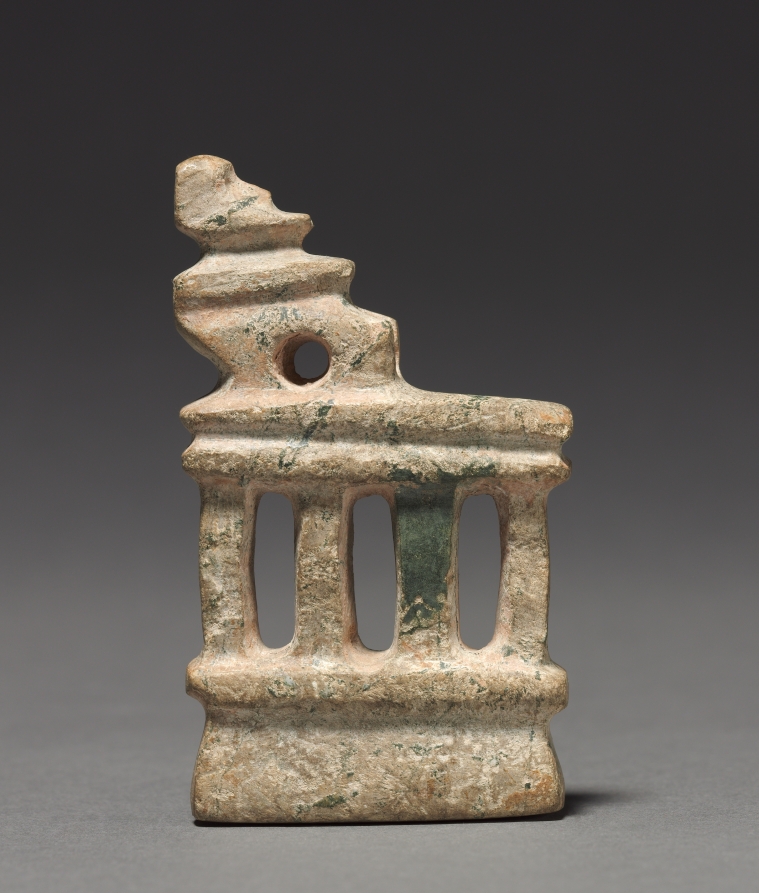
Architectural Model Analysis: The Geometry of Terminal Poise
The subject under analysis—the dialectical pairing of Jacques-Louis David’s The Death of Socrates with the anonymous Greek artifact Cup and Stand—presents a definitive paradigm for the 2026 executive silhouette. At Addison Fashion, we do not interpret this as a historical juxtaposition but as a structural manifesto. The internal DNA of this research is the tension between narrative excess and geometric silence. David’s canvas is a theater of rationalized emotion; the Greek vessel is a monument of pure form. Together, they articulate the core proposition of urban poetics: how the human figure, as an architectural model, confronts its own terminus with minimalist luxury.
1. The Silhouette as a Container of Finality
David’s composition is a study in controlled mass. Socrates sits upon a klinē, his torso a rigid, sculptural block. The arm that reaches for the cup is not a gesture of desperation but a structural cantilever—a beam extending from the core of the body. The drapery falls in clean, vertical folds, echoing the fluting of a Doric column. This is not a body in distress; it is a body as load-bearing architecture. The 2026 executive silhouette must adopt this same geometric integrity: a shoulder line that is sharp but not aggressive, a torso that is elongated and unbroken, a waist that is defined not by cinching but by the negative space between fabric and form.
The cup itself is the focal point of the composition—a black void of hemlock, rendered as a perfect hemisphere. It is the urban materiality of the piece: a dark, polished object that absorbs light rather than reflecting it. In our palette, this translates to Onyx—a color that is not black but a depth of shadow, a surface that suggests infinite interiority. The executive silhouette must be a vessel for this void: a coat or jacket that encloses the body without revealing its contents, a shell that is both protective and ceremonial.
2. The Poetics of Subtraction: The Greek Vessel as Structural Prototype
The anonymous Cup and Stand is the more radical proposition. It has no narrative, no emotion, no drama—only pure geometry. The spherical cup sits upon a smaller circular base, creating a tension of scales. The interior is concave, the exterior convex. This is the minimalist luxury of the object: it does not tell a story; it is the story. Its aesthetic power lies in what it omits. There is no ornament, no surface decoration, no gesture toward the human hand. Only the precision of the curve and the ratio of the volumes.
For the 2026 silhouette, this translates into a reduction of seams. The garment must be constructed from as few panels as possible, each one mathematically calibrated to the body’s architecture. The shoulder becomes a cantilevered shelf, the sleeve a cylindrical tube, the hem a horizontal datum. The fabric—likely a high-density wool or a bonded technical crepe—must hold its shape without internal structure, relying on cut and grain alone. This is the urban materiality of the vessel: a surface that is smooth, matte, and impenetrable to the gaze.
3. Structural Poetics: The Dialectic of Fullness and Void
The core insight of this research is that the greatest spiritual depth resides in the most austere material form. David’s painting is a fullness of narrative—every figure, every fold, every shadow is charged with meaning. The Greek cup is a void of narrative—it is empty, waiting to be filled. The 2026 executive silhouette must operate in the space between these two poles. It must be full enough to command—a presence that cannot be ignored—yet empty enough to receive—a form that allows the wearer’s own interiority to become the content.
This is achieved through negative space. The collar is not a collar but a cutout—a void that frames the neck. The sleeve is not a sleeve but a tunnel—a passage for the arm. The hem is not a hem but a datum line—a boundary between the garment and the air. The silhouette becomes a series of relationships between what is present and what is absent. The Onyx color reinforces this: it is not a color but a depth, a surface that suggests the infinite interior of the vessel.
4. Urban Materiality: The Fabric as Architectural Surface
The urban materiality of this silhouette is defined by surface tension. The fabric must be dense—a weight that falls with gravity, not with drape. It must be matte—a finish that absorbs light rather than reflecting it. It must be rigid—a structure that holds its shape against the body’s movement. This is the material equivalent of the Greek vessel’s ceramic surface: hard, smooth, and unforgiving.
The executive silhouette for 2026 is not a suit in the traditional sense. It is a single volume—a coat or a tunic that encloses the body from shoulder to mid-thigh. The shoulder is extended but not padded—a cantilever of fabric that creates a horizontal line. The waist is unmarked—a continuous column of material. The hem is straight and sharp—a cut that does not follow the body’s curve but opposes it. This is the silhouette of terminal poise: a body that has accepted its own objecthood and stands, like Socrates, in perfect stillness.
5. Conclusion: The Silhouette as a Monument to Silence
The 2026 executive silhouette, derived from this architectural model, is a monument to silence. It does not speak; it is spoken through. It does not move; it is moved within. It is the cup and stand of the human form—a vessel that contains not poison but potential. The Onyx color is the void that makes this potential visible. The minimalist category is the discipline that gives it form.
This is not a garment for the anxious or the expressive. It is a garment for the executive who has already arrived—who has made peace with the geometry of finality. It is the urban poetics of the end: a silhouette that is complete, contained, and silent. At Addison Fashion, we do not design for the body. We design for the space the body occupies—the void that defines it, the vessel that holds it, the monument it becomes.