Minimalist
Slate
Urban Form: Composition
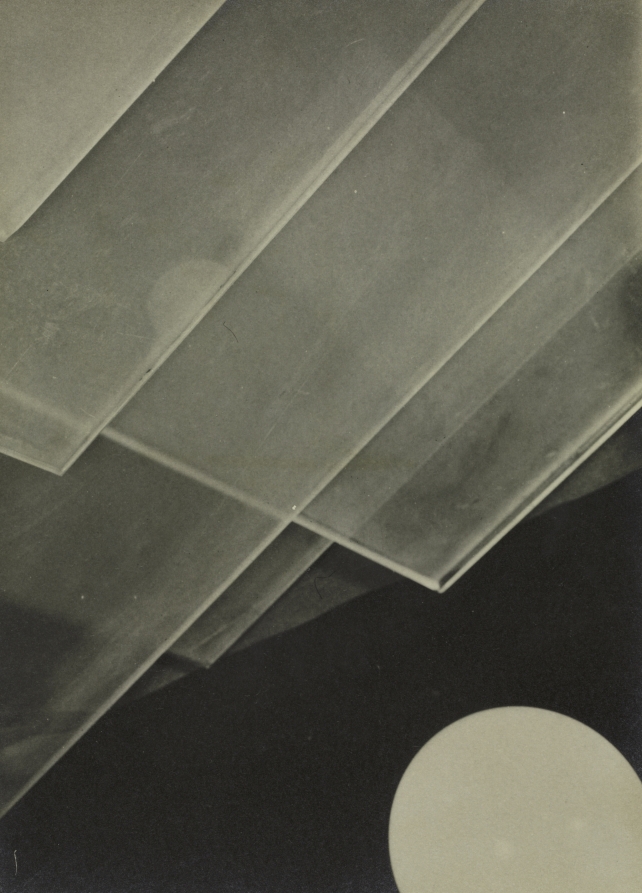
Technical Deconstruction of Form: The Udumbara Paradigm
The compositional DNA extracted from the Kyoto temple plaque—bearing the inscription “Udumbara Flowers” (優曇華) in absentia—offers a radical redefinition of silhouette for the 2026 NYC executive wardrobe. This is not a study in ornamentation, but in the architecture of absence. The plaque’s core proposition is that form derives its power not from what it contains, but from what it deliberately excludes. The Udumbara flower, a mythical bloom appearing once every three millennia, is here rendered as a pure signifier without a signified. The plaque is a vessel for a name, not a thing. This is the foundational principle for our new urban silhouette: the garment as a container for potential, not a display of substance.1. The Geometry of Negative Space
The plaque’s calligraphy, executed in gold inlay on a moss-green wooden ground, creates a tension between the physical mark and the conceptual void. The characters are not descriptive; they are performative. They point to a flower that does not exist. In garment construction, this translates to a rigorous interrogation of negative space. The 2026 executive silhouette must prioritize the void over the volume. We are not designing to fill the body; we are designing to frame the space around it. Consider the shoulder line. In traditional tailoring, the shoulder is a point of assertion—a padded, structured declaration of presence. Under the Udumbara paradigm, the shoulder becomes a threshold. The ideal silhouette for the NYC executive is a minimalist, dropped shoulder with a slight, almost imperceptible extension. This is not a power shoulder; it is a *potential* shoulder. The fabric falls from a point that suggests, but does not enforce, a line. The result is a garment that hovers, rather than clings. The space between the fabric and the collarbone is the true design element—a negative volume that invites the eye to complete the form. The sleeve follows suit. A standard set-in sleeve creates a closed, definitive arc. Our approach is the kimono-inspired, integrated sleeve, but stripped of any ethnic signifiers. It is a clean, continuous plane from neck to wrist, with a subtle, almost architectural pleat at the underarm. This pleat is not decorative; it is a structural release, a point where the fabric is allowed to breathe and create a micro-void. The sleeve does not end; it *withdraws*. The cuff is a whisper, not a statement—a narrow, self-lined band that suggests the hand’s emergence from a cloud of slate-toned wool.2. Color as a Condition of Light
The chosen color, Slate, is not a neutral. It is a condition of light, a state of atmospheric suspension. The plaque’s moss-green wood and gold calligraphy exist in a state of perpetual twilight—the gold only visible when light catches it at a specific angle. Slate operates on the same principle. It is not a flat gray; it is a composite of blue, green, and charcoal undertones that shift with the urban environment. Under the fluorescent glare of a Midtown office, it reads as a cool, authoritative gray. In the amber glow of a SoHo gallery opening, it deepens to a near-black, absorbing light and creating a sense of depth. This is a deliberate rejection of the high-contrast, binary color systems (black/white, navy/cream) that dominate executive dressing. Slate is a *tertiary* color, a zone of ambiguity. It demands a different kind of visual processing. The eye does not immediately categorize it; it must *search* for its boundaries. This search is the sartorial equivalent of the temple visitor’s pause before the plaque—a moment of quiet, active contemplation. For the 2026 collection, we will deploy Slate in a monochromatic layering system. The base layer is a Slate-charcoal (a 70/30 blend of slate and onyx) in a fine-gauge cashmere turtleneck. The mid-layer is a Slate-blue (a 60/40 blend of slate and indigo) in a double-faced wool crepe, cut as a sleeveless, high-neck vest. The outer layer is a pure Slate in a heavy, felted wool, constructed as a long, single-breasted coat with no visible buttons—a magnetic closure system hidden within the placket. The effect is a gradient of depth, a landscape of tonal variation that mimics the shifting light of a rainy city afternoon.3. The Hunt: Stasis as Dynamic Tension
The second DNA source—Piero della Francesca’s *The Hunt*—provides the counterpoint to the Udumbara’s emptiness. Where the plaque is about absence, the painting is about the *suspension of presence*. Francesca does not depict a hunt in motion; he depicts a hunt frozen at the precise moment before impact. The arrow is drawn, the hounds are poised, the deer is alert—but nothing moves. This is not a static image; it is a *dynamic stasis*. The energy is contained, compressed, and held in perfect equilibrium. This principle informs the silhouette’s relationship to the body in motion. The 2026 executive wardrobe must not be designed for static poses. It must be designed for the *potential* of movement. The garment should look as though it is about to move, even when the wearer is still. This is achieved through strategic tension points. The trouser is the primary canvas. A standard straight-leg or wide-leg trouser is either relaxed or flowing. Our design is a tapered, high-waisted trouser with a single, deep pleat at the front. The pleat is not for ease; it is a visual arrow, a line of force that draws the eye from the waist to the ankle. The fabric is a 4-ply wool crepe with a slight, almost imperceptible stretch. When the wearer stands still, the pleat is a clean, architectural fold. When they walk, the fabric releases and the pleat opens, revealing a flash of the Slate-blue lining. This is the *Hunt* principle in action: the garment holds its breath until the moment of movement, then releases a controlled, deliberate energy. The jacket reinforces this. A single-breasted, notched lapel jacket in the same felted wool as the coat, but with a key modification: the shoulder seam is set back by 1.5 centimeters, creating a slight, almost invisible drape at the back of the armhole. This is not a design flaw; it is a *reservoir of motion*. When the wearer reaches for a document or gestures in a meeting, the fabric has a pre-allotted space to move into. The jacket does not pull or strain; it *anticipates* the action.4. The Synthesis: A Wardrobe of Silent Dialogues
The final composition is a wardrobe that operates on two simultaneous registers: the void of the Udumbara and the tension of the Hunt. The garments are not objects; they are *interfaces* between the wearer and the environment. The Slate color absorbs and reflects light in a constant, silent dialogue with the city. The dropped shoulders and integrated sleeves create negative spaces that the eye must fill. The pleated trousers and set-back shoulder seams hold energy in reserve, ready for release. This is not a wardrobe for the executive who seeks to dominate a room. It is a wardrobe for the executive who seeks to *inhabit* a room with a quiet, unassailable presence. The garments do not shout; they *resonate*. They are the sartorial equivalent of the temple plaque—a name for a flower that does not exist, a form for a movement that has not yet occurred. In the 2026 NYC landscape, where attention is the most scarce and valuable resource, this is the ultimate power move: to be seen not as a figure, but as a field of potential. The wearer is not the hunter or the hunted; they are the space in between, the moment of suspended time where all outcomes are still possible.
Technical Insight
NYC Perspective: Translating Slate tones into Minimalist silhouettes.