Urban Form: Seated Male Figure
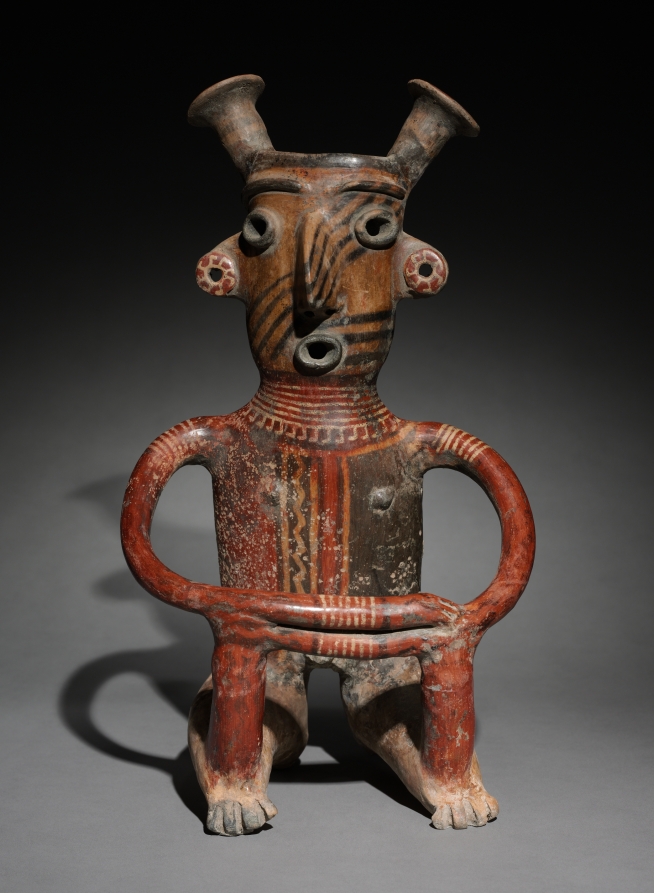
Technical Analysis: The Seated Executive & The Architectural Silhouette
The provided discourse on Eastern aesthetic philosophy, centered on the dialogue between the Yongzheng porcelain vase and the Flowering Crab Apple painting, presents not a narrative but a structural blueprint. For Addison Fashion, this is a treatise on spatial relationships, scale, and the integrity of form. The seated male executive is not merely a figure; he is the central axis in a composition of urban materiality. Our analysis extracts a precise geometric and philosophical framework to define the 2026 executive silhouette, moving beyond trend into the realm of structural poetics.
I. Foundational Geometry: The Axis and The Void
The core tenet extracted is the principle of "纳须弥于芥子"—containing the cosmos within a mustard seed. This translates directly to the architectural silhouette. The seated figure itself becomes the porcelain vessel: a defined, contained form that must imply vast interior space and dynamic external relationships. The silhouette is not a shell, but a curated volume.
The painting’s philosophy of "凝神寂照" (concentrated gaze and silent reflection) informs the garment’s relationship to the body. It is not compressive, but delineating. The tailoring creates a series of precise lines—the shoulder axis, the sleeve pitch, the break of the trouser—that function like the painting’s branch: a "calligraphy of force." These lines are not arbitrary; they are calculated vectors that guide perception, emphasizing verticality and controlled tension even in a seated position. The "void" or negative space within the composition—the painting’s essential留白—is replicated in the silhouette’s strategic attenuation. This is not minimalism as absence, but as calculated resonance. The space between the jacket’s waist suppression and the hip, the precise drape of a trouser leg over the shoe, these are the inhabited silences where the garment breathes and authority is implied, not shouted.
II. Structural Poetics: The Mobile Landscape & The Singular Focus
The porcelain vase is described as a "mobile landscape," where elements are integrated in a "cyclical visual movement." This is the operational logic for the 2026 tailored silhouette. A garment is not a static object; it is an environment experienced through movement and perspective.
Urban Materiality must facilitate this. Consider a jacket constructed from a technical wool-silk blend with a matte, mineral finish—our Slate hue, echoing ink-wash mountains and mist. From one angle, it presents a severe, planar front. As the wearer moves—leans forward in negotiation, gestures, rises—the fabric’s behavior and the cut’s understructure reveal themselves. The articulated back, the functional yet discreet bi-swing gussets, the internal canvas that molds to the body’s micro-movements: these are the "distant mountains, scholars, and flora" of the vase, co-existing in one integrated form. The functional becomes poetic. A pocket’s placement is not merely utilitarian; it breaks the plane of the jacket like a scholar figure in a landscape, directing the eye and suggesting purpose.
Conversely, the painting’s focus on a single branch of crab apple informs our approach to detail and surface. This is the principle of "simplicity revealing abundance." The silhouette’s primary form is clean, almost severe. The "branch" is a singular, exquisite detail: the specific curvature of a lapel roll that emerges from the collar like a stem from a trunk; the precise, almost architectural stitching on a cuff that mimics the "time trajectory from potential to full bloom" described in the painting’s buds and flowers. This detail is not appliqué; it is intrinsic to the structure, a focal point that rewards the "concentrated gaze." The texture of the fabric itself becomes the painting’s gradations of ink—a Slate hue that shifts from deep charcoal to soft graphite depending on the light, achieved through advanced, muted finishing techniques.
III. The 2026 Executive Silhouette: A Synthesis of Contained Motion
The definitive 2026 silhouette for the seated executive is therefore a study in contained potential energy. It synthesizes the vase’s macro-cosmic integration with the painting’s micro-cosmic intensity.
The jacket is tailored with a renewed emphasis on the scapular architecture, creating a clean, horizon-like line across the shoulders that references the vase’s stable base, yet allows for full range of motion—the "游观" (wandering gaze) experience. The waist suppression is subtle, a suggestion rather than a constraint, creating a volume below that hints at the vase’s rounded form, accommodating the seated posture without collapse. Trousers are cut with a high, precise waist and a straight, unwavering leg that maintains its line from thigh to ankle, a vertical counterpoint to the torso’s implied volume. They are a manifestation of the painting’s branch: strong, intentional, and leading the eye.
Materiality is paramount. Fabrics are technically sophisticated with inherent memory and minimal sheen—brushed wools, matte technical blends, dense cottons with structural integrity. The Slate color palette is essential: it is urban mineral, it is ink, it is shadow and mist. It provides a non-chromatic canvas upon which the play of light, texture, and precise cut becomes the primary narrative. It embodies the "cold" sophistication of the analysis, rejecting transient color in favor of timeless, environmental tonalities.
Ultimately, this silhouette constructs a poetic habitat for the executive. It is a vessel that contains a worldview—one of integrated complexity, focused detail, and resonant space. It does not dress the man; it architects an environment around him that is both a shield and an expression, as coherent and profound in the boardroom’s seated negotiation as the porcelain vase was in the scholar’s hand or the painting on the contemplative wall. It is, in its precise geometry and material truth, a form of urban poetics.