Minimalist
Onyx
Urban Form: Muse with Violin Screen
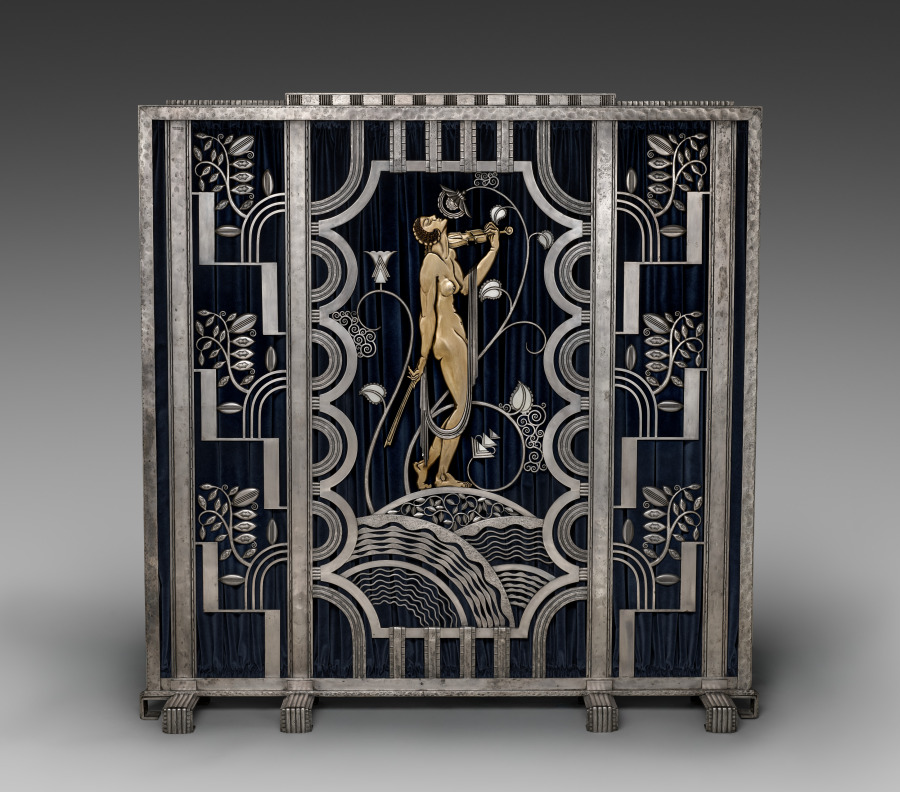
Formal Deconstruction: The Dialectic of Terminal Gesture
The subject—a muse holding a violin screen—is not a portrait of performance but a study in terminal stillness. The instrument becomes a prop for the threshold, a bridge between the tactile and the transcendental. To analyze this silhouette is to engage with the same aesthetic tension that animates the Socratic cup and the Buddha’s parinirvana: the body at the moment of its highest articulation, poised between action and cessation.Geometric Containment vs. Flowing Drape
The Socratic vessel presents a body rendered as architecture. The philosopher’s seated form is a study in orthogonal clarity—shoulders squared, spine erect, the arm reaching upward as a diagonal vector. This is the Tailored impulse in its purest form: the garment as a second skeleton, a cage of intention. The fabric falls in clean, unbroken planes, with minimal gathering. The silhouette is contained, every fold a decision. The color is a deep, matte Onyx—not black, but a black that absorbs light, suggesting the gravity of the moment. This is the color of the cup’s contents, of the void into which the soul ascends. In contrast, the Buddha’s robe is a study in Fluid dissolution. The mineral pigments—cinnabar, lapis, orpiment—create a surface that shimmers with internal light. The fabric does not cling; it flows. The silhouette is expansive, the body dissolving into the drape. The folds are not structural but atmospheric, like water over stone. The color is a faded Ivory, not white but the memory of white, a color that has absorbed centuries of incense and prayer. This is the color of the void as plenitude, of form returning to formlessness.The Shoulder Line: Axiom of Agency
For the 2026 NYC executive wardrobe, the shoulder is the primary site of this dialectic. The Socratic shoulder is sharp, defined, assertive. It declares: “I am here. I choose.” This is the power shoulder reimagined not as aggression but as existential clarity. The cut is clean, the padding minimal but precise. The seam falls at the acromion, not beyond. The sleeve is set-in, not raglan. This is a shoulder that can hold a boardroom or a courtroom, a shoulder that does not slouch. The Buddha’s shoulder is soft, sloping, recessive. It says: “I am here, but I am also elsewhere.” This is the shoulder of the drop-shoulder silhouette, the dolman sleeve, the cape. It is not weak; it is receptive. For the executive who must listen as much as command, this shoulder signals a different kind of authority—one rooted in presence, not projection. The fabric falls from a point beyond the natural shoulder, creating a continuous line from neck to wrist. The effect is a silhouette that is both generous and grounded.The Vertical Axis: From Ascension to Recumbence
The Socratic gesture—the finger pointing upward—creates a vertical axis that pulls the eye from the hem to the heavens. This is the line of ambition, of transcendence through will. In garment terms, this translates to the elongated silhouette: the long-line blazer, the floor-sweeping coat, the high-waisted trouser that extends the leg. The hem is sharp, the cut is clean. The fabric is a dense wool or a stiffened silk, capable of holding a crease. The Onyx color deepens the vertical effect, creating a column of darkness that draws the gaze upward. The Buddha’s recumbent pose creates a horizontal axis, a line of rest, of surrender. This is the silhouette of the wide-leg pant, the oversized coat, the asymmetrical hem that breaks the vertical. The fabric is soft—cashmere, matte jersey, a fluid crepe. The color is a warm Sand or a pale Silver, tones that reflect light rather than absorb it. The horizontal line is not a line of defeat but of equilibrium. It says: “I do not need to climb. I am already here.”Color as Philosophical Statement
The Onyx of the Socratic silhouette is not a neutral. It is a negative color, a color that denies. It is the color of the hemlock, of the void, of the absolute. It demands attention by refusing to give any. In the 2026 wardrobe, Onyx is the color of the power uniform—the suit that says nothing and therefore says everything. It is the color of the closing argument, the final offer, the irreversible decision. The Ivory of the Buddha’s robe is a positive color, a color that contains all others. It is the color of the lotus, of the dawn, of the infinite. It does not demand; it invites. In the wardrobe, Ivory is the color of the transition piece—the coat that can be worn over anything, the dress that moves from day to night. It is the color of the negotiator, the mediator, the one who holds space.The Synthesis: The Minimalist Silhouette
The 2026 executive does not choose between Socrates and the Buddha. She synthesizes. The Minimalist silhouette is the site of this synthesis: a garment that is both contained and flowing, both sharp and soft. The shoulder is defined but not aggressive. The hem is clean but not rigid. The fabric is dense but not heavy. The color is Onyx, but with a subtle sheen—a black that is not dead but alive, a black that contains the memory of Ivory. This is the silhouette of the double-faced coat: Onyx on the outside, Ivory on the inside. When the wearer moves, the lining flashes, a brief glimpse of the Buddha beneath the Socratic exterior. This is the silhouette of the asymmetric blazer: one shoulder sharp, the other soft. One lapel wide, the other narrow. A garment that is both a shield and a veil.Conclusion: The Garment as Threshold
The muse with the violin screen is not playing. She is listening. The instrument is not a tool but a portal. The silhouette is not a statement but a question. The 2026 executive wardrobe must be a wardrobe of thresholds—garments that allow the wearer to move between the Socratic and the Buddhaic, between the boardroom and the meditation room, between the will to power and the surrender to presence. The Onyx Minimalist silhouette is the answer: a form that contains both the upward finger and the recumbent body, a color that holds both the void and the infinite. It is the garment of the one who has seen both the cup and the lotus, and chooses to wear them both.
Technical Insight
NYC Perspective: Translating Onyx tones into Minimalist silhouettes.