Minimalist
Onyx
Urban Form: Julius Caesar
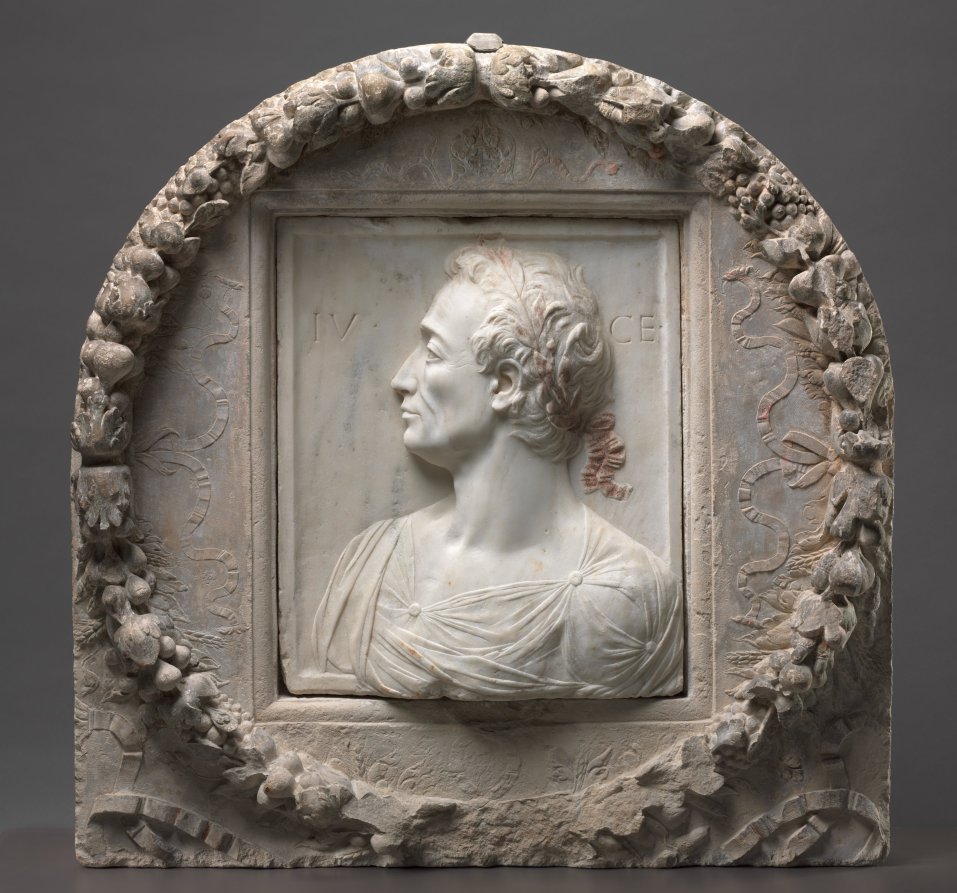
Geometric Integrity and the Executive Silhouette: A Structural Analysis of the Caesar Archetype
The subject of Julius Caesar, when filtered through the internal DNA of the *Pilgrim Sudhana* and *Harpist* dialectic, yields a definitive urban silhouette for the 2026 executive. This is not a silhouette of imperial pomp or martial aggression. Rather, it is a study in **compressed power**—a form that internalizes its authority, achieving dominance through stillness and structural clarity. The analysis proceeds from the geometric integrity of the Caesar archetype, translating its inherent poetics into a contemporary, material language.I. The Geometric Archetype: From Bust to Block
The canonical representation of Caesar—the sculpted bust, the toga-draped torso—presents a geometry of **stable mass**. The head is a near-perfect ovoid, the neck a truncated cylinder, the shoulders a horizontal lintel. This is not the dynamic, S-curve contrapposto of the *Harpist*; it is the static, frontal, and axial geometry of the *Pilgrim Sudhana*. The power lies in the **closed form**. The silhouette is defined by a clear, unbroken perimeter: a vertical axis from crown to base, with the horizontal line of the shoulders acting as a structural beam. For the 2026 executive silhouette, this translates into a **minimalist block**. The jacket is the primary vessel. Its shoulder line is not padded into aggression but constructed with a precise, architectural drop—a clean, horizontal termination that suggests a load-bearing capacity. The lapel is not a flourish but a structural fold: a sharp, notched or peak lapel that functions as a visual buttress, anchoring the chest. The torso is a column, not a sheath. It falls straight from the shoulder, with minimal waist suppression. This is not about revealing the body; it is about housing it within a **geometric envelope**. The length extends to the mid-hip or lower, creating a 2:3 proportion between the jacket and the visible trouser leg, echoing the stable base of a classical plinth.II. Structural Poetics: The Internalized Tension
The *Pilgrim Sudhana* offers the principle of **inward-directed energy**. The figure’s posture is one of receptive stillness, a container for spiritual gravity. The *Harpist* provides the counterpoint: a **latent dynamism** frozen in a perfect instant. The Caesar silhouette synthesizes these. The power is not expressed through movement but through the *potential* for movement, held in rigorous check. This is achieved through **structural poetics** in the garment’s construction. The canvas interfacing is not merely a support; it is the **armature**. It is dense, heavy, and hand-stitched to create a firm, unyielding chest piece. This chest is a shield, a carapace of authority. The sleeve head is set with a precise, rolled fullness—not a puff, but a controlled volume that suggests the latent power of a bicep under a toga. The back is a study in **contained geometry**. A center vent is minimal or absent; side vents are cut high and clean, allowing for a narrow range of motion without disrupting the monolithic front view. The entire structure is designed to resist the body’s natural curves, imposing a rectilinear ideal. The trouser is the logical extension of this column. It is a straight, full-length cylinder from hip to hem, with a single, sharp crease down the center. This crease is not a casual fold; it is a **structural line**, a vector of precision. The waistband is high and flat, sitting at the natural waist, creating a seamless transition from the jacket’s torso. The hem breaks cleanly over the shoe, with no pooling fabric. The silhouette is one of **vertical compression**—the entire form is a single, uninterrupted line from shoulder to floor.III. Urban Materiality: The Onyx and the Ivory
The color Onyx is not merely a shade; it is a **material statement**. It is the color of polished basalt, of deep obsidian, of the void between stars. It absorbs light, refusing reflection. This aligns with the internalized aesthetic of the *Pilgrim Sudhana*—a color that does not project but rather **sinks into itself**. For the Caesar silhouette, Onyx is the primary. It is the color of the jacket, the trouser, the entire monolithic form. It is a color of absolute authority, devoid of warmth or sentiment. The materiality must support this. The fabric is a **super 150s wool** or a **worsted flannel** with a tight, compact weave. It has a dry, matte hand, not a luster. The surface is smooth, almost impermeable, like a stone wall. The texture is not tactile in a soft sense; it is **tactile in a structural sense**—you feel its weight, its density, its resistance. The lining, in contrast, is a flash of **Ivory**—a pure, unbleached silk. This is the *Harpist*’s hidden dynamic, the secret warmth within the cold exterior. It is revealed only in the moment of movement, a brief, luxurious counterpoint to the Onyx monolith.IV. The 2026 Executive: A Manifesto of Stillness
The final silhouette is a **minimalist armor** for the urban battlefield. It is not for the man who shouts; it is for the man who is heard in silence. The jacket is a **structural poem** of horizontal and vertical lines. The trouser is a **column of precision**. The color is a **void of power**. The entire form is a study in **controlled mass**, a direct translation of the Caesar bust’s geometric integrity into a wearable, urban object. This is the definitive silhouette for the executive who understands that true authority is not performed but **inhabited**. It is the *Pilgrim Sudhana*’s meditative stillness, the *Harpist*’s frozen moment of creation, and Caesar’s absolute, unyielding presence. It is a garment for the man who, like the bust itself, needs to move nothing to command everything. The 2026 executive does not wear a suit; he **occupies a structure**.
Technical Insight
Technical Insight: Translating Onyx palettes into Minimalist silhouettes for the modern metropolis.